
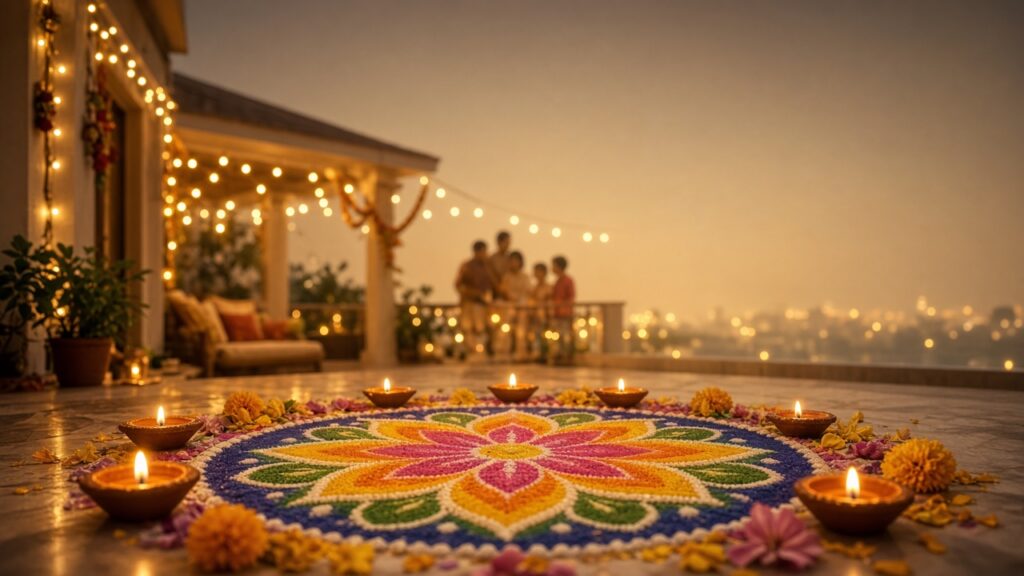
Diwali is lights, sweets, family, and that unmistakable festive hum across India. For many of us living with asthma, it can also mean tighter chests, restless nights, and a quiet worry about cracker smoke, incense, and the days of haze that often follow.
This guide is for you if you want to celebrate with joy, not fear. It is educational, practical, and India-aware. It is not a diagnosis, a prescription, or advice to change any medicine your doctor has prescribed. If something feels wrong, trust your body and get medical help.
1. Why Diwali air can feel harder on asthma
Fireworks, sparklers, and many household rituals release fine particulate matter (especially PM2.5), gases such as sulphur dioxide and nitrogen dioxide, and metal-containing particles that hang in the air. Reviews of fireworks events worldwide, including Diwali in India, document sharp short-term rises in these pollutants after displays and cracker use.
India’s health system treats this seriously. The Ministry of Health and Family Welfare’s updated Health Advisory on Air Pollution (under NPCCHH / NCDC, October 2025) specifically flags firecracker pollution for people with heart or lung disease, and lists practical Do’s and Don’ts for Diwali nights: avoid crackers if you have asthma or another lung condition, stay indoors during Diwali nights when possible, consider a well-fitting N95 or N99 mask when you must go out, and seek medical care promptly if breathing becomes difficult.
Indoors is not automatically safe either. Incense sticks (agarbatti), dhoop, camphor, and mosquito coils used in closed rooms add another layer of smoke, something India’s same advisory asks households to avoid in confined spaces, especially when outdoor air is already poor.
Outdoor pollution and asthma are connected more broadly too. The World Health Organization’s 2021 global air quality guidelines set a very low health-based annual mean for PM2.5 (5 µg/m³) and a 24-hour guideline of 15 µg/m³, numbers that many Indian cities exceed, especially around festival and winter smog periods. NHLBI guidance for living with asthma also emphasises knowing your triggers, checking air quality, and keeping windows closed and outdoor exertion low when air quality is poor.
None of this means Diwali has to be cancelled. It means planning beats panic.
2. What usually triggers symptoms around the festival
Common Diwali-week irritants for people with asthma include:
- Firecracker and sparkler smoke: sudden PM spikes, especially late evening and night
- Neighbourhood haze that can linger for hours (and sometimes into the next morning)
- Incense, dhoop, camphor, and heavily scented décor in closed puja rooms
- Cooking smoke from long festival meal prep without good exhaust
- Cold night air mixed with pollution (common in North India around Diwali timing)
- Crowded outdoor gatherings near continuous cracker zones
- Post-Diwali smog days, when ambient AQI may stay “Poor” to “Severe”
For a wider look at how dirty air affects asthma year-round, see our overview on the impact of air pollution on asthma. For smoke-free festive ritual ideas at home, our guide on mosquito coils, incense, and dhoop alternatives pairs well with this article.
3. Check AQI like you check the weather
India’s Central Pollution Control Board (CPCB) publishes a National Air Quality Index with six categories that are easy to act on:
| AQI range | Category | Rough meaning for people with asthma |
|---|---|---|
| 0 to 50 | Good | Lowest concern |
| 51 to 100 | Satisfactory | Usually okay for most; stay alert if you are very sensitive |
| 101 to 200 | Moderately polluted | Breathing discomfort more likely for asthma/heart/lung conditions |
| 201 to 300 | Poor | Limit outdoor time and exertion |
| 301 to 400 | Very Poor | Prefer indoors; keep activity low |
| 401 to 500 | Severe | Stay indoors as much as possible; protect vulnerable family members |
Practical habit: Open the CPCB Sameer app (or your city pollution board / AQI page) each morning and again before evening plans during Diwali week. MoHFW/NCDC messaging for high-pollution periods also suggests avoiding outdoor morning and late-evening walks or exercise when AQI is Poor or worse, and ventilating homes in the afternoon window when outdoor air is relatively better, if local conditions allow.
Winter festival timing matters too: cold night air plus pollution is a pattern many North Indian families already recognise around Diwali.
4. Celebrate Diwali with a safer plan
4.1 Lights without the smoke cloud
You can keep the glow and cut the irritants:
- Prefer LED diyas / electric lights for décor; use traditional oil diyas in open, well-ventilated spaces if that matters to your family ritual
- Skip or sharply limit indoor incense, dhoop, and camphor when someone at home has asthma
- If you light a small outdoor diya or lamp, keep doors to bedrooms closed so smoke does not pool indoors
- Ask housing societies for designated cracker zones far from stairwells and balconies where people sleep
4.2 Crackers: culture, choice, and boundaries
MoHFW/NCDC advice is clear for people with asthma or other lung disease: avoid burning firecrackers. That is not anti-festival. It is protective.
If your extended family still uses crackers:
- Stay indoors with windows closed during peak bursting hours
- Use AC or fan on recirculate if you have it (the national advisory suggests recirculate mode in buildings and vehicles on Poor-to-Severe days)
- If you must step out briefly, wear a snug N95 or N99 (not a loose cloth or handkerchief; those do not filter fine particles well). Our practical guide to choosing an N95 you can actually breathe in may help
- Change clothes and wash face/hands after outdoor exposure so residual smoke does not linger on fabric near your bed
- Celebrate with community light shows, rangoli, music, sweets, and shared meals that do not depend on smoke
Saying no can feel awkward in a joint family. A calm script helps: “I would love to celebrate with everyone, cracker smoke triggers my asthma, so I’ll enjoy the lights from inside / join after the main bursting.” More boundary ideas live in How to Politely Say No to Triggers Without Feeling Guilty.
4.3 Kids, elders, and pregnancy
India’s air-pollution health advisory lists children, older adults, pregnant people, and those with existing lung or heart disease as especially vulnerable. For Diwali week:
- Keep children’s outdoor play away from active cracker lanes
- Prefer short, planned outdoor moments over long nights on balconies in smoke
- Elders with asthma or COPD often do better with a quiet indoor celebration and early rest
- If you are pregnant and have asthma, discuss festival-week exposure and your usual plan with your clinician before Diwali, do not change medicines on your own
4.4 Guests, societies, and “one night only”
Smoke does not respect compound walls. Even one “grand” night can leave fine particles settling on curtains and sofas. Simple community steps:
- Agree on early cut-off times for crackers in the society
- Offer a smoke-free floor / wing for residents with asthma or infants
- Keep stairwells and lifts free of indoor sparklers (they concentrate smoke fast)
- Share AQI updates in the WhatsApp group the way you share power-cut alerts
5. Your asthma “festival kit” (same medicines, better readiness)
Educational reminder: Do not start, stop, or change prescribed asthma medicines because of an article. Use your doctor’s plan. Festival week is a good time to prepare, not experiment.
Before Diwali:
- Confirm you have enough of your usual controller (if prescribed) and reliever / rescue inhaler for the whole week, including travel to relatives
- Check expiry dates and that spacers (if you use them) are clean and working
- Put together a small kit: inhalers, spacer, written action plan, mask, peak-flow meter if you use one, doctor/clinic numbers, and spare batteries for any device
- Review your asthma action plan so green / yellow / red steps are clear for every adult in the house
- Stock a simple asthma emergency kit for home so you are not hunting for things at midnight
Technique matters when stress is high. If your spray technique has gotten rusty, ask your clinician or pharmacist to re-check it before the festival week.
If your asthma has felt “not quite right” for weeks (night cough, needing the reliever more often, waking short of breath), get clinical advice before the festival, not during peak smoke.
6. During a flare: what to do, and when it is an emergency
Follow your written asthma action plan first. In general educational terms used by NHLBI and GINA-style self-management approaches:
- Move away from smoke into cleaner indoor air
- Sit upright; loosen tight clothing
- Use your prescribed reliever exactly as your plan or clinician taught you
- Stay calm and have someone stay with you
Seek urgent medical care / call emergency services (112 in India) if any of these happen:
- Severe breathlessness, difficulty speaking full sentences, or lips/fingertips looking blue or grey
- Reliever not helping as it usually does, or you need it repeatedly with little relief
- Chest pain, confusion, extreme drowsiness, or collapse
- A child who cannot walk, speak, or stay alert because of breathing difficulty
- MoHFW/NCDC Diwali messaging also says: if a person develops breathing difficulty during Diwali, consult a doctor immediately
Do not drive yourself if you are in severe distress, have someone take you, or call 112.
7. The days after Diwali: when haze lingers
Many cities see AQI stay elevated after the main night, especially when weather is still and winter fog mixes with pollution (SMOG). India’s health advisory explicitly calls out pre- and post-Diwali periods for awareness campaigns.
Post-festival tips:
- Keep checking AQI for 2 to 3 days, not just on Diwali night
- Delay balcony workouts and school morning PT if AQI is Poor or worse
- Wet-mop floors instead of dry sweeping (reduces resuspended dust)
- Wash curtains and sofa covers if they smell strongly of smoke
- Watch for delayed symptoms: cough, wheeze, or tight chest the morning after
The same “celebrate smarter” frame applies to other fireworks-heavy nights, New Year society events, weddings with crackers, or late-night displays near your building.
8. Empathy for the social side of Diwali
Asthma at festivals is not only about your lungs. It is also explaining yourself for the tenth time, watching cousins light crackers, and feeling guilty for “ruining the mood.” You are not ruining anything. You are protecting a chronic airway condition that can flare hard with irritant smoke.
A few community-minded lines that often land well:
- “We’ll do lights and sweets together, I’m skipping the smoke part.”
- “Can we keep crackers in the far parking area so kids and elders can stay near the building?”
- “I’ll join the aarti from the doorway / balcony where the air is clearer.”
Joy and caution can sit at the same table.
Siddhant’s POV: Diwali should feel like a celebration, not something you just get through
Living with asthma for more than 30 years has made me very aware of how much the air around me shapes how I feel, and festivals are no exception.
Diwali is one of those times when the environment can change within hours. The same evening that brings family, lights and sweets can also bring smoke, haze and gentle pressure to step out “just for a few minutes”.
I have also experienced how important the environment can be. After moving from Delhi NCR to Dehradun, I noticed an improvement in my breathing. That is my personal experience, and I know most people cannot simply move away from polluted air, especially during the festival season.
What I believe matters most is preparation. Checking the AQI, keeping your prescribed medicines within reach and deciding in advance where you will be during peak cracker hours can take a lot of stress out of the night.
I also think it is okay to protect your breathing without apologising for it. Watching from indoors or skipping the crackers does not make you any less a part of the celebration.
The aim is not to fear Diwali. It is to enjoy the parts that bring you joy while making informed choices about the parts that affect your breathing.
This section reflects Siddhant Jain’s experience of living with asthma for more than 30 years and his personal observation after moving from Delhi NCR to Dehradun.
Conclusion
Diwali does not have to mean choosing between tradition and breathing. Check AQI, cut indoor incense smoke, skip personal crackers if you have asthma, wear a proper mask when outdoor smoke is unavoidable, keep your prescribed inhalers and action plan ready, and treat severe symptoms as emergencies, including calling 112.
Celebrate the light. Protect the air around the people you love. That is a festival win.
Take the next step with Asthma Friend
- Join our community: Connect with people who understand life with asthma at Asthma Friend.
- Learn through play: Explore free educational games at Asthma Friend Games.
- Prepare for worsening symptoms: Create your free asthma action plan using the Asthma Friend Action Plan Generator. Review it with your healthcare professional so it reflects your prescribed treatment.
Frequently asked questions
Yes. Fireworks and crackers raise fine particulate matter and irritant gases. People with asthma are among those most sensitive to short-term pollution spikes. India’s MoHFW/NCDC advisory specifically warns that firecracker pollution can seriously affect people with respiratory disease and advises avoiding crackers if you have asthma or another lung condition.
Often yes, especially during peak bursting hours and when local AQI is Poor, Very Poor, or Severe. Close windows during heavy outdoor smoke; use recirculate mode on AC if available. Ventilate later when outdoor levels ease, ideally following local AQI updates.
They can be. Burning incense or dhoop in closed rooms adds indoor particulate pollution. Prefer smoke-free ritual options, or use them briefly in open, well-ventilated outdoor spaces away from anyone with asthma.
They are not reliable for fine particles. MoHFW/NCDC messaging points to properly fitted N95 or N99 masks for short outdoor exposure on high-pollution days, and only if you can tolerate wearing them. Discuss mask use with your clinician if you have severe asthma or get breathless with face coverings.
Only if your personal asthma action plan or clinician has told you to do that kind of preventive step. Do not invent a new dosing schedule from a blog. If you are unsure, ask your doctor before Diwali.
Sparklers still produce smoke and hot particles. Prioritise distance, short exposure, indoor alternatives (LED sticks, glow crafts), and your child’s prescribed plan. Severe breathing difficulty needs urgent care or 112. Never “wait and see” through a bad attack.
Use CPCB’s Sameer app or official CPCB / State Pollution Control Board AQI pages for your city. Check more than once a day during Diwali week.
Educational content only. Asthma Friend does not diagnose conditions or prescribe treatment. Always follow your clinician’s advice for your medicines and action plan. In a breathing emergency in India, seek urgent care or call 112.
Last reviewed: 1 November 2026
Information on this page was written against widely published guidance from national and international respiratory health bodies. It is educational only and is not a substitute for personal medical advice from a doctor.

About the author
Siddhant Jain
Siddhant Jain is the founder of Asthma Friend. He has lived with asthma for more than 30 years. After moving from Delhi NCR to Dehradun, his breathing improved, and he built Asthma Friend to give Indian patients and caregivers practical, empathetic education. The content is educational and is not a substitute for advice from a doctor.
Related posts:
 Spacer 101: Use, Cleaning, and Common Mistakes
 Asthma-Friendly Mountain Destinations in India: Breathe Easy on Your Next Holiday
 Should You Exercise Outdoors When Air Quality Is Poor? Asthma Considerations
 Asthma and Train Travel in India: A Preparation Checklist for Sleeper and AC Coaches
 Is Your Child Wheezing With Every Cold? Viral Wheeze vs Asthma in Children Under 5
 Cold Air and Asthma: How to Plan Walks and Morning Commutes
 Is Your Home Summer-Ready for Asthma? A Cleaning Checklist
 Friendship and Asthma: How My Friends Helped Me Breathe Easier
 Renovating? Low-VOC Paints and Safer Home Upgrades for Asthma-Friendly Homes
 How to Tell Your Manager About Asthma Without Oversharing: A Simple Script and Smart Asks