
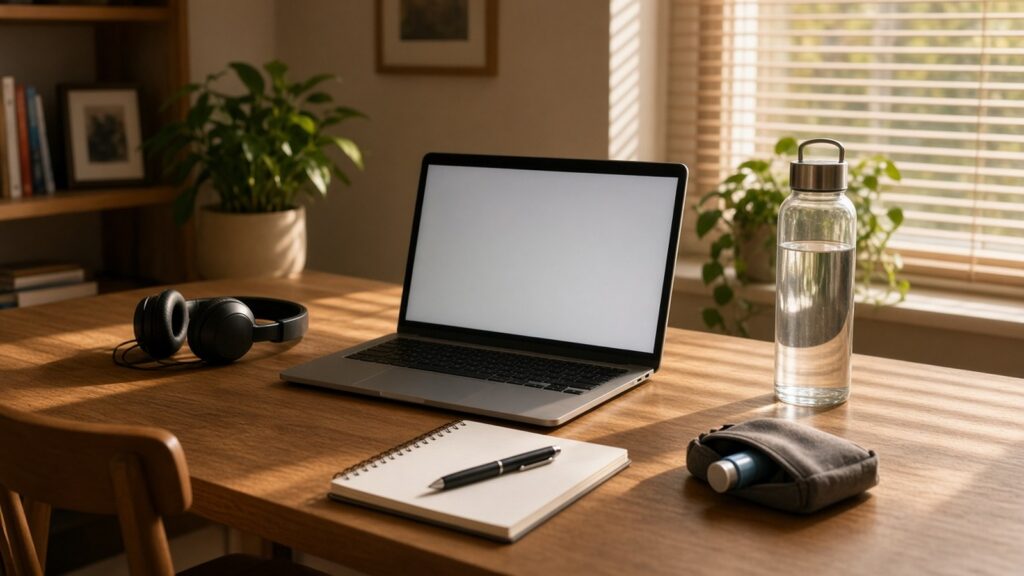
If your workday is full of client calls, sales pitches, teaching sessions or stage presentations, asthma can show up as more than wheeze. Voice fatigue, throat dryness and the fear of coughing mid-sentence are real. This guide is a workplace checklist for asthma long calls presentation days, written for Indian offices, hybrid roles and work-from-home setups.
You will find pacing ideas, hydration habits, desk and bag essentials, scripts for asking for breaks, and clear signs that voice strain needs a doctor’s review. It is not a voice-training course and it is not medical treatment advice.
This article is general education, not medical advice. Everyone’s asthma is different. Please talk to a doctor about individual symptoms and treatment, and never start, stop or change any asthma medicine based on a blog post.
1. Why talking-heavy work can feel harder with asthma
Long stretches of speaking ask a lot from your breath control, throat moisture and posture. Add AC rooms, strong office fragrance, dusty meeting halls or a stuffy home office, and the day can feel longer than the calendar shows.
Common patterns people describe:
- Voice getting rough or quiet by late afternoon.
- Needing more sips of water than colleagues on the same call block.
- Cough triggered by cold meeting-room air or perfume in a closed cabin.
- Anxiety before a big presentation that makes breathing feel shallow.
- Skipping lunch hydration because back-to-back Zooms leave no gap.
Asthma and voice symptoms can overlap, but they are not always the same problem. Our overview of how asthma can affect your voice explains why speaking days deserve a plan. For wider office coping ideas, see coping with asthma in the workplace.
2. Pace the speaking day before it starts
A full calendar of calls is easier when you design recovery gaps on purpose. Treat speaking like physical effort that needs warm-up and rests.
- Cluster calls with short buffers. Even 5 to 10 minutes between heavy sessions helps you drink water, stretch and reset posture.
- Put the hardest pitch when you feel freshest. Many people speak more comfortably earlier in their personal energy curve.
- Avoid stacking outdoor commute dust with an immediate live presentation. If traffic air bothers you, arrive early and settle indoors first.
- Keep one lighter task after a long webinar. Admin work or email can be a voice rest without looking dramatic on the calendar.
- Say no to optional speaking slots in a week when nights have already been wheezy. Protecting recovery is professional, not weak.
3. Hydration and throat comfort without gimmicks
Dry air and long talking often travel together. Simple hydration habits support comfort for many people, though they do not replace prescribed asthma care.
- Keep a bottle you actually like within arm’s reach on every call.
- Sip regularly rather than gulping only when your voice cracks.
- Limit back-to-back coffee or very cold drinks if they scratch your throat; notice your own pattern.
- In strong AC rooms, a short warm drink between sessions can feel kinder than ice water for some people.
- Skip strong mints or heavily scented lozenges if fragrance bothers your chest.
For a fuller look at daily fluids and breathing comfort, read why drinking water matters when you live with asthma.
4. Desk, bag and room setup for speaking roles
A small kit reduces panic when a cough starts mid-meeting. Pack for the room you will actually be in.
Work bag essentials
- Reliever inhaler in a labelled pouch you can open one-handed.
- Spacer if your clinician has advised one for you.
- Tissues, lip balm and a quiet water bottle.
- A light layer for freezing conference rooms that can trigger cough.
- Printed or phone copy of emergency contacts.
Our list of asthma work bag essentials can help you build a kit that fits your commute and role.
Room and call hygiene
- Sit slightly upright with feet supported; slumped chests make speaking harder.
- Ask for a seat away from the strongest perfume zone or photocopier corner when you can.
- On video calls, mute when you need a quiet sip or a brief cough, then unmute with a calm one-line return.
- If your home office faces a dusty road, keep that window shut during long speaking blocks on high-pollution days.
5. Scripts for breaks, cameras and managers
You should not have to explain your entire medical history to protect a five-minute pause. Short, practical lines work better than long apologies.
- Between agenda items: “I need a two-minute water break, then I’m ready for the next section.”
- On a marathon Zoom: “Could we take five minutes off-camera? I’ll be right back.”
- Before a long pitch: “I’ll present for 12 minutes, pause for questions, then continue. That pacing keeps it clear for everyone.”
- If fragrance is heavy: “Would you mind if we crack the door or move one seat down? Strong scent makes it harder for me to speak comfortably.”
If you are deciding how much to share at work, our guide on how to tell your manager about asthma covers privacy, timing and practical asks.
6. Presentation day checklist
Screenshot this for pitch mornings:
- Inhaler and water packed the night before, not during the Uber ride.
- Arrive early enough to settle breathing after the commute.
- Test mic levels so you are not shouting into a weak laptop microphone.
- Place water where you can reach it without turning your back to the room.
- Build one planned pause into the slide deck for questions or a sip.
- Know where the nearest quiet corridor is if you need a short reset.
- Keep emergency contacts unlocked on your phone.
7. Voice fatigue versus warning symptoms
Tired voice after a long teaching day can be ordinary strain. Other symptoms need faster attention. Learn your early signs and do not tough them out in front of a client because the meeting feels important.
Seek urgent help if you notice:
- Severe breathlessness or inability to speak full sentences.
- Lips or face looking blue or grey.
- Reliever medicine not helping as it usually does for you.
- Chest tightness that keeps worsening through the call.
Call 112 or go to the nearest emergency department for those red-flag symptoms. A presentation is never more important than breathing. For quieter early clues, review how to recognise early signs of an asthma attack.
If voice fatigue, throat pain or cough keep following every speaking-heavy week, book a doctor review. Ask whether asthma control, reflux, allergies, vocal strain or the work environment need attention. Do not start, stop or change any medicine on your own.
8. Hybrid and work-from-home speaking days
Home setups remove commute dust for some people and add new irritants for others: incense in the next room, renovation noise, or a child’s powder play nearby.
- Tell household members your call blocks so cooking smoke and vacuuming can wait when possible.
- Keep the speaking room low-scent; ask others to skip room spray during your webinar window.
- Use a simple stand or stack of books so the laptop camera does not force a hunched neck.
- Stand for short sections if sitting makes your chest feel tight, then sit again for discussion.
- End the day with quiet non-talking time when you can. Voice rest is part of recovery.
9. After the call: recovery that fits a real evening
Speaking-heavy days often end with more meetings or a noisy commute. Build a short recovery ritual so tomorrow’s first call does not start from empty.
- Drink water before you scroll messages.
- Step into quieter air for a few minutes if outdoor AQI allows; otherwise rest in a low-scent room.
- Avoid celebrating a big win with incense or heavy fragrance at home right after a long pitch day.
- Note any late cough or night waking in a simple diary so your doctor can see patterns later.
- Protect sleep. Voice and asthma both feel harder after short nights.
If recovery never seems enough and every speaking week ends in more reliever use than usual, that is useful clinical information. Take it to your doctor rather than silently lowering your standards for what a normal workday should feel like.
10. Teaching, sales floors and stage events
Some roles add extra load beyond a laptop mic. Classroom dust, open-plan sales floors and outdoor stages each need a slightly different plan.
- Teachers and trainers: Ask for chalk alternatives or damp-wipe boards when possible, keep water at the desk, and schedule one voice-lighter period after a double lecture.
- Sales floors: Rotate away from the strongest perfume desk clusters when seating is flexible, and take outdoor demos only after checking air quality.
- Conferences and stages: Walk the venue early, find a quiet side room, confirm where medical help would be, and keep your inhaler on you rather than in a bag under the stage.
- Outdoor rallies or street promotions: Masking choices, shorter shifts and exit plans matter as much as the script. Skip voluntary outdoor speaking on severe smog days when you can.
None of these steps diagnose your condition. They simply reduce avoidable strain while you follow the plan your clinician has already set.
11. Team culture and peer pressure on camera
Always-on cultures can make a water break feel like a performance issue. You can still protect breathing while staying professional.
- Normalise short pauses for everyone in meetings you host, so you are not the only person who needs one.
- Put agenda timings in the invite, including a mid-point break for sessions over 45 minutes.
- If a manager jokes about toughness, answer with outcomes: clearer delivery after a two-minute reset.
- Keep medical detail private unless you choose to share; practical needs are enough.
Good work and good breathing are not opposites. Teams that allow human pacing usually get better presentations, not worse ones.
Siddhant’s POV: Speaking days need the same respect as smog days
I have lived with asthma for more than 30 years, and long conversations used to leave me more drained than I admitted at the time. My breathing improved after I moved from Delhi NCR to Dehradun, which took the sharpest edge off daily pollution. What remained was the need to pace talking, keep water nearby and treat early chest tightness as information, not inconvenience.
Work culture often praises pushing through. Asthma asks for smarter pacing instead. That is not a lack of ambition. It is how you stay present for the next meeting.
Siddhant Jain, founder of Asthma Friend, has lived with asthma for more than 30 years.
Conclusion
Asthma on long-call and presentation days is manageable with planning: paced calendars, steady hydration, a ready work bag, short break scripts and honest attention to warning signs. Protect your voice and your breathing without turning every meeting into a medical discussion. Keep your doctor in the loop when patterns change, call 112 for emergencies, and remember that clear communication includes the pauses that let you keep speaking tomorrow.
Take the next step with Asthma Friend
- Join our community: Connect with people who understand life with asthma at Asthma Friend.
- Learn through play: Explore free educational games at Asthma Friend Games.
- Create your free asthma action plan: Use the Asthma Friend Action Plan Generator and keep a copy handy through the festive season.
Frequently asked questions
Pace your calendar with short buffers, keep water and your reliever within reach, sit upright, mute briefly when you need a sip or cough, and ask for short breaks without over-explaining.
Long speaking, dry AC air and poorly controlled airway irritation can all contribute. Persistent voice fatigue deserves a doctor review rather than guesswork.
Share what you need for safety and practical adjustments. You do not have to disclose every detail. Focus on breaks, seating or timing that help you deliver your work.
Reliever inhaler, spacer if advised, water, tissues, a light layer for cold rooms and emergency contacts. Pack them the night before.
Not always. Throat dryness and ordinary cough happen too. Watch for worsening breathlessness, difficulty speaking or a reliever that is not helping, and get urgent help for red-flag symptoms.
Call 112 or go to the nearest emergency department for severe breathlessness, inability to speak full sentences, blue or grey lips, or a reliever that is not helping.
No. Water can support comfort, but it does not replace prescribed asthma care. Follow your doctor’s plan and never change doses on your own.
Last reviewed: 1 November 2026
Information on this page was written against widely published guidance from national and international respiratory health bodies. It is educational only and is not a substitute for personal medical advice from a doctor.

About the author
Siddhant Jain
Siddhant Jain is the founder of Asthma Friend. He has lived with asthma for more than 30 years. After moving from Delhi NCR to Dehradun, his breathing improved, and he built Asthma Friend to give Indian patients and caregivers practical, empathetic education. The content is educational and is not a substitute for advice from a doctor.
Related posts:
 Closing Windows on Smog Days: How to Ventilate Without Letting Pollution In
 Traveling with Asthma: A Checklist for Stress-Free Trips
 Preventing Mold Growth at Home: A Guide for Asthma Patients
 Creating an Asthma Emergency Kit for Your Home
 How Intermittent Fasting Affects Asthma: Benefits, Risks, and Considerations
 Celebrating Nurses Who Help Asthma Patients Breathe Easier
 The Impact of Air Pollution on Asthma: A Growing Health Crisis
 How to Tell Your Manager About Asthma Without Oversharing: A Simple Script and Smart Asks
 What to Keep in Your Work Bag If You Have Asthma: A Practical Checklist
 Workplace Stress: The Hidden Trigger Behind Asthma and High Blood Pressure