
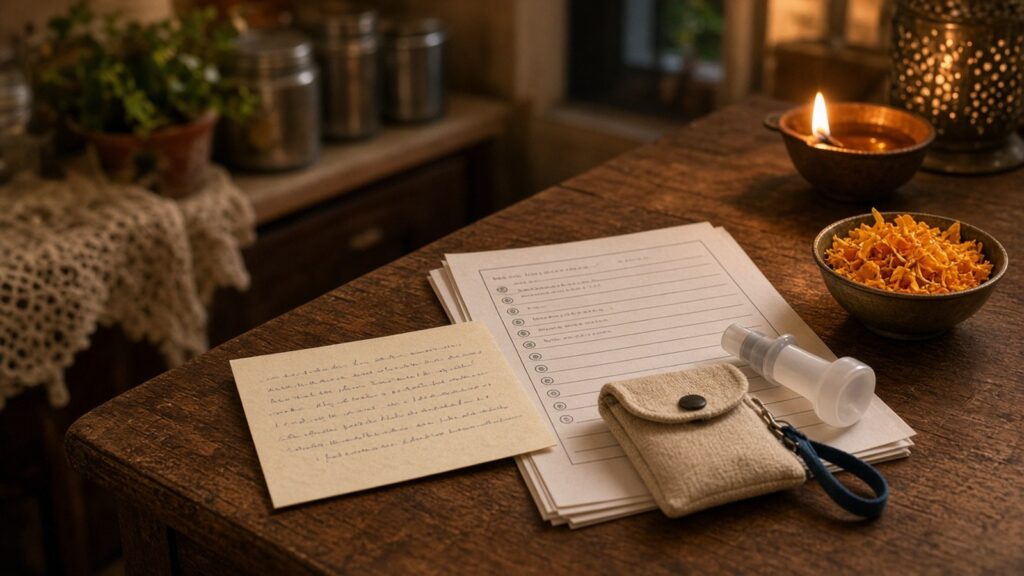
Diwali week often means children sleep over at grandparents’ homes, bounce between relatives, or stay back while parents finish last-minute work. Love is abundant. Clear medical handovers sometimes are not. A grandparent may know the child deeply and still not know which inhaler is which, where the spacer lives, or when a cough becomes an emergency.
This is a simple grandparents child asthma handover guide you can screenshot, print or write on one page. It is for temporary care during festive gatherings and ordinary babysitting days. It does not ask grandparents to become doctors. It asks parents to leave clarity behind.
This article is general education, not medical advice. Every child’s asthma is different. Please talk to a doctor about individual symptoms and treatment, and never start, stop or change any asthma medicine based on a blog post.
1. Why festive handovers go wrong
Most misses are ordinary, not careless:
- Parents explain everything verbally while packing sweets and clothes
- Devices end up in the wrong bag after a temple visit
- Two inhalers look similar to someone who does not use them daily
- Well-meant home remedies appear when the child coughs
- Fireworks smoke, incense and dusty guest rooms raise symptoms on the same evening
- Parents’ phones are on silent in another room during aarti
A written handover turns love into usable steps. For wider family support ideas, see how Indian joint families can support a member with asthma and how to take care of a person with asthma.
2. The one-page handover: what to write
Keep it short enough to read in two minutes. Include:
- Child’s full name, age and any nickname staff or relatives use
- Doctor’s name and clinic number
- Parent phone numbers in call order, plus one backup relative
- Exact names of devices (controller vs reliever in plain words) and where each pouch is
- Usual medicine times as the doctor prescribed them, written clearly
- Spacer or mask notes, if the clinician advised one
- Trigger list for this house: smoke, incense, pets, dusty storerooms, strong cleaners, cold AC
- Early warning signs for this child in plain language
- Emergency box: when to call parents, when to call 112
- Food or other allergy notes if relevant to the same gathering
If you are still shaping the medical plan with your clinician, use how to develop an asthma action plan to prepare questions, then copy the agreed steps onto the grandparent page.
3. A sample handover script parents can say out loud
Read this once while pointing to the pouches:
- “This blue pouch is the reliever for symptoms. This other pouch is the everyday controller. Please do not swap them.”
- “Here is the spacer. The child knows the steps. Please stay calm and follow the card if cough or tightness starts.”
- “If breathing looks severe, or lips look blue or grey, or the child cannot speak comfortably, call 112 first, then call us.”
- “Please skip incense and mosquito coils in the room where the child sleeps.”
- “If you are unsure, call us early. You will not be bothering us.”
Confidence for grandparents comes from permission to call. Fear comes from feeling they must handle everything alone.
4. Medicine times without improvisation
Festive days wreck clocks: late dinners, afternoon naps, temple visits, fireworks at odd hours. Write medicine timing in clock times and in anchor events (“after breakfast”, “before bedtime”) exactly as the doctor directed.
- Do not ask grandparents to “adjust the dose for smoke tonight”.
- Do not leave leftover strips from an old prescription without labels.
- Do not store inhalers in the kitchen near the frying pan or on a sunny windowsill.
- Do leave a photo of each device on the WhatsApp chat with grandparents.
- Do check dose counters before you leave the child for the evening.
If a dose is missed because of travel chaos, grandparents should call the parents or the doctor for advice rather than guessing a double dose.
5. Trigger map for a typical Indian grandparent home
Walk through the house together for five minutes before you leave:
- Puja room: Can incense wait until the child is in another ventilated space?
- Guest bedroom: Are blankets dusty from storage? Air them earlier in the day if possible.
- Kitchen: Will there be heavy tadka smoke in a closed kitchen during the child’s nap?
- Courtyard or galí: Where will fireworks be, and can the child watch from farther away?
- AC or cooler: Is the child’s sleep spot directly under a cold blast?
- Pets or pigeons: Any areas to limit if those bother the child?
You are not criticising the home. You are protecting a short stay. Small shifts often matter more than big speeches.
6. Early signs grandparents should notice
Share signs that are specific to your child, and keep a general list too:
- Persistent cough, especially at night or after running around relatives
- Wheeze or a whistling sound
- Complaint that the chest feels tight or “heavy”
- Unusual tiredness during play
- Faster breathing, or ribs pulling in
- Needing the reliever more than the written plan expects
Our guide on recognising early signs of an asthma attack can help you choose simple wording for the card. Match it to what your doctor confirmed.
7. When grandparents should call parents vs call 112
Write two boxes in bold on the page.
Call parents now if:
- Early symptoms start and you have followed the first steps on the card
- You cannot find a device or are unsure which pouch to use
- The child is scared and wants a parent on video while using the inhaler
- Symptoms are mild but different from the child’s usual pattern
Call 112 or go to the nearest emergency department now if:
- Severe breathlessness or fighting for air
- Difficulty speaking or walking a few steps because of breathing
- Blue or grey lips
- Exhaustion, confusion or collapse
- Symptoms keep worsening despite following the emergency steps on the written plan
Tell grandparents clearly: calling 112 is not overreacting. A festive gathering is never more important than a child’s airway.
8. Diwali-night extras for the handover
Add three festive lines when the stay overlaps fireworks:
- Child watches crackers from a distance or indoors with windows managed as the family agrees
- Reliever pouch stays on a named adult, not in a bedroom upstairs
- Quiet exit plan if smoke becomes heavy: who takes the child inside, who stays with guests
Pack a small kit that travels between rooms. Ideas overlap with creating an asthma emergency kit for your home: labelled inhalers, spacer, tissues, water bottle, copy of the card, and emergency numbers.
9. Helping grandparents feel respected, not tested
Many elders worry they will be blamed if something goes wrong. Parents can set a kinder tone:
- Thank them for specific help, not only for “managing the illness”.
- Avoid correcting them sharply in front of other relatives.
- Offer a quick practise run with the spacer before guests arrive.
- Put the plan in large font if reading small print is hard.
- Use the child’s own words for symptoms if that helps recognition.
If the child is old enough, practise a short sentence they can say to Dadi or Dadaji. Age-appropriate language ideas are in how to explain asthma to your child.
10. After you return: a two-minute debrief
When you pick the child up, ask:
- Did the child need the reliever?
- Any night cough or sleep disruption?
- Any incense, smoke or dusty room issues?
- Any confusion about devices or timing?
- Anything to change on the card for next time?
Update the written handover while the memory is fresh. Next festive season will be calmer.
11. Packing list for a short overnight stay
Before you leave the child with grandparents, pack a small labelled kit and show it once:
- Reliever inhaler in a distinct pouch
- Controller inhaler if a dose will fall during the stay, exactly as prescribed
- Spacer or mask with a clean case, if advised by the clinician
- Printed one-page handover in large font
- Phone numbers on paper, not only in a phone contact list
- A light scarf or layer for cold AC rooms
- Tissues, water bottle and any non-medicine comfort item the child uses when calm
Place the kit where grandparents actually sit in the evening, not buried under guest bedding. If the stay includes outdoor fireworks, the named adult should carry the reliever pouch on their body.
12. If two households share care across Diwali days
Some children move from Nani’s house to Dadi’s house across the week. That is when devices disappear into the wrong suitcase.
- Use one master kit that travels with the child, not duplicate mystery pouches in every home unless both are fully labelled and stocked on purpose.
- Send the same PDF or photo of the handover to both households.
- Name one parent as the coordination point so two elders are not giving conflicting instructions.
- After each move, confirm out loud: “Reliever pouch is here. Controller pouch is here. Card is on the fridge.”
Shared care works when the plan is identical and the kit is findable. It fails when every relative improvises from memory.
If anything on the card is hard to read in evening light, rewrite it larger before guests arrive. A handover nobody can read under a dim staircase bulb is not a handover.
13. A fridge-door checklist grandparents can tick
Leave a tiny tick list on the fridge for the evening:
- Reliever pouch seen and reachable
- Controller dose given if due (as prescribed)
- No incense or coil in the child’s sleep room
- Parent phone numbers tested with a quick hello call
- Named adult for fireworks hour confirmed
Ticks reduce mental load when the house fills with relatives and noise. They also show parents that the plan was active, not only received.
Siddhant’s POV: Clarity is a form of care
I have lived with asthma for more than 30 years, and I have seen how quickly a room full of loving adults can still freeze when breathing changes. The freeze is usually about missing information, not missing love.
My breathing improved after I moved from Delhi NCR to Dehradun, but no city change replaces a clear plan in a caregiver’s hand. For grandparents watching a grandchild during Diwali, one page of plain instructions can be the difference between panic and steady help.
Siddhant Jain, founder of Asthma Friend, has lived with asthma for more than 30 years.
Conclusion
Grandparents caring for a grandchild with asthma need a short handover, not a lecture. Write device roles, medicine times, triggers in that house, early signs, parent numbers and a bold 112 rule. Walk the home for smoke and dust traps, keep pouches findable during fireworks, and invite early phone calls. Medical changes stay with the doctor. Severe breathing trouble means emergency care without waiting for the party to end.
Take the next step with Asthma Friend
- Join our community: Connect with people who understand life with asthma at Asthma Friend.
- Learn through play: Explore free educational games at Asthma Friend Games.
- Create your free asthma action plan: Use the Asthma Friend Action Plan Generator and keep a copy handy.
Frequently asked questions
Child details, parent and doctor numbers, labelled controller and reliever pouches, prescribed timing in plain words, spacer notes, household triggers, early warning signs, and clear rules for calling parents or 112.
No. They should follow the written plan from the child’s doctor. If smoke is heavy or symptoms change, call the parents or seek urgent care rather than inventing a new dose.
With a named adult who stays near the child, not upstairs in a bedroom. Agree the person before crackers start.
Use differently coloured pouches, large labels with roles in words, and a photo on WhatsApp. Demonstrate once before you leave.
For severe breathlessness, difficulty speaking, blue or grey lips, exhaustion or collapse, or symptoms that worsen despite the written emergency steps. Call 112 or go to the nearest emergency department.
Ask for smoke-free alternatives in the child’s sleep space and keep rituals in a separate ventilated area when possible. Put that request on the written card so it is not only a verbal hint.
A short practised sentence helps, but adults must own the plan. Children can participate without carrying full emergency responsibility.
Last reviewed: 1 November 2026
Information on this page was written against widely published guidance from national and international respiratory health bodies. It is educational only and is not a substitute for personal medical advice from a doctor.

About the author
Siddhant Jain
Siddhant Jain is the founder of Asthma Friend. He has lived with asthma for more than 30 years. After moving from Delhi NCR to Dehradun, his breathing improved, and he built Asthma Friend to give Indian patients and caregivers practical, empathetic education. The content is educational and is not a substitute for advice from a doctor.
Related posts:
 Is Asthma Hereditary? What Parents with Asthma Should Know About Their Children
 Why Your Asthma Symptoms Can Change from Week to Week
 Managing Asthma During Monsoons in India: Tips for a Breath-Easy Season
 What People with Asthma Wish Others Understood
 Asthma and India’s AQI in Stubble Season: How to Read the Colours and Plan Your Day
 Avoid Self-Medication: A Vital Step in Managing Asthma Safely
 Traveling with Asthma: A Checklist for Stress-Free Trips
 How to Manage Asthma While Working from Home
 Workplace Stress: The Hidden Trigger Behind Asthma and High Blood Pressure
 Why Occasional Smoking or Hookah Is Dangerous Especially If You Have Asthma