
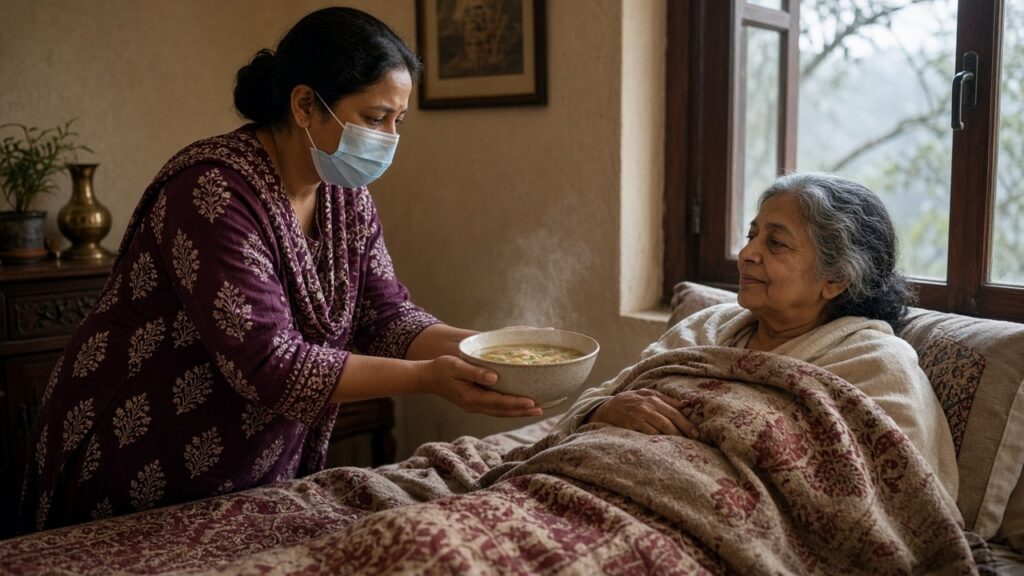
It often starts with one sneeze. A child brings home a cold from school, a parent catches it, and within days the whole household is coughing. In joint families and busy flats across India, illness spreads quickly. If someone at home has asthma, a family flu wave can feel especially worrying, because colds and flu are among the most common triggers for asthma flares.
This guide shares practical ways to reduce spread at home, protect the person with asthma, and know when to seek medical help.
This article is general education, not medical advice. Please talk to a doctor about symptoms and treatment, and never start, stop or change any medicine based on a blog post. If someone is struggling to breathe, call 112 or go to the nearest emergency department.
Why flu season is tougher for people with asthma
Viral infections can inflame the airways. For a person with asthma, that extra inflammation can trigger coughing, wheezing and breathlessness, and sometimes a serious flare. Recovery may also take longer, with a lingering cough for weeks.
Our article on asthma and infections explains why viruses are such a common trigger.
Before flu season: prepare in advance
A little planning in October and November helps a lot:
- Review the asthma action plan with the doctor, including what to do during a cold or flu.
- Ask about vaccines for the person with asthma and other family members. Our guide on vaccines and asthma lists questions to ask.
- Check medicines so the reliever and controller are not running out.
- Stock basics such as tissues, soap, a thermometer, masks and a few easy meals.
- Keep emergency numbers handy, including 112.
When someone at home falls sick
Reduce close contact where you can
Indian homes are often shared and small, so complete separation may not be possible. Small steps still help:
- If possible, let the sick person rest in a separate room or a corner away from the person with asthma.
- Avoid sharing beds, pillows, towels and utensils during illness.
- Keep a little distance during meals if you can.
Clean hands, often
- Wash hands with soap and water, especially after coughing, sneezing, using the toilet and before cooking or eating.
- Keep a hand sanitiser near the door and dining area.
- Remind children with simple songs or games.
Cover coughs and sneezes
- Use a tissue or the inner elbow.
- Throw tissues away straight after use.
- A sick family member may wear a mask in shared spaces, if comfortable.
Keep shared spaces fresh
- Open windows briefly for fresh air when outdoor air quality allows.
- Wipe frequently touched surfaces like door handles, switches, remotes and phones with a gentle cleaner.
- Avoid strong disinfectant sprays and harsh chemicals around the person with asthma, since fumes can be a trigger.
If the person with asthma is the caregiver
In many families, the person with asthma is also the one cooking, cleaning and caring for others. That is hard during flu season.
- Ask another adult to take over close care tasks for a few days, if possible.
- Wear a mask while caring for someone sick, if your doctor says it suits you.
- Wash hands after every caregiving task.
- Rest when you can, and do not skip your own medicines.
- Notice early symptoms in yourself and follow your action plan.
Our article on how joint families can support a member with asthma has ideas for sharing the load.
If the person with asthma catches the flu
- Follow the written asthma action plan.
- Contact the doctor early, especially if symptoms are increasing.
- Rest and drink fluids.
- Track symptoms and reliever use in a notebook or phone.
- Avoid self-medicating with leftover antibiotics, cough syrups or combination tablets without checking with the doctor.
Watch for warning signs
Seek help promptly if you notice:
- Increasing breathlessness or wheezing.
- Needing the reliever more than the plan allows.
- Waking at night with symptoms.
- High or persistent fever.
Call 112 immediately if there is severe breathlessness, trouble speaking, blue or grey lips, a reliever that is not helping, or confusion and drowsiness.
Children with asthma during family illness
Children often catch colds from siblings and classmates. For a child with asthma:
- Keep their action plan easy to find.
- Let the school know if they are unwell.
- Watch their breathing closely at night.
- Keep them home when sick, both for their recovery and to protect others.
After the illness passes
- Wash bedding and towels used during illness.
- Let the person with asthma ease back into normal activity gradually.
- Watch for a lingering cough. Our guide on returning to routine after a respiratory infection explains what to watch for.
- Book a review with the doctor if asthma remains unsettled.
Small habits that make a big difference
- Handwashing before meals for everyone, every day.
- A tissue box in every room.
- Clear family rules: no sharing water bottles during illness.
- A calm, supportive atmosphere, so nobody feels blamed for getting sick.
Food, rest and comfort during a household flu wave
When everyone is unwell, meals and rest often fall apart. A few simple ideas keep things calmer:
- Cook simple, warm meals such as khichdi, dal, soups and rice that are easy to digest and quick to make.
- Keep a jug of boiled and cooled water or warm water within reach of each sick person.
- Avoid heavy frying and tadka smoke in a closed kitchen, since cooking fumes can irritate the airways of the person with asthma. Use the exhaust fan or chimney if you have one.
- Skip incense, dhoop and mosquito coils while people are coughing, as smoke adds to irritation.
- Let the person with asthma sleep in the room with the freshest air, away from heaters that dry the air too much.
- Ask a neighbour, friend or relative outside the home to drop off groceries or medicines if everyone is sick.
Keeping a simple illness log
During a busy flu week, it is easy to forget who had a fever when, or how many times the reliever was used. A notebook on the dining table or a note on your phone helps. Write down the date, temperature, main symptoms and reliever use for the person with asthma. If you need to call the doctor, you will have clear information ready, and the doctor can decide more easily what to do next.
Siddhant’s POV: Family illness tests everyone’s patience
I have lived with asthma for more than 30 years. My breathing improved after I moved from Delhi NCR to Dehradun.
My view is that household illness calls for teamwork rather than blame about who brought an infection home. I would encourage families to share everyday tasks, support hand hygiene and make room for rest while keeping the asthma action plan accessible. I believe it helps to agree who will seek advice if symptoms change, instead of leaving one unwell person to organise everything.
Siddhant Jain, founder of Asthma Friend, has lived with asthma for more than 30 years.
Conclusion
When flu spreads through the family, the person with asthma needs extra protection and attention. Prepare before the season with an updated action plan and a vaccine conversation with the doctor. During illness, reduce close contact, wash hands often, cover coughs and keep shared spaces fresh without harsh chemicals. Share caregiving duties so the person with asthma can rest. Watch for warning signs, avoid self-medicating and contact the doctor early. If breathing becomes severely difficult, call 112.
Take the next step with Asthma Friend
- Join our community: Connect with people who understand life with asthma at Asthma Friend.
- Learn through play: Explore free educational games at Asthma Friend Games.
- Create your free asthma action plan: Use the Asthma Friend Action Plan Generator and keep a copy handy through the festive season.
Frequently asked questions
Viral infections can inflame the airways, which can trigger coughing, wheezing and breathlessness in people with asthma. Recovery can also take longer.
Reduce close contact, wash hands often, cover coughs and sneezes, avoid sharing utensils and towels, and keep shared spaces fresh without strong chemical sprays.
It is better if another adult can take over close care where possible. If not, handwashing, a mask if suitable and following the asthma plan can help.
Many doctors discuss flu vaccination with people who have asthma and their families. Ask your doctor whether it is recommended for you.
Contact a doctor if breathlessness or wheezing increases, the reliever is needed more than usual, or fever is high or persistent. Call 112 in an emergency.
Strong sprays and harsh chemicals can trigger asthma in some people. Use gentle cleaners on a cloth and keep the room ventilated when air quality allows.
Last reviewed: 8 November 2026
Information on this page was written against widely published guidance from national and international respiratory health bodies. It is educational only and is not a substitute for personal medical advice from a doctor.

About the author
Siddhant Jain
Siddhant Jain is the founder of Asthma Friend. He has lived with asthma for more than 30 years. After moving from Delhi NCR to Dehradun, his breathing improved, and he built Asthma Friend to give Indian patients and caregivers practical, empathetic education. The content is educational and is not a substitute for advice from a doctor.
Related posts:
 Workplace Smoking Zones: A Breeding Ground for Asthma Attacks?
 How Intermittent Fasting Affects Asthma: Benefits, Risks, and Considerations
 Allergic Rhinitis at Night: Nasal Care Routines to Ease Nocturnal Asthma
 Emotions and Exercise: Understanding Their Role as Asthma Triggers
 The Impact of Air Pollution on Asthma: A Growing Health Crisis
 Flying with Asthma from India: Inhalers in Hand Baggage, Airport Security and Dry Cabin Air
 Traveling with Asthma: A Checklist for Stress-Free Trips
 Thank You, Mom: A Tribute to Mothers Who Help Their Children Breathe Easier
 How to Politely Say No to Triggers Without Feeling Guilty
 The Impact of Strong Fragrances and Perfumes on Asthma