
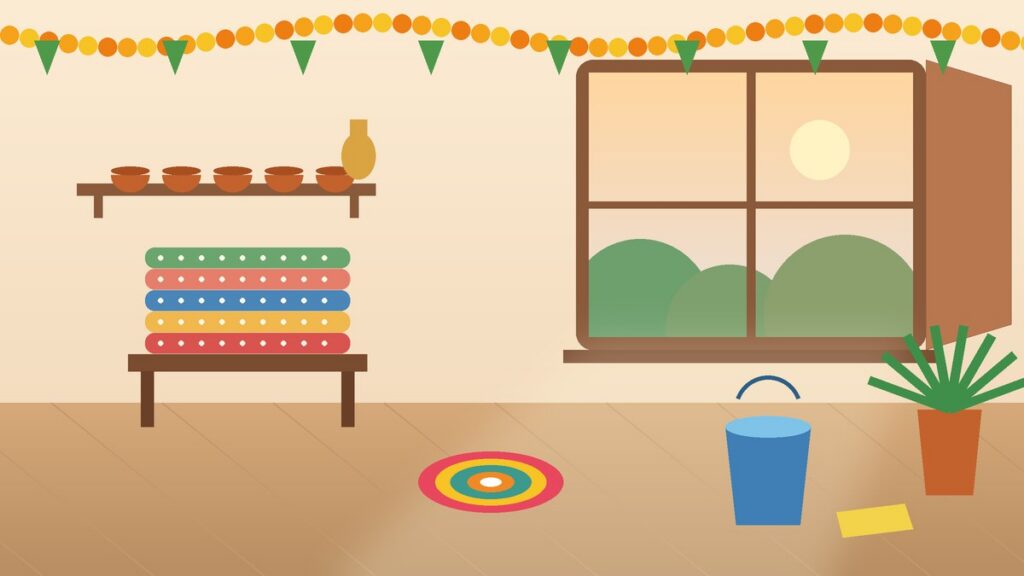
In many Indian homes, Diwali does not start with diyas. It starts with the safai. Lofts get emptied, fans get wiped, the razai comes down from the top shelf, curtains get washed and every corner gets scrubbed. For most people it is tiring but satisfying. For someone with asthma, it can mean a week of coughing, a tight chest and more reliever puffs than usual.
So, can Diwali cleaning trigger asthma? For many people, yes. The good news is that you do not have to skip the festive clean. You just need to plan it differently. This guide is for anyone with asthma, and for the family members who share the safai with them. You will learn which cleaning jobs stir up the most triggers, how to split the work, which products to handle carefully and when breathing symptoms need medical attention.
This article is general education, not personal medical advice. Triggers and reactions vary from person to person, so follow your own doctor’s advice and your written asthma action plan.
1. Why Diwali cleaning can trigger asthma symptoms
Festive cleaning packs a whole year of housework into a few days. That means several common asthma triggers get disturbed at the same time, often in closed rooms.
- Dust: lofts, fan blades, the tops of almirahs and the space behind the fridge collect fine dust that rises into the air the moment you touch it.
- Dust mites: these tiny creatures live in mattresses, pillows, quilts, curtains and soft toys. Shaking out a stored razai or old curtains can release a lot of their allergen at once.
- Mould: moving an almirah or opening a long-closed box after the monsoon often reveals damp patches. Scrubbing or brushing dry mould can send spores into the air.
- Strong cleaning products: bleach, acid-based toilet cleaners, floor cleaners with heavy fragrance and spray products can irritate sensitive airways.
- Paint and whitewash: fresh paint, putty sanding and lime wash add fumes and fine particles to the mix.
- Outdoor air: in north India, Diwali cleaning often overlaps with smoggy autumn air, so even opening windows can feel like a trade-off.
2. Plan your Diwali safai like a project, not a marathon
The single most useful change is time. Instead of cleaning the whole house in one or two days, spread it across two to three weeks before Diwali.
Make a simple room-by-room plan
- List every room and storage area, including the loft, balcony and puja corner.
- Mark the dustiest jobs (loft, fans, old boxes, curtains) and the jobs that involve strong products (bathrooms, kitchen grease).
- Spread those heavy jobs across different days, with lighter days in between.
- Leave the final two or three days before Diwali for light touch-ups only.
Share the work smartly
If you live in a joint family or have house help, this is the time to swap tasks. The person with asthma can take on jobs that create less dust, like sorting clothes, polishing brass with a damp cloth, organising the kitchen shelves or planning decorations. Others can handle the loft, fan blades, old cartons and scrubbing with strong cleaners.
3. How to deal with dust without breathing it in
Dry dusting with a feather duster or dry cloth moves dust into the air, where you breathe it. A few simple swaps keep more of it trapped.
Damp dusting and better tools
- Use a slightly damp microfibre cloth for shelves, fans, window grills and photo frames.
- Wipe fan blades by slipping an old pillow cover over each blade and pulling it back, so dust falls inside the cover instead of onto you.
- If you use a vacuum cleaner, one with a HEPA filter and a sealed body is better at holding fine dust. Empty it outdoors, ideally by someone else.
- Mop the floor with a wet mop instead of sweeping with a dry jhaadu where possible.
Protect yourself during dusty jobs
- Open windows on the side of the house away from heavy traffic, if outdoor air quality allows.
- Leave the room while others do the dustiest work, and return after the dust has settled and the floor has been mopped.
- If you must do a dusty task, a well-fitted N95 mask may reduce how much dust you breathe in. Our guide on choosing an N95 mask with asthma explains fit and comfort. Stop if the mask makes breathing harder.
- Keep your reliever inhaler in your pocket, not in another room.
4. Razai, curtains and stored bedding: handling dust mites
Quilts, blankets and curtains that have been stored for months are some of the biggest dust mite reservoirs in an Indian home. The goal is to clean them without shaking allergen into your face.
- Do not shake out stored razais or blankets indoors. Let someone else take them outdoors or to the terrace.
- Wash what you can in hot water, as hot as the fabric label allows. Hot washing is one of the most effective ways to reduce dust mite allergen.
- Sun-drying helps bedding dry fully, which matters because mites and mould both like damp fabric.
If dust mites are a known trigger for you, our 7-day bedroom makeover for dust mites walks through mattress covers, pillows and soft toys in more detail.
5. Found mould behind the almirah? Do this, not that
After the monsoon, many families discover black or green patches behind cupboards, under sinks or on walls near bathrooms. Mould is a common asthma trigger, and how you deal with it matters.
Do
- Fix the source of damp first, such as a leaking pipe, seepage from a bathroom or a blocked drain. Otherwise the mould returns.
- Let someone without asthma clean small patches while you stay out of the room.
- Clean with a damp cloth and a mild detergent solution, and dry the area well afterwards.
- Ask for professional help for large patches, mould that keeps coming back or damp inside walls.
Don’t
- Dry-brush or scrape mould, which spreads spores.
- Paint over mould without fixing the damp. It usually grows back under the new paint. If you do paint, plan safer re-entry after painting.
- Mix different cleaning products to make a stronger mould remover.
For a longer-term plan, read our guide on preventing mould growth at home.
6. Cleaning products: bleach, acids, phenyl and sprays
Strong smells often feel like proof that something is clean. For people with asthma, strong fumes can be a trigger in their own right.
Never mix cleaning products
This is the most important safety rule of the whole safai. Mixing bleach with acid-based toilet cleaners, or bleach with ammonia-based cleaners, can release harmful gases that irritate the lungs. This can be dangerous for anyone, not just people with asthma. Use one product at a time, rinse well and do not combine them in a bucket to save time.
Choose gentler options where you can
- Prefer liquid cleaners poured onto a cloth over spray bottles. Sprays put fine droplets into the air you breathe.
- Choose fragrance-free or mild-smelling products for daily cleaning.
- Use warm water, mild soap and a microfibre cloth for most surfaces. Many jobs do not need strong chemicals.
- When strong products are needed, such as for toilets, let someone else use them with the door and window open, and stay away until the smell clears.
Our asthma-friendly cleaning routine for kitchens and bathrooms has a ready list of what to keep in a low-irritant cleaning caddy all year round.
7. Mothballs, whitewash and other festive extras
Naphthalene balls in the almirah
Many families tuck naphthalene balls among clothes during the Diwali clean-out. They give off a strong vapour that can irritate breathing, and they are toxic if a child or pet swallows them. If you have asthma, consider skipping them, especially in bedroom cupboards. Clean, fully dry clothes in sealed bags or boxes are a gentler way to keep insects out. If you do use them, keep them well out of children’s reach.
Whitewash and painting
If the house is getting a fresh coat of paint or lime wash, try to schedule it early and stay elsewhere while the work happens and for a few days after, if possible. Keep rooms ventilated until the smell fades. Our guide on low-VOC paints and safer home upgrades covers what to ask your painter.
Diyas, incense and the final day
Once the cleaning is done, the festival brings its own triggers, like incense, camphor and firecracker smoke. Our guide to a safer Diwali with asthma covers the festival nights themselves.
8. A quick Diwali cleaning checklist for people with asthma
- Start two to three weeks early and spread heavy jobs out.
- Hand the loft, fans, old cartons and strong cleaners to someone else where possible.
- Damp-dust and wet-mop instead of dry dusting and sweeping.
- Wash bedding and curtains in hot water and dry them fully.
- Never mix cleaning products. Prefer pour over spray.
- Keep your reliever inhaler with you and take breaks.
- Keep taking your prescribed preventer medicine as advised by your doctor.
9. When to seek medical help
Mild symptoms that settle quickly once you step away from the dust are common. But some signs mean your asthma needs attention.
Talk to your doctor soon if
- You are needing your reliever inhaler more often than usual during the cleaning weeks.
- You are waking at night with cough, wheeze or a tight chest.
- Symptoms do not settle within a day or so of stopping the cleaning.
- You are unsure what your asthma action plan says to do when symptoms increase.
Call 112 or go to the nearest emergency department if
- You are very breathless or finding it hard to speak in full sentences.
- Your lips or fingertips look blue or grey.
- Your reliever is not helping, or you need it again very soon.
- Someone with asthma becomes drowsy, confused or exhausted from the effort of breathing.
If you have breathed in fumes from mixed cleaning products, move to fresh air straight away and seek medical help, especially if you have chest pain, coughing that will not stop or difficulty breathing.
Siddhant’s POV: A clean home should not cost you your breath
I have lived with asthma for more than 30 years, so the festive safai is something I know well from the inside. Dust, old bedding and strong cleaners are all part of the season, and they all matter when your airways are sensitive.
One thing that experience has taught me is how much the air around you shapes how you feel. My breathing improved after I moved from Delhi NCR to Dehradun. Most people cannot change cities, but almost everyone can change how the cleaning gets done at home.
That is why I think the real festive skill is planning, not scrubbing harder. Spread the work out, share the dustiest jobs and choose gentler products. It helps you actually enjoy it when the diyas are lit.
This section reflects Siddhant Jain’s experience of living with asthma for more than 30 years and his personal observation after moving from Delhi NCR to Dehradun.
Conclusion
Diwali cleaning can trigger asthma because it disturbs dust, dust mites, mould and chemical fumes all at once. A little planning changes that. Start early, split the work, damp-dust, wash bedding hot, fix damp before treating mould, never mix cleaning products and keep your reliever close.
Take the next step with Asthma Friend
- Join our community: Connect with people who understand life with asthma at Asthma Friend.
- Learn through play: Explore free educational games at Asthma Friend Games.
- Create your free asthma action plan: Use the Asthma Friend Action Plan Generator and review it with your doctor so it reflects your prescribed treatment.
Frequently asked questions
It can for some people. Festive cleaning disturbs dust, dust mite allergen, mould spores and fumes from strong products at the same time. Spreading the work out, damp-dusting and letting others handle the dustiest jobs can lower your exposure. Follow your asthma action plan if symptoms start.
A well-fitted N95 mask may reduce how much dust you breathe in during unavoidable dusty jobs. Cloth masks and dupattas are much less effective against fine dust. If a mask makes breathing feel harder, stop and step away, and discuss mask use with your doctor.
No. Mixing bleach with acid-based toilet cleaners or ammonia-based cleaners can release harmful gases that irritate the lungs. Use one product at a time, rinse well in between and keep the room ventilated.
Naphthalene balls give off a strong vapour that can irritate breathing, and they are toxic if swallowed by children or pets. Many people with asthma prefer to skip them and store clean, dry clothes in sealed bags or boxes instead.
Ideally, let someone without asthma clean small patches with a damp cloth and mild detergent while you stay out of the room. Fix the source of damp first, never dry-brush mould and get professional help for large or recurring patches.
Last reviewed: 1 November 2026
Information on this page was written against widely published guidance from national and international respiratory health bodies. It is educational only and is not a substitute for personal medical advice from a doctor.

About the author
Siddhant Jain
Siddhant Jain is the founder of Asthma Friend. He has lived with asthma for more than 30 years. After moving from Delhi NCR to Dehradun, his breathing improved, and he built Asthma Friend to give Indian patients and caregivers practical, empathetic education. The content is educational and is not a substitute for advice from a doctor.
Related posts:
 Asthma and Train Travel in India: A Preparation Checklist for Sleeper and AC Coaches
 How the Weather Affects Asthma: From Summer Heat to Pre-Monsoon Showers
 Dust Mites in Indian Homes: A 7-Day Bedroom Makeover
 Kitchen Chimneys & Exhaust Fans: Cutting Indoor PM2.5 at Home
 The Impact of Strong Fragrances and Perfumes on Asthma
 Cold Air and Asthma: How to Plan Walks and Morning Commutes
 Asthma and India’s AQI in Stubble Season: How to Read the Colours and Plan Your Day
 Your Environment Matters: How Noise, Heat, and Urban Living Affect Asthma and BP
 Morning vs. Night Asthma: Why Symptoms Worsen at Certain Times
 How to Prepare for an Asthma Appointment When You Feel Fine