
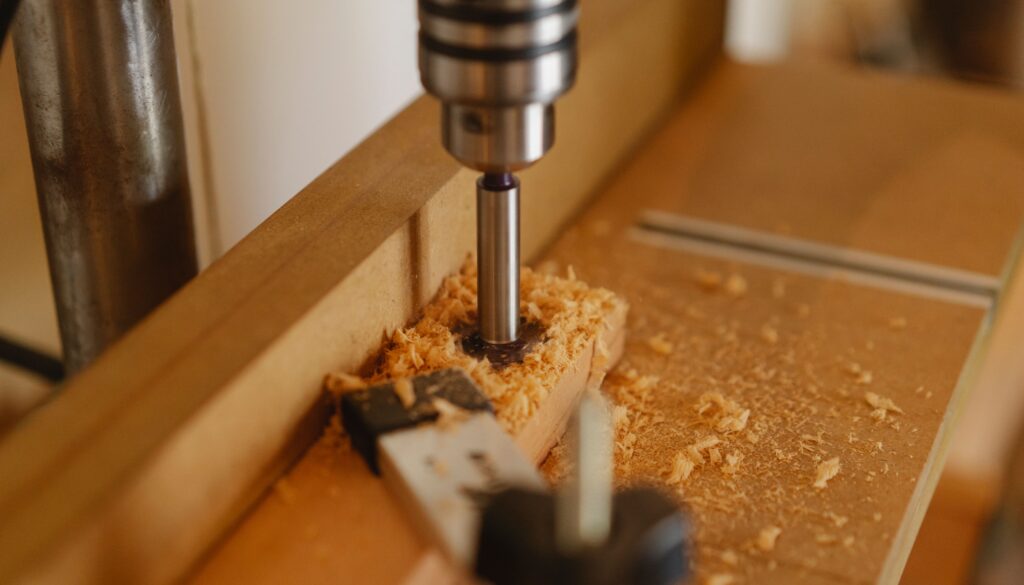
A small home repair can create a surprisingly large amount of dust. A worker drills a few holes to install a shelf, sands a wall before painting, or applies wall putty to prepare a room for renovation.
For someone living with asthma, that dust is more than a cleaning nuisance. This is common from Indian flat renovations to drywall repairs in the US, UK, Australia or Canada.
This article is general education, not medical advice. Everyone’s asthma is different. Please talk to a doctor about individual symptoms and treatment, and never start, stop or change any asthma medicine based on a blog post.
Drilling, sanding and wall putty work can irritate asthma when fine dust becomes airborne. Isolate the room, ask for dust control, stay away during the dustiest steps if you can, and clean thoroughly before you use the space again. Talk to your doctor if dust regularly worsens your symptoms.
1. Can drilling dust trigger asthma?
Drilling into plaster, brick, concrete, tile or drywall releases airborne particles. Many people notice coughing, wheezing or chest tightness when fine dust hangs in the air.
- Ask for vacuum extraction or lower-dust methods where practical.
- Isolate the room and keep the person with asthma elsewhere.
- Do not stand over the work while dust is flying.
- Wipe with a damp cloth and HEPA vacuum if available before re-entry.
2. Sanding and wall putty dust
Sanding is often dustier than drilling. Putty, joint compound and filler create inhalable particles when mixed, sanded or swept. Treat the dust load as the concern, whatever the product is called in your country.
- Use dust extraction when possible.
- Stay elsewhere during sanding and first cleanup if you can.
- Avoid dry sweeping.
3. Paint fumes after prep work
After putty comes paint. See safer re-entry after painting and paint as an asthma trigger. Prefer low-VOC products and sleep elsewhere until odour fades.
4. Practical reduction checklist
- Tell workers someone has asthma.
- Move bedding out of the work room.
- Seal doors if needed.
- Damp wipe and vacuum after work.
- Change bedding if dust settled on the bed.
More help: neighbour renovations, construction dust overview, asthma triggers, asthma symptoms.
5. If symptoms start
Leave the dusty area, follow your action plan, and do not return while dust is high. If breathing worsens severely, call your local emergency number (112 in India, 911 in the US/Canada, 999 in the UK, 000 in Australia).
Siddhant’s POV: Home repairs should not mean ignoring your breathing
Living with asthma for more than 30 years has taught me that everyday indoor work can change the air we breathe.
My breathing improved after I moved from Delhi NCR to Dehradun, but I still stay away during the dustiest repair steps.
Siddhant Jain, founder of Asthma Friend, has lived with asthma for more than 30 years.
Conclusion
Drilling, sanding and wall putty can irritate asthma by creating fine dust. Isolate work, clean thoroughly, and involve your doctor if renovations repeatedly trigger symptoms.
Take the next step with Asthma Friend
- Join our community: Connect with people who understand life with asthma at Asthma Friend.
- Learn through play: Explore free educational games at Asthma Friend Games.
- Create your free asthma action plan: Use the Asthma Friend Action Plan Generator and keep a copy handy.
Frequently asked questions
Yes, released particles may irritate airways in some people with asthma.
Dust from mixing, sanding or cleanup may irritate airways for some people.
Often yes, because it creates fine particles quickly. Containment matters.
It depends on scale and sensitivity. Staying elsewhere during sanding is often wiser.
It may help a little but cannot replace source control and cleaning.
Only when it helps without spreading dust or pulling in dirty outdoor air.
If severe breathlessness or a reliever that is not helping occurs, call your local emergency number (112 in India, 911 in the US/Canada, 999 in the UK, 000 in Australia).
Last reviewed: 1 November 2026
Information on this page was written against widely published guidance from national and international respiratory health bodies. It is educational only and is not a substitute for personal medical advice from a doctor.

About the author
Siddhant Jain
Siddhant Jain is the founder of Asthma Friend. He has lived with asthma for more than 30 years. After moving from Delhi NCR to Dehradun, his breathing improved, and he built Asthma Friend to give Indian patients and caregivers practical, empathetic education. The content is educational and is not a substitute for advice from a doctor.
Related posts:
 How Long After Painting Is It Safe for an Asthma Patient to Enter a Room?
 The Impact of Air Conditioning on Asthma: Helpful or Harmful?
 How to Manage Asthma While Working from Home
 Asthma and Oral Health: Understanding the Connection and Prevention Tips
 Asthma and Obesity: Understanding the Connection
 Asthma and Type 2 Diabetes: Understanding the Link and Managing Both Conditions
 Silent Asthma vs. Anxiety: How to Tell the Difference
 Journaling Prompts for Asthma Self-Awareness: A Simple Habit to Understand Your Triggers and Patterns
 Workplace Stress: The Hidden Trigger Behind Asthma and High Blood Pressure
 COVID-19 and Asthma: What You Need to Know in 2025