
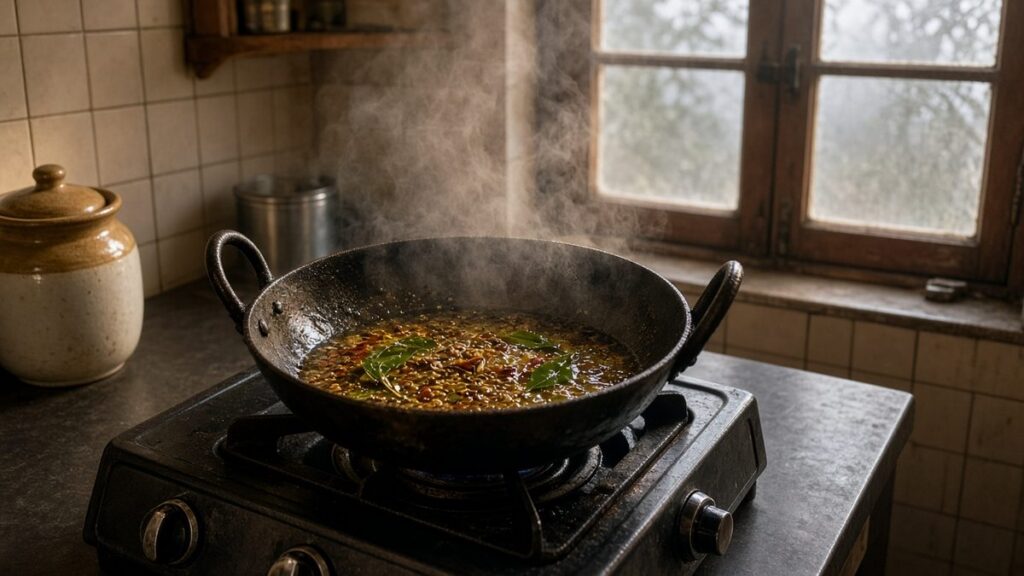
Winter in an Indian kitchen means sarson ka saag with a sizzling tadka, pakoras on a foggy evening, gajar ka halwa on a slow flame and bajra rotis roasted straight on the fire. It also means windows shut against the cold. For people with asthma, that combination of smoky cooking and closed windows can make the kitchen one of the hardest places in the house to breathe.
This guide is about tadka smoke and asthma in winter: which cooking habits create the most smoke and fumes, why closed windows make it worse, who should stand back, and simple changes that let the family enjoy winter food with less coughing.
This article is general education, not medical advice. Everyone’s triggers are different. Please talk to your doctor about your symptoms and treatment, and never start, stop or change any medicine based on a blog post. If someone is struggling to breathe, call 112.
1. Why winter cooking can trigger asthma
Cooking releases fine particles, gases and strong smells. Gas stoves, hot oil, burning spices and charred food all add to indoor air pollution. In summer, open windows and fans carry much of it away. In winter, many families close everything to keep the warmth in, so smoke and fumes linger in the kitchen and drift into living rooms and bedrooms.
For people with sensitive airways, this can mean coughing during or after cooking, a tight chest, sneezing or watery eyes. Our guide on asthma irritants explains how irritants differ from allergens.
2. The smokiest winter cooking habits
2.1 Tadka and tempering
The tadka is the heart of so many dishes. But heating oil or ghee until it is very hot, then adding mustard seeds, cumin, dried red chillies, hing and garlic, can release a sharp burst of smoke and pungent fumes. Dried red chillies in hot oil are particularly known for making people cough.
2.2 Mustard oil smoke
Many North and East Indian families heat mustard oil until it smokes before cooking, a traditional step to mellow its pungent taste. That visible smoke is exactly what can irritate airways. Any oil heated past its smoking point produces smoke and fumes.
2.3 Deep frying
Pakoras, puris, samosas, mathris and jalebis are winter favourites. Deep frying keeps a large amount of oil at high heat for a long time, releasing steady fumes and oil droplets into the air.
2.4 Roasting on an open flame
Roasting brinjal for baingan bharta, chillies, papads, corn and rotis directly on the gas flame creates smoke from charring. Bajra and makki rotis cooked on a tawa and then on the flame add more.
2.5 Burnt food and dry roasting
Dry roasting spices, sooji or besan can smoke if the heat is too high or attention slips. A pan that is left on too long can fill the room quickly.
3. The shut-window problem
Closed windows are understandable in a cold winter, especially in North India. But a sealed kitchen traps smoke. A few things help:
- Use the chimney or exhaust fan every time you cook, and keep it running for a while after you finish. Our guide on kitchen chimneys and exhaust fans explains how to get the best from them.
- Open a window a little while cooking, even a small gap, to let fresh air in as the fan pulls smoky air out.
- Close the kitchen door to stop smoke spreading to the rest of the house.
- Air the house briefly when outdoor air quality is better. Our guide on ventilation on smog days helps you balance fresh air and pollution.
4. Cooking habits that reduce smoke
You do not have to give up your favourite dishes. Small changes in how you cook can make a real difference.
- Lower the heat for tadka: heat oil until it is hot enough for the seeds to splutter, not until it smokes heavily.
- Add chillies last and carefully: add dried red chillies for a few seconds at the end, or use chilli powder off the heat if your family is sensitive.
- Use a lid: cover the pan quickly after adding spices to the hot oil to contain the burst.
- Shorten deep frying sessions: fry in smaller batches, or try shallow frying, air frying or baking for some snacks.
- Avoid burning: keep an eye on dry roasting and turn the heat down early.
- Use a tawa instead of direct flame for roasting rotis or papads if smoke bothers someone.
- Keep the stove clean: burnt-on food and old oil on burners smoke every time you cook.
If your family insists on smoking the mustard oil, ask the cook to do it with the chimney on high and a window open, and keep the person with asthma out of the kitchen for those minutes.
5. Who should stand back
Not everyone needs to be in the kitchen while the tadka sizzles.
- The person with asthma: if cooking smoke is a known trigger, step out during tadka, frying and roasting. Return once the air clears.
- Children with asthma: keep them in another room with the door shut during smoky cooking.
- Older family members: especially those with lung or heart conditions.
In joint families, the cooking is often shared. Our guide on how joint families can support a member with asthma has ideas for dividing tasks so the person with asthma takes the less smoky jobs, such as chopping, kneading or plating.
6. If you are the main cook and have asthma
Many people with asthma are the ones cooking for the whole family. Some practical ideas:
- Prepare everything before you start so the stove time is shorter.
- Turn the chimney on before you light the stove.
- Stand slightly back from the pan when adding spices to hot oil.
- Ask someone else to do the tadka or frying on bad days.
- Keep your reliever inhaler in the kitchen drawer or your pocket, not in the bedroom.
- Clean the kitchen with gentle, low-scent products. Our asthma-friendly cleaning routine for kitchens and bathrooms has suggestions.
7. A winter kitchen checklist
- Chimney or exhaust fan on before cooking and for a while after.
- A window open a little, kitchen door closed.
- Moderate heat for tadka, lids ready.
- Frying in small batches or alternative methods for some snacks.
- Person with asthma out of the kitchen during the smokiest steps.
- Stove and chimney filters cleaned regularly.
- Reliever inhaler within reach.
8. When to talk to your doctor
Talk to your doctor if you notice regular coughing, wheezing or chest tightness during or after cooking, or if you are using your reliever more often in winter. Your doctor can review your asthma control and your action plan.
Call 112 or go to the emergency department if someone is severely breathless, cannot speak in full sentences, has blue or grey lips, or is not improving with their reliever.
Siddhant’s POV: Enjoying winter food while respecting breathing needs
I have lived with asthma for more than 30 years. My breathing improved after I moved from Delhi NCR to Dehradun.
My view is that enjoying shared meals should not require someone to stay beside cooking smoke. I would encourage households to discuss ventilation, smoky cooking tasks and a comfortable place away from the kitchen. I believe sharing the work is kinder than telling a person with asthma to tolerate the tadka. Family food traditions deserve practical adjustments when someone’s breathing needs attention.
Siddhant Jain, founder of Asthma Friend, has lived with asthma for more than 30 years.
Conclusion
Winter cooking brings warmth and comfort, but tadka smoke, mustard oil heated to smoking, deep frying and roasting on the flame can all trigger asthma, especially with windows shut. Use the chimney or exhaust fan every time, open a window a little, lower the heat, cover pans, fry less and let the person with asthma step away during the smokiest moments. Talk to your doctor if cooking regularly sets off symptoms, and call 112 in an emergency.
Take the next step with Asthma Friend
- Join our community: Connect with people who understand life with asthma at Asthma Friend.
- Learn through play: Explore free educational games at Asthma Friend Games.
- Create your free asthma action plan: Use the Asthma Friend Action Plan Generator and keep a copy where you and your family can find it.
Frequently asked questions
Yes, for some people. Hot oil, dried chillies and spices can release smoke and pungent fumes that irritate sensitive airways. Lower heat, a lid and good ventilation help.
Heating any oil until it smokes releases fumes that can irritate airways. If your family smokes mustard oil, do it with the chimney on and a window open, and keep the person with asthma away.
Run a chimney or exhaust fan, open a window slightly while cooking, close the kitchen door and avoid burning food.
If frying fumes bother you, step away or let someone else fry, use smaller batches, or try other cooking methods for some dishes.
Leave the kitchen for fresh air and follow your action plan. Call 112 if breathing is severe or your reliever is not helping, and talk to your doctor if it keeps happening.
Free: Smog Season Survival Guide
A practical 27-page guide to breathing easier with asthma through India's pollution months: AQI explained, clean air at home, masks, kids and school, plus printable checklists. Join the free Asthma Friend newsletter and we'll email it to you.


Last reviewed: 8 November 2026
Information on this page was written against widely published guidance from national and international respiratory health bodies. It is educational only and is not a substitute for personal medical advice from a doctor.

About the author
Siddhant Jain
Siddhant Jain is the founder of Asthma Friend. He has lived with asthma for more than 30 years. After moving from Delhi NCR to Dehradun, his breathing improved, and he built Asthma Friend to give Indian patients and caregivers practical, empathetic education. The content is educational and is not a substitute for advice from a doctor.
Related posts:
 Is Your Child Wheezing With Every Cold? Viral Wheeze vs Asthma in Children Under 5
 Rangoli Colours and Asthma: Are Powders and Chalk Dust a Trigger?
 Night-time Reflux Hacks for Asthma: Meal Timing, Bed Angle, and Smart Snacks
 Cold Air and Asthma: How to Plan Walks and Morning Commutes
 Is Your Home Summer-Ready for Asthma? A Cleaning Checklist
 Friendship and Asthma: How My Friends Helped Me Breathe Easier
 Renovating? Low-VOC Paints and Safer Home Upgrades for Asthma-Friendly Homes
 Should You Exercise Outdoors When Air Quality Is Poor? Asthma Considerations
 When the Whole Family Gets Sick: Protecting the Person with Asthma During Flu Season
 Asthma and Staying with Relatives: How to Discuss Household Triggers