
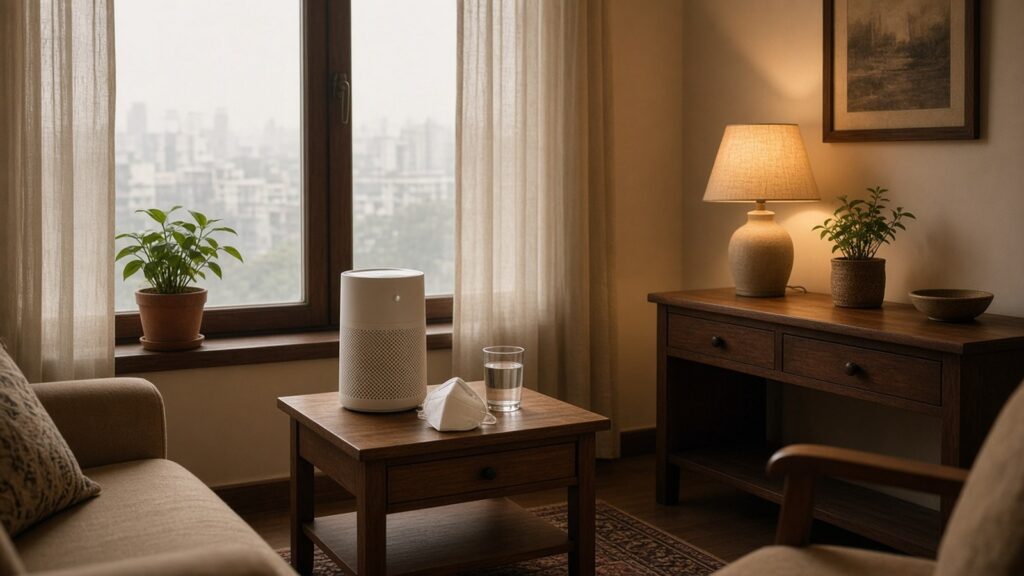
On a bad smog morning in North India, the instinct is simple: shut every window, switch on the fan or AC, and wait it out. That instinct protects you from outdoor pollution. It can also leave a flat full of cooking fumes, bathroom steam, stale air and rising humidity. Good ventilation during smog asthma care is not about choosing windows or walls. It is about timing.
This guide is for families who need practical, free steps when the AQI looks ugly. You will learn when a short window opening might help, when to keep rooms sealed, how to use kitchen and bathroom exhaust without inviting street air in, and how to keep one cleaner-air room without turning your home into a stuffy box. It is written for Indian flats and houses, not laboratory settings.
This article is general education, not medical advice. Everyone’s asthma is different. Please talk to a doctor about individual symptoms and treatment, and never start, stop or change any asthma medicine based on a blog post.
1. Why sealed rooms and open windows both cause trouble
Outdoor air on a high-pollution day can irritate airways. Indoor air that never refreshes can also bother people with asthma. Cooking oil mist, cleaning smells, incense leftover from the morning, damp towels and crowded living rooms all build up when nothing moves.
Typical smog-day indoor problems include:
- Kitchen PM and odour that hang around after tadka, frying or evening chai snacks.
- Bathroom humidity that creeps into bedrooms if exhaust is weak or unused.
- Stale living-room air when everyone stays indoors with doors shut for hours.
- Fragrance build-up from room sprays, floor cleaners or incense used earlier in the day.
- Over-drying or over-damp rooms when heaters, AC or wet laundry change the air without a plan.
You do not need expensive equipment to think this through. A simple habit of checking outdoor air, planning short exhaust bursts and protecting one quieter room already helps many households. For a broader look at pollution and breathing, see our overview of the impact of air pollution on asthma. For reading the numbers themselves, keep our AQI guide for asthma in India handy.
2. Check outdoor air before you open anything
Before you decide to cross-ventilate, look at the day’s air quality for your exact area, not just the city average. Morning and late evening are often the worst windows in winter smog season. Midday can be a little better on some days, but not always.
A quick pre-open checklist:
- Glance at a trusted AQI reading for your neighbourhood, not only the airport or a distant station.
- Step onto the balcony for ten seconds. If the air smells sharp, smoky or like exhaust, keep windows shut.
- Notice visibility. A grey-brown haze that hides nearby buildings usually means outdoor air is not your friend.
- Ask how you feel. If your chest already feels tight from a short balcony visit, do not invite that air inside.
If outdoor air is clearly bad, treat window opening as rare and brief, not as all-day fresh air. Your goal is controlled exchange, not an open-house breeze.
3. Timed window opening when outdoor air is only moderately bad
On days when AQI is imperfect but not extreme, a short, planned opening can clear indoor smells without flooding the home. Think minutes, not hours.
Practical timing ideas many Indian homes use:
- One room at a time. Open windows in the kitchen or living room for 5 to 10 minutes, then close them. Avoid opening the whole flat at once on a smoggy day.
- After cooking, not during. Finish cooking with chimney or exhaust on, then do a short purge if outdoor air allows.
- Away from peak traffic. Skip openings that face a jammed main road during school or office rush hours.
- Use opposite windows carefully. Cross ventilation is useful only when outdoor air is acceptable. On bad days it can pull street dust straight through.
- Close again promptly. Set a phone timer so a short airing does not turn into a forgotten open window.
If someone in the home is already coughing more than usual, or a child’s night was rough, lean towards keeping windows shut and using exhaust-only strategies instead. Talk to your doctor if symptoms are changing; do not treat ventilation tweaks as a substitute for medical care.
4. Kitchen and bathroom exhaust: your free first line
Exhaust fans and chimneys move air out without needing a wide street-facing window open for long. Used well, they reduce the indoor load that makes sealed homes feel stuffy.
Kitchen habits that help
- Switch the chimney or exhaust on before you heat oil, not after the smoke appears.
- Keep the chimney filter cleaned on a schedule you can stick to. A clogged filter moves less air.
- Close the kitchen door during heavy frying so fumes do not drift into bedrooms.
- If you must open a kitchen window briefly, open the one that vents away from the main road when possible.
- Avoid strong aerosol kitchen fresheners to cover cooking smells; they add another irritant.
Bathroom habits that help
- Run the exhaust during and for 10 to 15 minutes after a hot shower.
- Hang wet towels to dry where air can move, not in a closed bedroom corner.
- Fix slow leaks that keep walls damp. Persistent dampness can encourage mould, which bothers many people with asthma.
For more on cutting cooking-related particles at home, see our guide to kitchen chimneys and exhaust fans for indoor PM2.5.
5. Build one cleaner-air room without sealing the whole house forever
On severe smog days, many families pick one bedroom or living corner as the recovery room. The aim is fewer indoor sources and less outdoor air leaking in, while the rest of the home still handles cooking and bathing.
Cleaner-air room basics:
- Choose a room away from the busiest road side if you have a choice.
- Keep the door closed when outdoor air is bad, especially during peak traffic.
- Skip incense, dhoop, mosquito coils and strong floor cleaners in that room.
- Limit dusting to a damp cloth rather than dry sweeping that lifts particles.
- If you use a room heater, watch dryness and leave a small water bowl nearby if the air feels harsh. Our guide on room heaters for people with asthma covers heater choices and comfort.
- If you own a purifier, this is usually the room where it earns its keep. Size and filter care matter more than brand chatter.
Humidity swings can make a sealed room feel worse. Too dry air can irritate throats; too damp air can feel heavy and encourage mould. Our note on humidity and asthma explains the balance in plain language.
6. What not to do on high-AQI days
A few common habits make indoor air worse just when outdoor air is already bad:
- Burning incense or scented candles to make a closed flat smell festive.
- Dry sweeping carpets and balconies at noon and leaving the balcony door wide open.
- Running a strong room freshener on loop because the kitchen smell lingered.
- Leaving the main door ajar for hours for delivery staff on a smoky afternoon.
- Assuming an AC alone cleans outdoor pollution. Cooling is not the same as filtering.
- Blocking bathroom exhaust vents with tape because of dust, then never reopening them.
Small changes around the home add up. For a wider home checklist beyond smog weeks, see how to create an asthma-friendly home.
7. A simple day plan for a severe smog day
Here is a practical rhythm you can adapt:
- Morning: Check AQI. Keep windows shut. Run bathroom exhaust after showers. Keep the cleaner-air room door closed if nights were rough.
- Cooking times: Chimney on early. Kitchen door closed. Short outdoor purge only if the reading and smell outside are clearly better.
- Afternoon: Prefer indoor tasks. If you must dust, use a damp cloth. Avoid renovation or drilling if you can postpone.
- Evening peak: Traffic and cooking often overlap. Keep street-facing windows closed. Use exhaust rather than open-window cross breeze.
- Night: Settle the cleaner-air room. Keep inhalers where you can reach them without searching in the dark.
Call 112 or go to the nearest emergency department if someone has severe breathlessness, cannot speak full sentences, has blue or grey lips, or their reliever is not helping. Indoor strategies never replace emergency care.
8. When to talk to your doctor about smog-season patterns
Ventilation habits help comfort, but they are not a treatment plan. Contact your doctor if smog weeks bring more night waking, more reliever use than usual, chest tightness that lasts into the next day, or school and work days regularly cut short. Bring a simple symptom diary if you can. Do not change doses or add new medicines on your own.
If your clinician has already given you a written action plan, follow those steps. If you do not have one yet, ask for one at your next visit so household decisions and medical steps sit side by side.
9. Shared flats, paying guests and rented rooms
Not everyone controls every window in the home. Paying-guest rooms, joint families and rented flats need negotiated habits.
- Agree quiet hours for cooking exhaust so roommates know why the kitchen door stays shut on smog evenings.
- Ask landlords before sealing vents permanently; temporary draft stoppers on severe days are often enough.
- If you only control one room, treat that room as your cleaner-air base and keep incense out of it.
- Carry a small note of your needs when you travel between family homes in winter.
Polite clarity beats suffering in silence. Most households will accommodate short, specific requests when you explain they are about breathing, not fussiness.
Siddhant’s POV: Closed windows taught me timing, not fear
I have lived with asthma for more than 30 years, including many North Indian winters when closing every window felt like the only safe move. My breathing improved after I moved from Delhi NCR to Dehradun, and that change made outdoor air less of a daily battle. It also made me notice how stale a shut flat can become if cooking fumes and bathroom steam never leave.
What helps me now is timing: brief airing when outdoor air allows, steady use of exhaust, and one quieter room when the haze looks thick. Those are household habits, not medical instructions, and they work best beside a doctor’s plan.
Siddhant Jain, founder of Asthma Friend, has lived with asthma for more than 30 years.
Conclusion
Ventilation during smog asthma season is a timing skill. Shutting everything forever can trap indoor irritants. Opening everything on a grey, smoky morning can invite outdoor pollution in. Check the air, use kitchen and bathroom exhaust as your free tools, open windows briefly only when outdoor conditions allow, and protect one cleaner-air room on the worst days. Pair those habits with your doctor’s advice, keep emergency numbers close, and treat severe breathing problems as urgent every time.
Take the next step with Asthma Friend
- Join our community: Connect with people who understand life with asthma at Asthma Friend.
- Learn through play: Explore free educational games at Asthma Friend Games.
- Create your free asthma action plan: Use the Asthma Friend Action Plan Generator and keep a copy handy through the festive season.
Frequently asked questions
Only when outdoor air quality looks and smells clearly better, and then for short timed bursts. On severe haze days, prefer exhaust fans and a cleaner-air room instead of long open-window periods.
Constant sealing can trap cooking fumes, humidity and cleaning smells. Use kitchen and bathroom exhaust, limit indoor irritants, and air briefly only when outdoor conditions allow.
Cooling alone is not the same as filtering outdoor pollution. An AC can recirculate indoor air, but it does not automatically remove smog particles the way a suitable filter setup might.
Run the chimney or exhaust before cooking, keep the kitchen door closed during frying, and avoid long street-facing window openings on high-AQI hours.
It is one bedroom or quiet corner kept closed to busy roads, free of incense and strong sprays, with damp dusting and, if you have one, a well-maintained purifier.
Call 112 or go to the nearest emergency department for severe breathlessness, difficulty speaking, blue or grey lips, or a reliever that is not helping.
Last reviewed: 1 November 2026
Information on this page was written against widely published guidance from national and international respiratory health bodies. It is educational only and is not a substitute for personal medical advice from a doctor.

About the author
Siddhant Jain
Siddhant Jain is the founder of Asthma Friend. He has lived with asthma for more than 30 years. After moving from Delhi NCR to Dehradun, his breathing improved, and he built Asthma Friend to give Indian patients and caregivers practical, empathetic education. The content is educational and is not a substitute for advice from a doctor.
Related posts:
 Rangoli Colours and Asthma: Are Powders and Chalk Dust a Trigger?
 How to Build an Asthma Friendly Daily Routine
 Hotel Rooms and Asthma: Questions to Ask Before You Book
 Asthma and Staying with Relatives: How to Discuss Household Triggers
 Diwali and Asthma: How to Celebrate Safer When Fireworks and Smoke Fill the Air
 Asthma and India’s AQI in Stubble Season: How to Read the Colours and Plan Your Day
 Smog or Fog? Why Hazy Winter Mornings Are Not All the Same for Asthma
 The Impact of Asthma on Your Voice
 Raksha Bandhan Bond: How Siblings Can Support Each Other in Asthma Care
 Why Asthma Is Not “Just Breathlessness”