
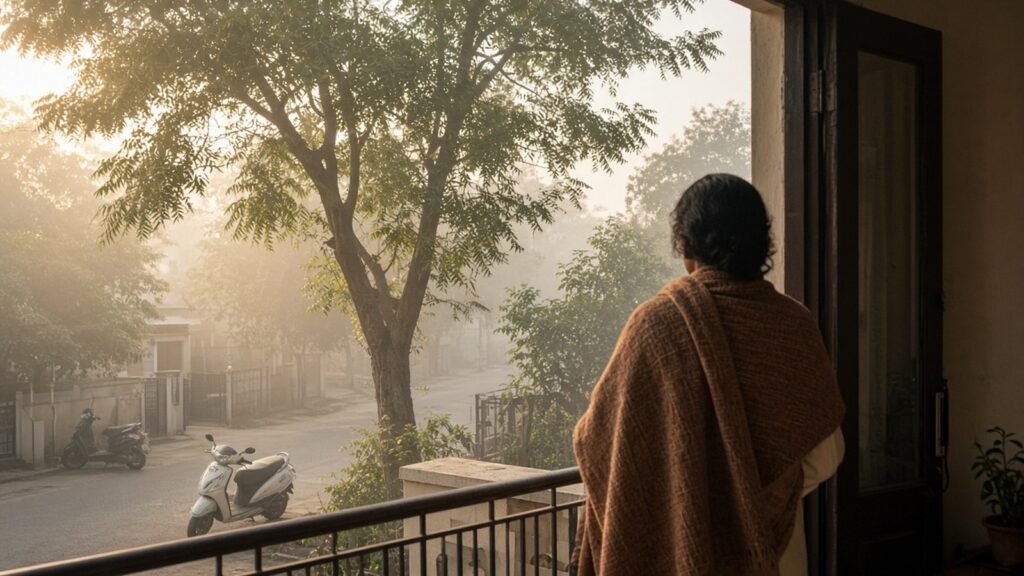
Winter mornings in North India often look the same from the balcony: a pale grey sky, soft light and streets that feel quieter than usual. Many of us call the whole scene fog. For someone living with asthma, though, not every hazy morning is the same. Some are mostly water vapour. Others are smog vs fog asthma questions in disguise, with pollution hanging low and airways working harder before breakfast.
This guide is a practical decoder for those early hours. You will learn how water fog differs from pollution haze, what simple checks to make before a walk or school run, and how to plan the morning without turning every day into a panic. It is literacy for your lungs, not a weather lecture.
This article is general education, not medical advice. Everyone’s asthma is different. Please talk to a doctor about individual symptoms and treatment, and never start, stop or change any asthma medicine based on a blog post.
1. Why the smog-versus-fog question matters
Cold air alone can bother many people with asthma. Add fine particles and irritant gases, and the same short walk to the metro or the school gate can feel very different. Families often treat every white morning the same way: either cancel everything, or push through as if nothing has changed. Neither extreme is helpful every day.
Knowing whether you are looking at fog, smog or a mix helps you decide:
- Whether outdoor exercise can wait until mid-morning or later
- Whether a mask makes sense for a short commute
- Whether windows stay closed for another hour
- Whether the school run needs a slower, calmer plan
Our guide on why winter mornings are risky for people with asthma in India covers cold air, traffic and timing. This piece zooms in on reading the haze itself.
2. What fog usually is (and is not)
Fog, in the everyday sense most of us mean, is tiny water droplets suspended near the ground. It forms when cool, moist air meets surfaces that help water condense. Visibility drops. Sounds can feel muffled. Clothes feel damp. In hill stations and river plains, this can happen on relatively cleaner air days too.
Fog by itself is not the same as dirty air. Some people still feel tightness because the air is cold and damp, or because they breathe faster when visibility is low and they feel anxious. That is still worth taking seriously. It just means the plan may focus more on warming up, pacing and covering the mouth and nose with a scarf, rather than treating the morning as a high-pollution event.
Clues that lean towards water fog:
- The air smells relatively clean, or only of wet earth and dew
- Surfaces are wet: railings, car windscreens, leaves
- As the sun strengthens, the haze thins in a fairly even way
- Your usual AQI app shows moderate or better numbers nearby
- Neighbours’ outdoor drying lines are damp rather than smelling of smoke
3. What smog and pollution haze feel like
Smog and pollution haze are not romantic winter weather. They are mixtures of particles and gases that can include fine particulate matter, smoke from burning, vehicle exhaust and other irritants. In North India after harvest and through early winter, many mornings carry a brownish or yellowish cast rather than a soft white one.
Clues that lean towards pollution haze or smog:
- Smell: smoke, something acrid, or a persistent traffic odour even on quiet lanes
- Colour: brown, yellow-grey or “dirty white,” not a clean mist
- Eyes and throat: stinging, scratchiness or a sudden cough on stepping out
- AQI apps: high or very high readings for your neighbourhood or nearby stations
- Persistence: the haze stays thick even after mid-morning sun
None of these clues is perfect on its own. Fog and pollution often mix. Treat them as a pattern, not a single test. For the bigger picture of how dirty air affects breathing, see the impact of air pollution on asthma.
4. A simple morning check before you step out
You do not need a laboratory. A two-minute routine is enough for most days:
Step 1: Look and sniff from the doorway
Open the door briefly. Notice colour, smell and how your eyes and throat feel in the first few breaths. If the air already feels harsh, treat that as useful information before anyone starts a long walk.
Step 2: Check a trusted AQI reading
Open the AQI tool you already use and look at the nearest reading, not only the city-wide number. Station gaps exist, so combine the number with what you see outside. Our AQI guide for asthma in India explains how to read those colours and numbers in everyday language.
Step 3: Ask how your chest usually behaves
Think about the last similar morning. Did a short walk leave you coughing for an hour? Did your child need the reliever after the school gate? Patterns matter more than one dramatic day.
Step 4: Decide the day’s outdoor dose
Choose one: stay in and move indoors, shorten the outing, shift exercise to later, or go out with a plan (mask, slower pace, reliever in the bag as your doctor has advised). Avoid inventing a new medicine routine on the spot. Stick to the plan you already have with your clinician.
5. What this means for morning walks and exercise
Many people with asthma enjoy walking. Winter does not have to cancel that forever. It does ask for flexibility.
- On clearer foggy mornings: a shorter walk after a warm-up indoors may still feel fine for some people, especially if cold air is the main issue and pollution readings are not high. Cover the mouth and nose with a scarf or muffler to warm the air a little.
- On high-AQI or smoky mornings: move the walk indoors, use stairs or a simple home routine, or wait until afternoon if local air usually improves. See exercise tips when air quality is poor.
- Cold plus pollution: this combination often feels hardest. Prioritise indoor movement and keep outdoor time brief and purposeful (school drop, essential errands).
For cold-air planning on cleaner days, how to plan walks and morning commutes in cold air has practical pacing ideas.
6. School runs, buses and the first outdoor hour
Children often leave home at the smoggiest time of day. A few adjustments help without drama:
- Pack the reliever and spacer where an adult can reach them quickly, as your child’s doctor has already recommended
- Prefer a slightly later departure if the school allows flexibility on severe haze days
- Keep the car or cab windows closed when traffic is dense; avoid sitting in idle queues with vents pulling in outside air if you can
- If your child uses a mask outdoors on high-pollution days, practise wearing it at home so it does not become a morning fight
- Tell the class teacher once, calmly, that winter haze mornings may mean slower starts or indoor PE swaps when the school agrees
Month-by-month winter patterns across North India are covered in our winter asthma month-by-month guide. Use it to anticipate the tougher weeks rather than reacting every sunrise.
7. Indoor mornings when the outdoor air is bad
A smoggy morning is a good day to protect the indoor bubble you already have:
- Keep bedroom and living-room windows closed while outdoor AQI is high
- Run a HEPA purifier in the room where people sleep or spend the early hours, if you have one
- Avoid frying or burning incense during the worst outdoor hours
- Do a short indoor stretch or play routine so children still get movement
- Check in with how everyone feels by mid-morning, not only at 6 a.m.
If someone develops severe breathlessness, cannot speak full sentences, has blue or grey lips, or their reliever is not helping as their doctor has directed, call 112 or go to the nearest emergency department. Do not wait for the haze to lift.
8. A quick smog-or-fog decision card
Screenshot this for the family WhatsApp group:
- Looks white, smells clean, surfaces wet, AQI okay: treat mainly as fog and cold air. Warm up, cover the face, shorten if needed.
- Looks brown or dirty, smells smoky, eyes sting, AQI high: treat as pollution. Limit outdoor time, close windows, shift exercise.
- Unsure: combine both plans. Shorter outdoor exposure and indoor backup activities.
- Symptoms rising: follow your written asthma action plan and contact your doctor if you are unsure. For emergencies, call 112.
9. Common myths that mix fog and smog
A few beliefs circulate every winter. Clearing them up saves arguments at the breakfast table.
- “If I can see the next building, the air is fine.” Visibility helps, but fine particles can still be high when the view looks only mildly grey. Pair sight with smell and an AQI check.
- “Fog always means pollution.” Not always. Hill towns and river belts can have wet fog on relatively cleaner days. Treat each morning on its own evidence.
- “Once the sun is up, outdoor exercise is always safe.” Sunshine helps some days. On heavy smog spells, afternoon air can stay poor. Check again before a long run or playground hour.
- “Children adapt, so they can tough it out.” Children feel cold and dirty air too. A calmer plan is not overprotecting; it is matching the day.
- “Staying indoors with all windows sealed forever is best.” On high outdoor AQI days, limiting outdoor air helps. You still need a plan for cooking fumes, bathroom moisture and brief timed ventilation when outdoor air improves. Ask your doctor how your household should balance this if anyone has complex needs.
Literacy beats slogans. The goal is a flexible morning, not a fixed rule that ignores what the air is doing today.
10. What to tell relatives who insist “it is only fog”
Family debates can be harder than the weather. Try a short, calm script rather than a lecture:
- “I am checking the AQI and how the air smells, not only the weather label.”
- “We will keep outdoor time short this morning and move the walk indoors.”
- “This is about comfort and safety for asthma, not about spoiling winter.”
You do not need everyone to agree on the science. You need enough room to follow the plan that keeps your household steadier.
Siddhant’s POV: Learning to read the morning
I have lived with asthma for more than 30 years, and Delhi NCR winters taught me that a “foggy” label on a weather app does not tell the whole story. Some mornings looked soft and turned out harsh for my chest. Others looked dramatic but felt mainly cold and damp.
My breathing improved after I moved from Delhi NCR to Dehradun. Cleaner mornings made the difference between fog and pollution easier to feel in my own body. I still check smell, colour and a simple AQI reading before I treat a haze as harmless. That habit costs less than recovering from a bad outdoor hour.
Siddhant Jain, founder of Asthma Friend, has lived with asthma for more than 30 years.
Conclusion
Not every hazy winter morning is the same for asthma. Water fog and pollution haze ask for different day plans. Use look, smell, how your body feels and a nearby AQI reading together. Adjust walks, school runs and window habits without rewriting medicines on your own. When breathing gets urgently worse, call 112 or go to emergency care. Small morning literacy can spare a lot of afternoon regret.
Take the next step with Asthma Friend
- Join our community: Connect with people who understand life with asthma at Asthma Friend.
- Learn through play: Explore free educational games at Asthma Friend Games.
- Create your free asthma action plan: Use the Asthma Friend Action Plan Generator and keep a copy handy through the festive season.
Frequently asked questions
Look at colour and smell, notice whether surfaces are wet, check a nearby AQI reading and pay attention to eye or throat irritation. Fog is often cleaner-smelling and wetter; pollution haze often looks browner and smells smoky or acrid. Many mornings are a mix, so use several clues together.
Fog is mainly water droplets. Some people still feel worse because of cold, damp air or anxiety when visibility is low. If AQI is good and there is no smoke smell, focus on warming the air you breathe and pacing outdoor time. Talk to your doctor about your own pattern.
Not necessarily. On clearer days, a shorter, warmer-paced walk may still suit some people. On high-AQI or smoky mornings, shift exercise indoors or wait for later. Follow the plan you have agreed with your clinician.
Check outdoor air briefly, keep the child’s reliever accessible as advised by their doctor, prefer closed windows in traffic, and keep the school informed about asthma needs. Indoor movement can replace outdoor play when pollution is high.
Use the nearest reliable reading you can find, then confirm with what you see and smell outside. City averages can hide local spikes near roads or burning. Combine the number with your symptoms and common sense.
Call 112 or go to the nearest emergency department for severe breathlessness, difficulty speaking full sentences, blue or grey lips, or a reliever that is not helping as directed. Do not wait for the haze to clear.
Last reviewed: 1 November 2026
Information on this page was written against widely published guidance from national and international respiratory health bodies. It is educational only and is not a substitute for personal medical advice from a doctor.

About the author
Siddhant Jain
Siddhant Jain is the founder of Asthma Friend. He has lived with asthma for more than 30 years. After moving from Delhi NCR to Dehradun, his breathing improved, and he built Asthma Friend to give Indian patients and caregivers practical, empathetic education. The content is educational and is not a substitute for advice from a doctor.