
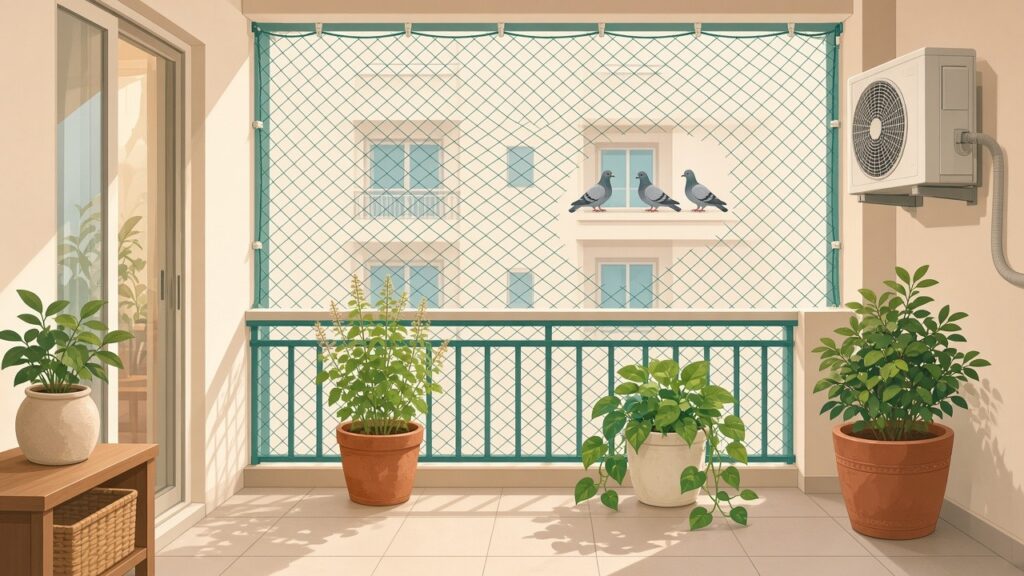
If you live in an Indian city, you probably share your home with pigeons whether you like it or not. They nest on the AC outdoor unit, coo on the window ledge at dawn and leave a crust of droppings on the balcony railing. For most people that is just a cleaning chore. But if you have asthma, you may have wondered whether pigeon droppings asthma flare-ups are a real thing, or whether that cough every time you clean the balcony is just a coincidence.
This guide explains how pigeons can affect your breathing, the difference between a bird-triggered asthma flare and a separate lung condition sometimes called pigeon or bird fancier’s lung, how to clean droppings more safely, and simple ways to keep birds off your balcony without harming them.
This article is general education, not medical advice. Everyone’s asthma and triggers are different. Please talk to your doctor about your own symptoms and treatment, and never start, stop or change any asthma medicine on your own.
1. Why pigeons matter for people with asthma
Pigeons are not dangerous in themselves. The problem is what they leave behind, especially when it builds up in places close to where you breathe.
- Dried droppings. When droppings dry out, they crumble into fine dust. Sweeping, wind or a ceiling fan can lift that dust into the air you breathe.
- Feather dust and dander. Pigeons shed tiny particles from their feathers called bloom. These carry bird proteins that some people react to.
- Nesting material. Old nests behind AC units, in shafts or on window sills collect droppings, feathers and dust, and can attract mites and insects.
- Germs and fungi. Old, dried droppings can harbour fungi and bacteria. Breathing in heavy amounts of this dust is not a good idea for anyone, and it is a bigger concern for people with weak immunity or lung conditions.
For people with allergic asthma, bird proteins can act like any other allergen, such as dust mites or pet dander. Our guide on asthma and allergens explains how an allergic reaction in the airways can lead to swelling, extra mucus and tighter breathing. For others, the dust is simply an irritant, much like smoke or strong smells. You can read more about that in our article on asthma irritants and how to reduce exposure.
2. Pigeon droppings asthma flare or something else? Knowing the difference
This is the part many people do not know about. Pigeons can affect the lungs in two quite different ways, and it helps to understand both.
A. An asthma flare triggered by bird dust
This looks like your usual asthma, just set off by bird exposure. It often happens within minutes to a few hours of cleaning a balcony, opening a dusty window or sitting near a feeding spot. Common signs include:
- Wheezing or a whistling sound when you breathe out
- Coughing, especially a tickly or dry cough
- Chest tightness
- Needing your reliever inhaler more than usual
- Symptoms that settle once you are away from the birds and use your prescribed treatment
B. Hypersensitivity pneumonitis (bird fancier’s lung)
Hypersensitivity pneumonitis is a different condition. It is not asthma. It is an immune reaction deep in the small air sacs of the lungs, caused by repeatedly breathing in certain dusts, including bird proteins from droppings and feathers. It is often linked with keeping pet birds or racing pigeons, but long, regular exposure to a heavy pigeon population at home can also be a concern.
Possible warning signs that are worth reporting to a doctor include:
- Breathlessness that slowly gets worse over weeks or months, especially on stairs or while walking
- A dry cough that does not go away
- Flu-like feelings such as fever, chills or body aches a few hours after bird exposure
- Unusual tiredness or weight loss without a clear reason
- Symptoms that do not respond well to your usual reliever inhaler
Only a doctor can tell what is going on. They may ask about birds at home or work, listen to your chest, and suggest tests such as lung function tests or a chest scan. The most useful thing you can do is mention birds clearly. Many people never think to say, “There are about twenty pigeons on my balcony every day,” and that detail can matter.
3. Signs your home may have a pigeon problem
Sometimes the exposure is bigger than we realise because it has become part of the background. Take a quick look around:
- Droppings building up on the balcony floor, railing or grill
- Nests behind or under the AC outdoor unit or window cooler
- Pigeons sitting in the duct or shaft between buildings
- Feathers drifting into rooms when windows are open
- A strong smell near window sills, especially after rain
- Neighbours feeding grain on a shared terrace or ledge
If you tick more than a couple of these, it is worth making a plan rather than living with it.
4. How to clean pigeon droppings more safely
Ideally, someone without asthma or a lung condition should do the heavy cleaning while you stay indoors with windows closed. If you live alone or have no choice, these steps can help lower how much dust you breathe in.
Before you start
- Pick a calm, non-windy time, such as early morning.
- Keep your reliever inhaler with you, as your doctor has advised.
- Close the windows and doors that lead from the balcony into your rooms.
- Wear a well-fitted N95 mask, rubber gloves, and old clothes you can wash right away. Our guide to choosing an N95 mask you can breathe in can help you find one that suits you.
- Keep children, older family members and pets indoors.
Step by step
- Never dry sweep or dust. Brushing dry droppings sends fine particles straight into the air.
- Wet it first. Spray the droppings with water mixed with a little detergent and let them soak for several minutes so they soften and do not turn into dust.
- Scrape gently. Use a scraper or old cardboard to lift the softened droppings into a plastic bag.
- Bag and seal. Tie the bag tightly and put it out with your regular waste.
- Wash the area. Mop with detergent and water. Avoid mixing cleaning chemicals, and go easy on strong fumes, which can trigger asthma on their own.
- Clean yourself. Remove gloves and mask carefully, wash your hands and face, and put the clothes straight into the wash.
Our asthma-friendly cleaning routine has more ideas for keeping cleaning products gentle on your lungs.
When to call a professional
If there are large, old nests in a duct, a big build-up under an AC unit, or droppings in places you cannot reach safely, it is often wiser to hire a cleaning or bird-control service. Ask them to wet the area before removal and to bag the waste.
5. Keeping pigeons off your balcony, kindly
Pigeons are a part of our cities, and many families feed them for religious or personal reasons. The aim is not to harm birds. It is to stop them from living right next to where you sleep and breathe.
- Bird netting. A well-fitted net across the balcony opening is one of the most common and effective options in Indian apartments.
- Covers for AC units. Mesh or sloped covers on top of and around the outdoor unit can stop nesting in that favourite hidden corner.
- Bird spikes or wires. These make railings and ledges uncomfortable to sit on without hurting the birds.
- No food or water on the balcony. Grain, leftover roti and open water bowls invite pigeons back again and again.
- Remove nests early. Check sills and ledges regularly. Clearing a new nest early is easier than cleaning up after months of use.
- Talk to your society. If neighbours feed birds on a shared terrace, a polite conversation about a feeding spot away from windows can help everyone.
For more ways to lower allergens around the house, see our guide on creating an asthma-friendly home.
6. Kabutarkhanas, feeding spots and everyday outings
In many Indian cities, people gather at kabutarkhanas and temple squares to feed pigeons. These spots can have hundreds of birds and a thick layer of droppings and feathers. Some cities have even debated limiting public feeding because of health concerns.
If bird dust bothers your breathing:
- Avoid lingering at busy feeding spots, especially on windy days.
- If you want to feed birds as a ritual, consider asking a family member to do it, or feed from a distance at a quieter place.
- Wear a mask if you must pass through a crowded feeding area.
- Wash your hands and face when you get home.
7. Pet birds, feather pillows and other hidden exposures
Pigeons are not the only source of bird proteins at home. If you are trying to work out a pattern, think about:
- Pet birds such as budgies, parrots or lovebirds, especially if their cage is in a bedroom
- Feather pillows, cushions or quilts
- Old down jackets stored in cupboards
- Hobby pigeon lofts on a terrace in your building or lane
Do not give away a pet or throw out bedding in a panic. Note what you notice, and discuss it with your doctor, who can help you decide whether allergy testing or other checks make sense.
8. When to seek medical help
Call 112 or go to the nearest emergency department if
- You are struggling to breathe, or too breathless to speak in full sentences.
- Your lips, tongue or fingertips look blue or grey.
- You feel very drowsy, confused or exhausted.
- Your reliever is not helping, or relief does not last as your action plan says it should.
While you wait for help, sit upright, stay as calm as you can, and follow the emergency steps in your written action plan.
See your doctor soon if
- Your asthma flares every time you clean the balcony or open certain windows.
- You have a dry cough or breathlessness that has been slowly getting worse for weeks.
- You get fever, chills or body aches a few hours after bird exposure.
- You need your reliever more often than usual. Our guide to signs your asthma is not well controlled explains what to look out for.
Siddhant’s POV: The air close to home matters most
I have lived with asthma for more than 30 years, and one lesson keeps coming back: the triggers that affect us most are often the ones closest to home. They are in the places we sit every day, so we stop noticing them.
My breathing improved after I moved from Delhi NCR to Dehradun. That change made me pay much closer attention to the air around me, including the small, everyday things inside and around the house.
If pigeons are a daily part of your balcony, you do not need to panic. Just treat it like any other trigger. Notice your symptoms, clean safely, keep the birds a little further away, and tell your doctor about it. Small, steady steps really do add up.
Siddhant Jain, founder of Asthma Friend, living with asthma for 30+ years
Conclusion
Pigeons are part of life in Indian cities, but their droppings, feathers and nests can trigger asthma flares in some people and, with heavy long-term exposure, may contribute to a separate lung condition called hypersensitivity pneumonitis. You can lower the risk by never dry sweeping droppings, wetting them before cleaning, wearing a good mask, letting someone without asthma do the heavy work, and using netting or covers to keep birds off balconies and AC units. Most importantly, if your breathing changes around birds, tell your doctor clearly about the exposure so they can guide you.
Take the next step with Asthma Friend
- Join our community: Connect with people who understand life with asthma at Asthma Friend.
- Learn through play: Explore free educational games at Asthma Friend Games.
- Create your free asthma action plan: Use the Asthma Friend Action Plan Generator and note your home triggers, including birds, to review with your doctor.
Frequently asked questions
Yes, for some people. Dried pigeon droppings and feather dust can carry bird proteins and fine particles that may irritate the airways or set off an allergic reaction, leading to cough, wheeze or chest tightness in people with asthma.
No. Bird fancier’s lung is a type of hypersensitivity pneumonitis, an immune reaction in the small air sacs of the lungs caused by repeatedly breathing in bird proteins. It is a different condition from asthma and needs to be assessed by a doctor.
Ideally, someone without asthma should do it. If you must, wear an N95 mask and gloves, never dry sweep, wet the droppings with soapy water first, scrape them into a sealed bag, mop the area and wash your hands and clothes afterwards.
Feeding pigeons near your home attracts more birds and more droppings. If you wish to feed them, consider doing it away from your windows and balcony, or ask someone else to do it, and avoid lingering at busy feeding spots.
Bird netting and AC unit covers can reduce the number of pigeons nesting and leaving droppings near your home, which lowers your everyday exposure. They work best alongside safe cleaning of any existing droppings.
See your doctor if your asthma flares around birds, if you have a dry cough or breathlessness that is slowly getting worse, or if you get fever or body aches after bird exposure. Call 112 for severe breathing difficulty.
Last reviewed: 1 November 2026
Information on this page was written against widely published guidance from national and international respiratory health bodies. It is educational only and is not a substitute for personal medical advice from a doctor.

About the author
Siddhant Jain
Siddhant Jain is the founder of Asthma Friend. He has lived with asthma for more than 30 years. After moving from Delhi NCR to Dehradun, his breathing improved, and he built Asthma Friend to give Indian patients and caregivers practical, empathetic education. The content is educational and is not a substitute for advice from a doctor.
Related posts:
 Can Diwali Cleaning Trigger Asthma? How to Do Your Safai Without Dust, Mould and Chemical Fumes
 Room Heaters and Asthma in India: Oil-Filled vs Fan vs Halogen, Angithi Smoke and Safe Winter Warmth
 Diwali and Asthma: How to Celebrate Safer When Fireworks and Smoke Fill the Air
 Is Your Child Wheezing With Every Cold? Viral Wheeze vs Asthma in Children Under 5
 Asthma and India’s AQI in Stubble Season: How to Read the Colours and Plan Your Day
 How to Tell Your Manager About Asthma Without Oversharing: A Simple Script and Smart Asks
 Diwali Gifting for Someone with Asthma: Thoughtful, Trigger-Free Ideas
 How Construction Dust and Renovations Can Worsen Asthma
 Karva Chauth Fasting with Asthma: Planning Water, Medicines and the Long Wait for Moonrise
 Flying with Asthma from India: Inhalers in Hand Baggage, Airport Security and Dry Cabin Air