
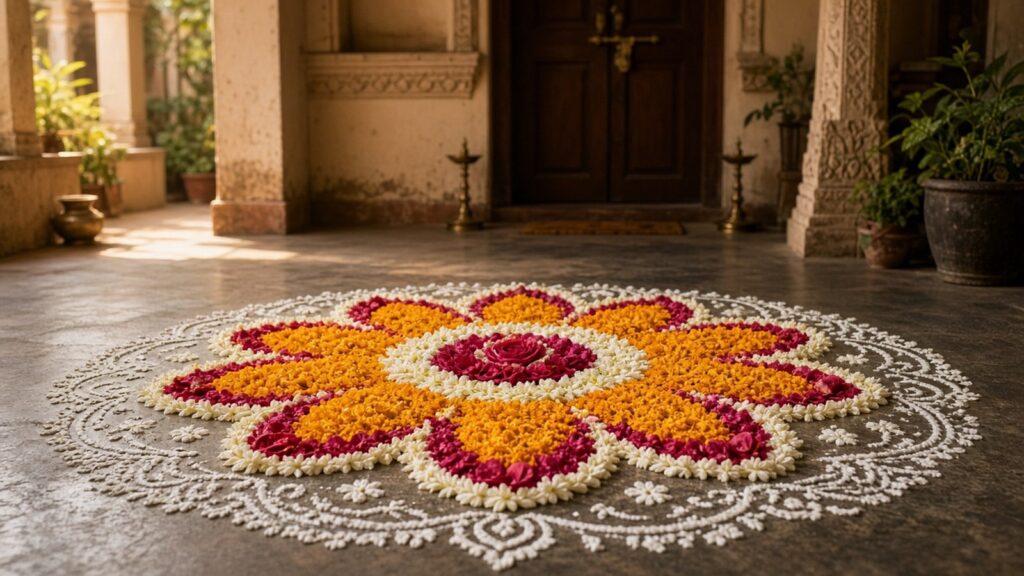
Before the diyas are lit, many Indian homes begin Diwali on the floor: chalk outlines, dry colour powders, stencil dust and a broom chasing bright patterns across the threshold. For someone with asthma, that pretty cloud can be as irritating as a dusty cleaning session. The question is practical, not festive spoilsport: how do you enjoy rangoli powder asthma awareness without losing the welcome at your door?
This guide focuses on dry rangoli powders, chalk dust and sweeping, then offers lower-dust alternatives such as flower petals and wet rice paste. It is about decorative powder underfoot, not Holi gulal play or fireworks smoke.
This article is general education, not medical advice. Everyone’s asthma is different. Please talk to a doctor about individual symptoms and treatment, and never start, stop or change any asthma medicine based on a blog post.
1. Why rangoli powder can bother asthma
Dry powders become airborne the moment you pour, tap a stencil or sweep. Fine particles can irritate airways even when the powder is marketed as “natural” or “herbal.” Chalk-based outlines create a similar dust film on floors that rises again with every footstep and broom stroke.
People often notice:
- A tickly cough while making the design
- Sneezing or itchy eyes during sweeping
- Chest tightness later the same evening
- Worse symptoms in closed corridors where dust hangs
Irritants are not always allergens. For a broader map of everyday irritants, see understanding and reducing asthma irritants.
2. Which rangoli materials tend to create more dust
Not every design throws the same cloud. Higher-dust choices usually include:
- Fine dry colour powders sold in loose packets
- Chalk powder or crushed chalk for large outlines
- Stencil kits that you tap repeatedly
- Sawdust-like fillers mixed into cheap colours
- Dry rice flour flung from a height rather than placed gently
Lower-dust choices usually include:
- Fresh flower petals (marigold, rose, chrysanthemum)
- Wet rice paste or wet chalk slurry drawn with fingers or a cone
- Leaves, diyas and intact decorative elements that do not powder
- Pre-made rangoli stickers for short-term indoor use, if floors allow
Holi colour play is a different exposure pattern. If that festival is on your mind too, our guide on managing asthma during Holi and avoiding colour dust covers gulal and water play separately.
3. Plan the rangoli moment, not only the design
Timing and place matter as much as pigment.
- Prefer outdoor courtyards or open verandahs when air quality is decent
- Avoid pouring powder in a closed lobby where the family sits afterwards
- Make the design when the person with asthma can stay in another room
- Finish and damp-clean before evening guests arrive
- Keep children with asthma from “helping” with dry powder if it usually bothers them
If outdoor AQI is already severe, even courtyard powder play may be unwise. Pair this with your wider Diwali air plan from safer Diwali fireworks and smoke guidance.
4. Safer technique if you still use some dry colour
Some families want a little traditional powder. Reduce the cloud:
- Place powder with a spoon close to the floor instead of sprinkling from standing height
- Skip aggressive stencil tapping; press gently
- Limit the design size so sweeping stays short
- Wear a well-fitting mask if powder work is your task and your doctor agrees masks suit you for dusty chores
- Wash hands before touching your face
- Let someone without asthma do the dustiest steps when possible
This is harm reduction, not a promise that dry powder will feel fine for everyone.
5. Flower-petal and wet-paste ideas that still look festive
Lower-dust rangoli can look richer, not poorer.
Petal patterns
- Marigold circles with a diya centre
- Rose-petal borders around a small swastik or om drawn in wet paste
- Mixed petals in steel trays for apartment doors where floor powder is banned
- Leaf outlines filled with petals instead of chalk
Wet paste outlines
- Rice flour mixed with a little water into a smooth paste
- Cone or plastic pouch piping for clean lines
- Coloured wet paste using kitchen-safe food colours only if household members tolerate them on floors; keep quantities small
- Wipe edges with a damp cloth instead of dry sweeping
Guests still feel welcomed. Your airways get fewer surprise dust storms.
6. Sweeping and clean-up without a second trigger wave
The clean-up often causes more symptoms than the making. Dry brooms launch settled powder back into breathing height.
- Mist the area lightly with water before sweeping, if the floor type allows
- Prefer a damp cloth or wet mop over vigorous dry broom strokes
- Vacuum with a HEPA-filtered machine if you have one and the powder type is suitable for your vacuum
- Keep the person with asthma out of the corridor during clean-up
- Combine this with gentler festive cleaning habits from Diwali cleaning with asthma and asthma-friendly kitchen and bathroom cleaning
Throw used cloths into the wash rather than shaking them indoors.
7. Apartment rules, society lobbies and shared spaces
Many societies restrict powder rangoli in corridors. That can be a blessing for asthma households.
- Use a rangoli mat or tray at the door
- Offer to create a petal design for the wing entrance instead of loose powder
- Explain briefly to neighbours: “We are avoiding dry powder because of asthma dust.”
- Keep a small indoor table rangoli if lobby powder is unavoidable and bothersome
Community festivals work better when health needs are named early, not after an argument over broom dust.
8. Children, craft time and school rangoli competitions
Schools and housing societies often run rangoli contests. Prepare ahead:
- Ask teachers whether dry powder is required or if petals and wet paste are accepted
- Send the child with a mask for dusty craft periods if that is already part of their plan and comfortable for them
- Suggest a petal or recyclable-material design as the official entry
- Pack the reliever for school craft days as their doctor has advised
Overlooked triggers around the home are easy to miss during festivals. Our list of seven common asthma triggers people overlook is a useful companion read.
9. When to step away and when to seek urgent help
If powder work leaves you coughing, tight-chested or wheezy, stop, move to cleaner air and follow your asthma action plan. Do not push through “one more section” of the design.
Call 112 or go to the nearest emergency department for severe breathlessness, difficulty speaking full sentences, blue or grey lips, or a reliever that is not helping as directed. Decorative plans can wait. Breathing cannot.
10. A low-dust Diwali door checklist
- Choose petals or wet paste as the default
- If using powder, keep it small, low to the floor and outdoors when possible
- Keep the person with asthma out of pouring and sweeping steps
- Damp-clean instead of dry broom storms
- Wash hands and change dusty clothes after making rangoli
- Have the reliever nearby during craft and clean-up
- Skip powder entirely on high-AQI days when airways are already stressed
11. Talking to relatives who say “it is only rangoli”
Festive traditions carry emotion. A calm script helps:
- “The design can stay. We are swapping dry powder for petals so the dust does not bother my chest.”
- “I can help with diyas and flowers. Please let someone else handle chalk sweeping.”
- “Last year the powder clean-up set off a bad evening. We are trying a gentler version.”
You are protecting a person, not attacking a culture. Most families soften once they see a beautiful alternative on the floor.
12. Combining rangoli plans with the rest of Diwali prep
Rangoli rarely happens alone. It sits beside cleaning, cooking and shopping. Stacking dusty tasks on the same morning multiplies exposure.
- Do not schedule deep dry dusting, powder rangoli and market shopping back to back
- Place the lowest-dust decorative tasks nearest to the time when vulnerable family members are home
- Keep one recovery hour with quieter indoor air before evening aarti
Think of the week as a budget for dust and smoke. Spend it carefully.
13. Budget-friendly petal sourcing
Lower-dust rangoli does not need a luxury florist bill.
- Use marigold leftover from torans and puja flowers
- Ask the local flower seller for mixed “broken petal” packs at a lower price
- Combine a small petal centre with a wet-paste border to stretch flowers further
- Reuse sturdy leaves from kitchen stock such as banana leaf strips for outlines, then compost them
The point is less airborne dust, not a perfect magazine photograph.
14. If powder rangoli already happened
Sometimes you arrive after the design is done and the broom is mid-swing. Reduce further exposure:
- Step away until damp cleaning finishes
- Ask for windows or doors to be managed based on outdoor air quality
- Change clothes if you sat on powder-dusted steps
- Follow your action plan if symptoms start; contact your doctor if you are unsure
You do not need to remake the entire threshold. You need a calmer next hour.
15. Photography, reels and the pressure to use bright powder
Social media trends push vivid dry colours because they photograph well. Your lungs do not need to sponsor that feed.
- Petal rangolis photograph beautifully in morning light
- Wet-paste designs with a few diyas look warm on camera without a dust cloud
- You can edit colour saturation later; you cannot undo an evening of irritation as easily
- If relatives want a powder shot, keep it tiny, outdoors and cleaned with a damp cloth immediately after
Tradition can adapt. A welcome that people remember fondly is one that did not end in coughing.
Siddhant’s POV: Beauty without the cloud
I have lived with asthma for more than 30 years, and festive dust used to feel like something I was supposed to tolerate politely. Dry powders look harmless until the broom starts.
My breathing improved after I moved from Delhi NCR to Dehradun, and cleaner baseline air made me less willing to add avoidable powder clouds at the door. Petals and wet paste still say welcome. They just do it with less coughing afterwards.
Siddhant Jain, founder of Asthma Friend, has lived with asthma for more than 30 years.
A lower-dust doorstep is also kinder to guests who arrive with their own asthma or sensitive noses. Hospitality includes the air people breathe while they remove their shoes and admire the design.
Conclusion
Rangoli can stay part of Diwali without a dust storm. Prefer flower petals and wet paste, keep dry powder minimal and low to the floor, and damp-clean instead of dry sweeping. Protect children and adults with asthma from the pouring and broom steps. Call 112 for emergency breathing symptoms. A threshold that looks festive and feels kinder is possible.
Take the next step with Asthma Friend
- Join our community: Connect with people who understand life with asthma at Asthma Friend.
- Learn through play: Explore free educational games at Asthma Friend Games.
- Create your free asthma action plan: Use the Asthma Friend Action Plan Generator and keep a copy handy through the festive season.
Frequently asked questions
Dry rangoli powders and chalk dust can irritate airways for some people when particles become airborne during pouring or sweeping. Sensitivity varies. If powder bothers you, switch to petals or wet paste and keep your action plan handy.
Fresh flower petals, leaf designs, wet rice-flour paste outlines and small tray rangolis usually create less airborne dust than fine dry powders and chalk sweeping.
It can be. Crushed chalk and dry sweeping lift fine particles. Use wet paste lines or damp cleaning, and let someone else handle dusty steps if chalk affects you.
Lightly mist if the floor allows, then use a damp cloth or wet mop. Avoid vigorous dry broom strokes in closed corridors. Keep the person with asthma out of the clean-up zone.
They can join petal placement or wet-paste drawing if that usually suits them. Keep them away from dry powder pouring and sweeping, and follow their doctor’s advice for craft days.
Call 112 or go to emergency care for severe breathlessness, trouble speaking, blue or grey lips, or a reliever that is not helping as directed.
Last reviewed: 1 November 2026
Information on this page was written against widely published guidance from national and international respiratory health bodies. It is educational only and is not a substitute for personal medical advice from a doctor.

About the author
Siddhant Jain
Siddhant Jain is the founder of Asthma Friend. He has lived with asthma for more than 30 years. After moving from Delhi NCR to Dehradun, his breathing improved, and he built Asthma Friend to give Indian patients and caregivers practical, empathetic education. The content is educational and is not a substitute for advice from a doctor.
Related posts:
 Keeping Your Inhaler Routine on Track During the Busy Diwali Week
 The Impact of Strong Fragrances and Perfumes on Asthma
 Diwali and Asthma: How to Celebrate Safer When Fireworks and Smoke Fill the Air
 Flying with Asthma from India: Inhalers in Hand Baggage, Airport Security and Dry Cabin Air
 Your Environment Matters: How Noise, Heat, and Urban Living Affect Asthma and BP
 Asthma and Train Travel in India: A Preparation Checklist for Sleeper and AC Coaches
 Morning vs. Night Asthma: Why Symptoms Worsen at Certain Times
 How to Prepare for an Asthma Appointment When You Feel Fine
 Monsoon Laundry: Indoor Drying Without Triggering Asthma
 How a Simple Cold Stole Two Weeks of My Life: An Asthma Patient’s Recovery Story