
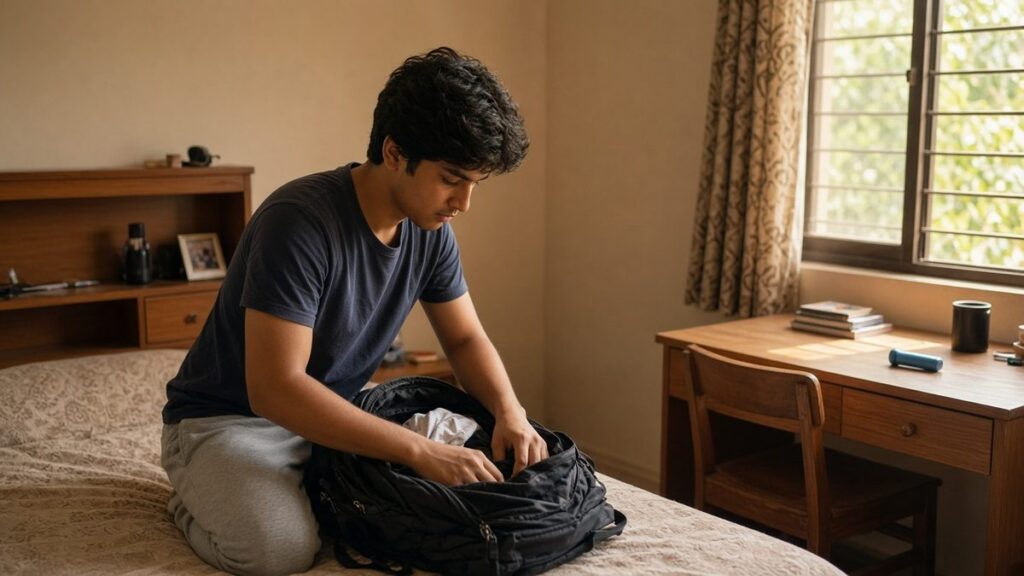
Moving into a hostel or PG is a big step. For many students it is the first time living away from home, managing money, food and laundry alone. If you have asthma, there is one more thing on the list: looking after your breathing without a parent reminding you about your inhaler or noticing when your cough sounds worse.
This guide is a practical checklist for hostel life with asthma. It covers choosing a room, talking to roommates and wardens, keeping refills going on a student budget, planning for nights and knowing when to call 112. It works whether you are in a college hostel, a PG or a shared flat.
This article is general education, not medical advice. Please talk to your doctor about your own asthma and treatment, and never start, stop or change any medicine based on a blog post. If you are struggling to breathe, call 112 straight away.
1. Before you move: a doctor visit and a plan
The best time to prepare is before you leave home.
- Book a check-up with your doctor to review your asthma and your medicines before you go.
- Get a written asthma action plan that says what to do when you are well, when symptoms rise and in an emergency. Our guide on how to develop an asthma action plan explains what it should include.
- Ask about refills in the new city: how many months of medicine you can carry, and whether you will need a local doctor.
- Take copies of prescriptions and your action plan, on paper and on your phone.
- Find a local doctor or clinic near your college, and the nearest hospital with an emergency department.
2. Choosing a room or PG
You may not get much choice, but where you do, a few things matter:
- Ventilation: a window that opens, and no constant damp smell.
- Damp and mould: look at walls, corners and the bathroom for black spots or peeling paint.
- Distance from the kitchen: PG rooms right next to a busy kitchen may get a lot of cooking smoke.
- Smoking: ask if residents smoke inside. Second-hand smoke is a common trigger.
- Floor and road: a ground floor room by a busy road may get more dust and traffic fumes.
- Mattress: old hostel mattresses can be dusty. A washable mattress protector and your own pillow can help.
3. Setting up your room
Once you move in, a few small steps make the room easier on your lungs:
- Bring your own pillow and a washable cover for the mattress.
- Wash bedsheets and pillow covers weekly.
- Keep clutter, soft toys and piles of clothes to a minimum so there is less dust.
- Damp wipe your desk and shelves rather than dry dusting.
- Air the room daily when outdoor air is cleaner.
- Keep incense, room fresheners and mosquito coils out of your room if they bother you.
4. Talking to roommates
Telling a new roommate about your asthma can feel awkward, but it is one of the most useful things you can do.
- Keep it simple: “I have asthma. I use an inhaler, and smoke and strong sprays can set it off.”
- Show them where you keep your reliever.
- Explain what an attack looks like and what to do: help you sit up, get your inhaler, follow your plan and call 112 if it is serious.
- Agree on basics like no smoking in the room and going easy on deodorant sprays.
If they want to know more, you can share our guide on supporting a friend with asthma.
5. Telling the warden or PG owner
You do not have to share every detail, but someone responsible for the building should know.
- Tell the warden or owner that you have asthma and keep an inhaler.
- Ask about the night-time emergency procedure, gate timings and who has the keys.
- Save the warden’s number and the security desk number in your phone.
- Ask whether there is a medical room or tie-up with a nearby clinic.
6. Keeping your inhaler with you
In a busy student life, inhalers get left in the room, the lab or a friend’s bag. Make it a habit:
- Keep your reliever in the same pocket of your bag every day.
- If your doctor agrees, keep a spare in your room.
- Check expiry dates and dose counters monthly.
- Never be embarrassed to use it in class, the library or the canteen. Our guide on asthma stigma and owning your inhaler in public talks about this.
7. Refills on a student budget
Running out because money is tight at the end of the month is a real risk. Some ideas:
- Track your inhaler use and plan refills before you run out.
- Budget for medicines first, before outings and food delivery.
- Ask your doctor or pharmacist whether there are more affordable options for your prescribed medicine. Never switch brands or medicines on your own.
- Check whether your college health centre or student health insurance covers prescriptions.
- Tell your family early if you need help, rather than going without.
8. Food, sleep and routine
Hostel life is famous for late nights, instant noodles and skipped meals. Your asthma usually does better with some routine.
- Try to sleep at similar times on most days.
- Take any daily medicines your doctor has prescribed at the same time each day. A phone alarm helps.
- Eat regular meals, and notice if any foods seem to bother you.
- Stay active, with a warm-up, and follow your plan for exercise.
Our guide on how to build an asthma-friendly daily routine has more ideas you can adapt to a hostel timetable.
9. Night-time plan
Many asthma symptoms are worse at night, and nights in a hostel can feel lonely when you are unwell.
- Keep your reliever and phone next to your bed.
- Know which roommate or neighbour you can wake up.
- Save the emergency number 112, the warden’s number and a nearby hospital in your phone favourites.
- Know the address of your hostel well enough to tell an ambulance quickly.
10. A small emergency kit for your room
Our guide on creating an asthma emergency kit is written for homes, but a mini version works in a hostel:
- reliever inhaler and spacer if you use one
- copy of your action plan and prescriptions
- list of emergency contacts and your blood group
- ID card and some cash
- a charged power bank
11. Warning signs and when to call 112
Know your early signs and follow your action plan when they appear. Call 112 or go to the emergency department if:
- you are very breathless or cannot speak in full sentences
- your reliever is not helping, or you need it again very soon
- your lips or fingertips look blue or grey
- you feel drowsy or confused
Do not wait until morning to avoid troubling anyone. Wake your roommate and get help.
Siddhant’s POV: Supporting independence away from home
I have lived with asthma for more than 30 years. My breathing improved after I moved from Delhi NCR to Dehradun.
My view is that moving into a hostel or PG should not mean managing asthma without support. I would encourage students to discuss room conditions, emergency contacts and access to their prescribed inhalers before settling in. I believe telling a trusted roommate or warden about the action plan is worth considering. Asking for a smoke-free space is a reasonable need, not an inconvenience.
Siddhant Jain, founder of Asthma Friend, has lived with asthma for more than 30 years.
Conclusion
Hostel life with asthma is very manageable with some preparation. See your doctor and get a written action plan before you move, choose a room with good ventilation and no smoke, tell your roommate and warden, keep your inhaler with you at all times and plan refills on your budget. Build a simple night-time plan and know when to call 112. Living away from home is about learning independence, and that includes taking charge of your breathing.
Take the next step with Asthma Friend
- Join our community: Connect with people who understand life with asthma at Asthma Friend.
- Learn through play: Explore free educational games at Asthma Friend Games.
- Create your free asthma action plan: Use the Asthma Friend Action Plan Generator and keep a copy where you and your family can find it.
Frequently asked questions
Yes, it helps. Tell them where your inhaler is, what an attack looks like and when to call 112. Most roommates appreciate knowing how to help.
Look for a window that opens, no damp or mould, no indoor smoking and a room away from a busy kitchen or road where possible.
Plan refills early, budget for medicines first and ask your doctor or pharmacist about affordable options for your prescribed medicine. Do not change medicines on your own.
Keep your reliever inhaler, spacer if you use one, a copy of your action plan and prescriptions, emergency contacts, ID and a charged phone.
Call 112 if you are very breathless, cannot speak in full sentences, your reliever is not helping, or your lips look blue or grey.
Free: Smog Season Survival Guide
A practical 27-page guide to breathing easier with asthma through India's pollution months: AQI explained, clean air at home, masks, kids and school, plus printable checklists. Join the free Asthma Friend newsletter and we'll email it to you.


Last reviewed: 8 November 2026
Information on this page was written against widely published guidance from national and international respiratory health bodies. It is educational only and is not a substitute for personal medical advice from a doctor.

About the author
Siddhant Jain
Siddhant Jain is the founder of Asthma Friend. He has lived with asthma for more than 30 years. After moving from Delhi NCR to Dehradun, his breathing improved, and he built Asthma Friend to give Indian patients and caregivers practical, empathetic education. The content is educational and is not a substitute for advice from a doctor.
Related posts:
 Thank You, Mom: A Tribute to Mothers Who Help Their Children Breathe Easier
 How to Manage Asthma Naturally with Daily Breathing Exercises
 What People with Asthma Wish Others Understood
 How the Weather Affects Asthma: From Summer Heat to Pre-Monsoon Showers
 The Role of Nebulizers in Asthma Management
 The Link Between Hypertension and Asthma: What You Need to Know
 Silent Asthma vs. Anxiety: How to Tell the Difference
 Hotel Rooms and Asthma: Questions to Ask Before You Book
 Is Your Child Wheezing With Every Cold? Viral Wheeze vs Asthma in Children Under 5
 The Role of Meditation in Asthma Management