
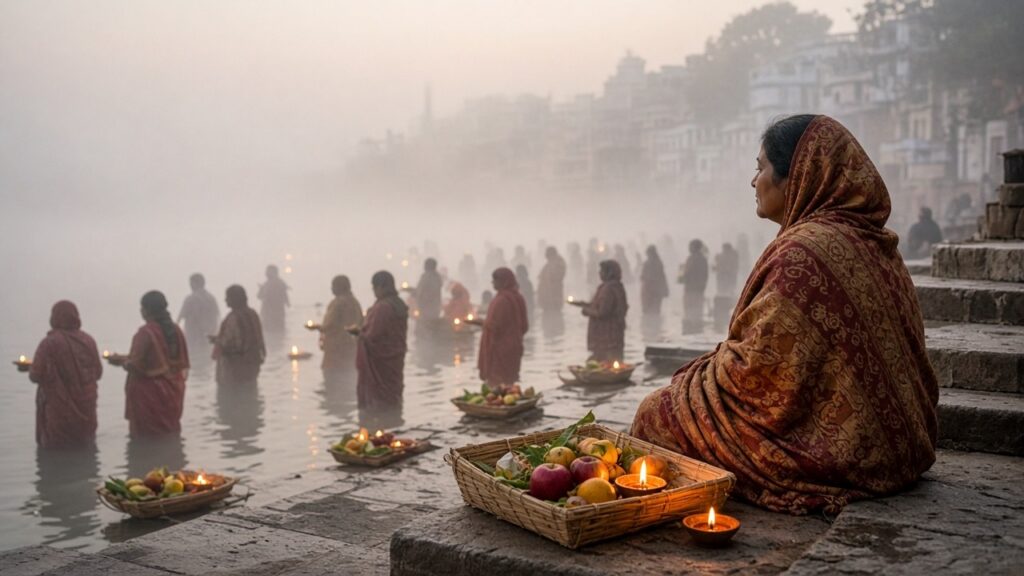
Chhath Puja is one of the most deeply felt festivals in Bihar, Jharkhand, eastern Uttar Pradesh and among families across India who carry its traditions to Delhi, Mumbai and beyond. Over four days, devotees observe strict fasts, prepare thekua and prasad with care, and offer arghya to the setting and rising sun while standing in rivers, ponds and ghats. For someone living with asthma, the devotion is the same, but the cold dawns, dense crowds, smoke and long fasts can bring real breathing challenges.
This guide offers respectful, practical ideas so devotees and their families can plan ahead and observe the festival as safely as possible.
This article is general education, not medical advice. Please talk to your doctor about your symptoms, treatment and fasting plans, and never start, stop or change any asthma medicine based on a blog post. If you are struggling to breathe, call 112 or go to the nearest emergency department.
Talk to your doctor before the festival
Chhath involves long periods without food or water for many devotees, as well as early mornings in cold air. If you or a family member has asthma and plans to fast, speak with your doctor in advance. Ask:
- Is my asthma well controlled enough for a long fast?
- How should I take my prescribed medicines during the fasting days?
- What signs mean I should stop fasting and seek help?
- Should I carry anything extra for the ghat?
Never skip prescribed asthma medicines because of a fast without your doctor’s guidance. Many families and religious elders recognise that health needs come first. If you need to adapt your observance, you can discuss options with your family priest or elders.
Nahay Khay and Kharna: kitchen smoke and preparation
The first two days involve purification, cooking and preparing prasad. Traditional cooking on wood or earthen chulhas can produce smoke that irritates the airways.
- If possible, cook in a well-ventilated space or outdoors, with the person with asthma upwind of the smoke.
- Use the kitchen exhaust or chimney if cooking indoors. Our article on kitchen chimneys and exhaust fans explains how they help.
- Share tasks so the person with asthma is not standing over a smoky fire for hours.
- Keep the reliever nearby while cooking.
Evening arghya: crowds and dust
On the third day, devotees gather at ghats in the evening to offer arghya to the setting sun.
Before you leave
- Check the AQI. In many North Indian cities, November air can be poor.
- Pack your reliever, spacer, written action plan, water for after the fast if allowed, and a warm layer.
- Tell a family member where your inhaler is and what to do if you feel unwell.
At the ghat
- Choose a spot at the edge of the crowd, where air moves more freely and you can step back easily.
- Avoid standing right next to burning diyas, incense or firecrackers.
- Stay with your family, and agree on a meeting point in case you get separated.
- Take breaks to sit if you feel tired.
Morning arghya: cold dawn and water
The final arghya at sunrise often means leaving home in the dark, sitting or standing in cold air, and stepping into chilly water. Cold air is a common asthma trigger. Our guide to cold air and asthma has practical tips.
- Dress in layers and cover your nose and mouth loosely with a scarf or dupatta to warm the air you breathe.
- Limit time standing in cold water if your family and priest agree, or offer arghya from the bank.
- Keep warm clothes and a blanket ready for after the ritual.
- Watch for early symptoms such as coughing, tightness or wheezing, and follow your action plan.
Our article on why winter mornings can be risky for people with asthma in India explains why early hours can be tougher.
Smoke from diyas, incense and firecrackers
Diyas and incense are part of the beauty of Chhath. Some families also burst firecrackers. For people with asthma, smoke can be a strong trigger.
- Sit upwind of diyas and incense.
- Ask family members to light firecrackers away from you, or skip them nearby.
- Move away from heavy smoke quickly if you begin coughing.
Our article on the impact of air pollution on asthma explains why smoke particles can irritate the lungs.
Fasting and breaking the fast gently
Long fasts can leave you tired and dehydrated. If your doctor has said fasting is okay for you:
- Rest as much as possible during the fast.
- Avoid unnecessary walking in dusty or smoky areas.
- Break the fast gently with water and light food, as your family tradition allows.
- If you feel faint, very breathless or unwell, stop and seek help. Your health matters.
Supporting a devotee with asthma
Family members can help a lot:
- Carry the inhaler bag and keep it within reach.
- Help find a less crowded spot at the ghat.
- Offer to do smoky cooking tasks.
- Learn the warning signs and know when to call 112.
- Reassure the devotee that adapting for health is not a lack of devotion.
Warning signs that need urgent help
Call 112 or go to the nearest emergency department if the person with asthma:
- Struggles to speak in full sentences.
- Has lips or fingertips that look blue or grey.
- Finds the reliever is not helping.
- Seems drowsy, confused or faint.
- Has a tight chest and breathlessness that keeps getting worse.
Big ghats sometimes have medical camps or volunteers. Note where they are when you arrive.
After Chhath: rest and recover
The days after the festival can bring tiredness and, for some, a lingering cough from cold air and smoke. Rest, drink water, eat well and watch your symptoms. If your asthma feels unsettled for more than a few days, contact your doctor.
Planning the journey to and from the ghat
Getting to the ghat can be as tiring as the ritual itself. Roads are crowded, parking is far, and walking in the dark on uneven ground is common. If you have asthma, plan to arrive a little early so you are not rushing, and walk at a comfortable pace. Avoid waiting near idling vehicles and generators. If you live far from the river, some families choose a nearby pond, society tank or rooftop arrangement, which can reduce travel and crowd exposure while keeping the spirit of the ritual.
Siddhant’s POV: Devotion and breathing can go together
I have lived with asthma for more than 30 years. My breathing improved after I moved from Delhi NCR to Dehradun.
My view is that devotion and breathing needs deserve equal respect during Chhath Puja. I would encourage families to discuss cold early mornings, crowded ghats and smoke before deciding how to participate. I believe offering a quieter place or a shorter visit is a thoughtful gesture, not a criticism of someone’s faith. Nobody should feel pressured to stay when breathing becomes uncomfortable.
Siddhant Jain, founder of Asthma Friend, has lived with asthma for more than 30 years.
Conclusion
Chhath Puja asks a lot of the body: fasting, cooking, cold dawns, water and crowds. For devotees with asthma, a conversation with the doctor before the festival, a well-packed inhaler bag, a less crowded spot at the ghat and support from family can make a real difference. Stay upwind of smoke, keep warm at dawn and break the fast gently. Know the warning signs, and call 112 if breathing becomes difficult. May your Chhath be peaceful and your breathing steady.
Take the next step with Asthma Friend
- Join our community: Connect with people who understand life with asthma at Asthma Friend.
- Learn through play: Explore free educational games at Asthma Friend Games.
- Create your free asthma action plan: Use the Asthma Friend Action Plan Generator and keep a copy handy through the festive season.
Frequently asked questions
Some people with well-controlled asthma may be able to, but only your doctor can advise you. Discuss fasting and medicine timing before the festival, and never skip prescribed medicines without guidance.
Dress in layers, cover your nose and mouth loosely with a scarf, limit time in cold water if possible and keep warm clothes ready for after the ritual.
Smoke can trigger asthma in many people. Sit upwind, move away from heavy smoke and ask family to light firecrackers away from you.
Carry your reliever, spacer, written action plan, a warm layer and your emergency contacts. Tell a family member where your inhaler is.
Move away from the crowd and smoke, sit upright and follow your asthma action plan. Call 112 if the reliever does not help or breathing gets worse.
Many families and elders accept adaptations for health. You can discuss options with your family priest or elders, alongside advice from your doctor.
Free: Smog Season Survival Guide
A practical 27-page guide to breathing easier with asthma through India's pollution months: AQI explained, clean air at home, masks, kids and school, plus printable checklists. Join the free Asthma Friend newsletter and we'll email it to you.


Last reviewed: 8 November 2026
Information on this page was written against widely published guidance from national and international respiratory health bodies. It is educational only and is not a substitute for personal medical advice from a doctor.

About the author
Siddhant Jain
Siddhant Jain is the founder of Asthma Friend. He has lived with asthma for more than 30 years. After moving from Delhi NCR to Dehradun, his breathing improved, and he built Asthma Friend to give Indian patients and caregivers practical, empathetic education. The content is educational and is not a substitute for advice from a doctor.
Related posts:
 Cold Air and Asthma: How to Plan Walks and Morning Commutes
 Spacer 101: Use, Cleaning, and Common Mistakes
 Is Your Home Summer-Ready for Asthma? A Cleaning Checklist
 Friendship and Asthma: How My Friends Helped Me Breathe Easier
 Renovating? Low-VOC Paints and Safer Home Upgrades for Asthma-Friendly Homes
 Should You Exercise Outdoors When Air Quality Is Poor? Asthma Considerations
 Asthma-Friendly Cleaning Routine for Kitchens & Bathrooms
 What People with Asthma Wish Others Understood
 Winter Asthma in North India: A Practical Month-by-Month Guide
 What to Keep in Your Work Bag If You Have Asthma: A Practical Checklist