
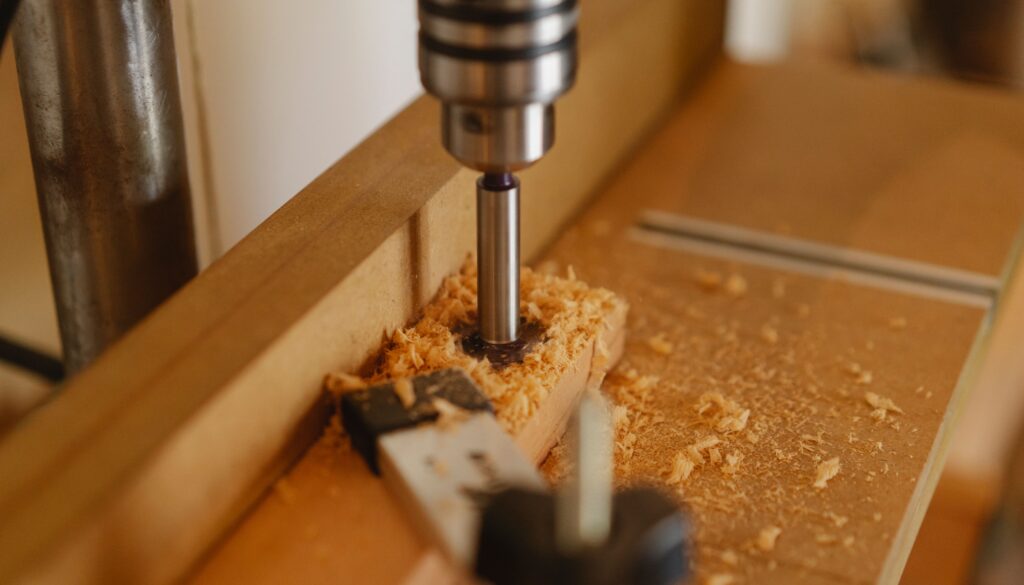
A small home repair can create a surprisingly large amount of dust. A worker drills a few holes to install a shelf, sands a wall before painting, or applies wall putty to prepare a room for renovation. Within minutes, fine particles may settle on nearby furniture, floors and windowsills.
For someone living with asthma, this raises an important question: Can drilling, sanding and wall putty irritate the airways?
The answer is yes, these activities can create dust or release other substances that may irritate some people with asthma. However, the level of exposure and the likelihood of symptoms depend on the materials involved, the work being performed and the individual’s sensitivity.
This is particularly relevant in Indian homes, where wall repairs, putty application, painting, drilling and tile work are common during renovations or before moving into a new flat.
Let’s look at what happens during these activities, what precautions may help, and how to make home repairs safer for someone living with asthma.
This article provides general educational information. It does not replace advice from your healthcare professional.
1. Can drilling dust trigger asthma?
Drilling into a wall can release particles from plaster, cement-based materials, brick, concrete or other building materials. The type of dust depends on what is being drilled.
These particles can spread beyond the immediate work area, particularly when drilling happens indoors without adequate containment.
For some people with asthma, exposure to airborne dust may contribute to coughing, wheezing, chest tightness or breathlessness.
What can you do?
If drilling is happening in your home:
- Ask the worker to use appropriate dust-control methods and, where suitable, tools with dust-collection attachments.
- Keep the work area separated from the rest of your living space.
- Remove or cover nearby belongings before work begins.
- Avoid remaining in the room while drilling is underway.
- Clean settled dust using damp methods rather than dry sweeping.
- If possible, have someone else carry out the cleanup while you stay away from the affected area.
If the drilling is happening in a neighbouring flat, ask building management whether the contractor can prevent dust from spreading into shared corridors and your home.
Important: Concrete and masonry dust can contain respirable crystalline silica, depending on the material and activity. This is a serious occupational health hazard, especially with repeated or substantial exposure. Appropriate dust controls and professional work practices matter; ordinary household precautions alone may not be sufficient.
2. Can wall sanding make asthma symptoms worse?
Sanding is often performed before painting to smooth a wall or prepare its surface. It may seem like a minor task, but sanding can release fine particles that remain airborne or settle throughout the room.
The concern is not limited to newly applied wall materials. Sanding an older painted surface can also release dust from existing coatings.
Why sanding dust deserves attention
Depending on the material being sanded, the dust may contain:
- Particles from plaster, putty or other wall compounds
- Residue from paint or surface coatings
- Fine particles from wood or other construction materials
- Other contaminants present on the surface
Not every particle will trigger asthma, and not everyone with asthma will react to the same exposure. However, it is sensible to reduce unnecessary exposure rather than wait to see whether symptoms appear.
Practical precautions during sanding
- Ask whether a lower-dust sanding method or suitable dust-extraction equipment can be used.
- Keep the work area isolated from occupied rooms.
- Avoid dry sanding without appropriate dust controls.
- Do not stand nearby to supervise the work if dust is spreading.
- Clean the area thoroughly before using it again.
- If symptoms are easily triggered by renovation work, consider staying elsewhere during sanding and cleanup.
If an older building’s painted surfaces are being disturbed, there may be additional hazards depending on the age and composition of the paint. Do not assume that visible dust is harmless simply because the wall looks ordinary.
3. Is wall putty dust harmful for people with asthma?
Wall putty is commonly used to prepare walls before painting. The exact ingredients vary by product, so it is important not to treat all wall putties as identical.
Potential exposure can occur during different stages of the work:
- Mixing: Powdered products may release dust while being handled.
- Application: Dust exposure may occur if dry material is disturbed or if the surrounding work creates airborne particles.
- Sanding: Once the surface dries, smoothing it can generate fine dust.
- Cleanup: Dry sweeping or brushing may put settled particles back into the air.
Some people may experience irritation from these exposures, while others may not notice symptoms. The product’s safety information can help identify its ingredients and recommended handling precautions.
What should you check?
Before work begins, ask the contractor or supplier for the product label and safety data sheet, where available.
Check the manufacturer’s instructions for:
- Safe handling and application
- Dust-control recommendations
- Suitable protective equipment for workers
- Ventilation requirements
- Cleanup and disposal instructions
Do not assume that a product is asthma-friendly just because it is marketed as low-odour, water-based or suitable for indoor use. Those descriptions do not guarantee that it will not irritate your airways.
If you are particularly sensitive to construction dust, consider staying away while the putty is mixed, sanded and cleaned up.
4. What about paint fumes after putty work?
Putty work is often followed by primer, paint, polish, adhesives or sealants. These products can introduce a different kind of indoor air problem.
Some products release volatile organic compounds (VOCs) and other chemicals into the air. Depending on the product and the person’s sensitivity, these emissions may cause irritation or other symptoms.
This means that finishing the dusty work does not necessarily mean the air is ready to breathe comfortably.
Ways to reduce exposure to fumes
- Read product labels and follow the manufacturer’s ventilation instructions.
- Where appropriate, choose products with lower emissions, while remembering that no product is guaranteed to be trigger-free.
- Keep people away from the work area during application.
- Ventilate the area appropriately without directing fumes into other occupied rooms or neighbouring flats.
- Allow the product to dry and the space to ventilate as instructed before returning.
- Avoid using strong fragrances or air fresheners to mask the smell.
Do not rely on smell alone to decide whether a room is safe. Some pollutants have little or no noticeable odour, while some noticeable smells may be irritating even when the exact exposure is unknown.
5. How can you reduce dust during home repairs?
If you are planning repairs in your own home, it is easier to organise precautions before work begins than to respond after dust has spread.
Use this practical checklist.
Before the work begins
- Explain to the contractor that someone in the household has asthma and may be sensitive to dust or fumes.
- Identify which rooms and belongings need protection.
- Ask how drilling and sanding dust will be collected.
- Discuss barriers to prevent dust from reaching other rooms.
- Plan ventilation so pollutants are removed without spreading into occupied spaces.
- Check whether the materials being disturbed require specialist handling.
While the work is happening
- Stay away from the immediate work area.
- Keep doors to the work zone closed or appropriately sealed where possible.
- Avoid allowing dust to spread through shared corridors.
- Keep food, bedding and personal belongings away from the work area.
- Ask workers to collect debris and dust rather than allowing it to accumulate.
After the work is completed
- Follow the contractor’s cleanup and ventilation recommendations.
- Wipe hard surfaces with a damp cloth.
- Damp-mop suitable floors.
- Use an appropriate vacuum with HEPA filtration if available.
- Keep away from the area if cleaning itself triggers your symptoms.
- Check whether dust continues to enter from adjacent rooms or common spaces.
- Return to the area when it is appropriate for the work performed and you are comfortable doing so.
For extensive demolition, potentially hazardous older paint or materials that may contain asbestos, seek suitable professional advice. Do not attempt to manage these hazards with ordinary household cleaning.
The EPA provides further information on best practices for indoor air quality during home remodelling.
6. Will an air purifier help with drilling and sanding dust?
An air purifier with effective particle filtration may reduce some airborne particles in the room it serves. However, its performance depends on factors such as the unit’s capacity, room size, airflow and maintenance.
Keep these limitations in mind:
- An air purifier does not stop dust from being generated.
- It may not capture all particles, particularly if the unit is too small for the room.
- A particle filter will not necessarily remove gases or vapours released by paints, adhesives or solvents.
- It cannot replace appropriate dust containment, ventilation or cleanup.
- It does not guarantee that asthma symptoms will be prevented.
If you already use an air purifier, check its specifications and keep its filters maintained according to the manufacturer’s instructions.
The priority is to control dust at its source. Filtration is a supporting measure, not a substitute for safe work practices.
7. Should you wear an N95 mask during renovation?
A well-fitting N95 respirator can filter many airborne particles when it is used correctly. However, it is not a complete solution to renovation-related air pollution.
Its limitations matter:
- Fit affects how much air passes through the filter rather than around it.
- It does not protect against every gas or vapour.
- It does not remove the need for dust containment and appropriate cleanup.
- It cannot guarantee that a person with asthma will not experience symptoms.
If construction work is happening inside your home, avoiding the affected area may be more practical than relying on a mask to remain there.
If you are a worker performing drilling, sanding or other dusty tasks, follow the relevant occupational safety requirements and use suitable protective equipment for the specific materials and activity. People with asthma who are considering exposure to construction dust should discuss their circumstances with a healthcare professional.
8. What if your symptoms start during drilling or sanding?
Pay attention to changes in your usual asthma symptoms. These may include coughing, wheezing, chest tightness, breathlessness or needing your prescribed reliever more often than usual.
If symptoms begin:
- Move away from the suspected exposure if you can do so safely.
- Follow your written asthma action plan.
- Use prescribed medication according to that plan.
- Contact your healthcare professional if symptoms persist, recur or worsen.
- Seek emergency medical care immediately for severe or rapidly worsening breathing difficulty, difficulty speaking in full sentences, confusion, unusual drowsiness or bluish or grey lips.
Do not wait for the dust to settle if you are struggling to breathe.
Avoid changing your medication doses or starting oral steroids on your own unless your clinician’s written plan specifically instructs you to do so.
The Global Initiative for Asthma’s 2026 Summary Guide explains the importance of an appropriate written asthma action plan and knowing when to seek medical care.
9. What if the renovation is happening in your neighbour’s home?
You may not be able to choose when a neighbour drills a wall or sands a surface. But you can still take practical steps.
- Speak to the neighbour or building management: Explain that dust is entering your home and ask whether containment can be improved.
- Ask about the schedule: Knowing when particularly dusty work is planned can help you decide whether to spend those hours elsewhere.
- Reduce indoor dust: Use damp cleaning methods and check where particles are entering.
- Avoid the affected area: If dust is spreading into your home, staying away during the work may reduce exposure.
- Track symptoms: Note whether symptoms appear during particular activities and whether they improve when you are away.
- Seek medical advice if needed: Repeated worsening should not be dismissed as an unavoidable part of apartment living.
If your neighbour is renovating for several days, a calm conversation through the RWA or apartment management may be more effective than trying to resolve the issue while workers are actively drilling.
For a fuller guide to dealing with construction in neighbouring flats, read our related article: Construction Dust and Asthma: What to Do When Your Neighbour Renovates. Confirm that the URL is live before publishing this internal link.
Siddhant’s POV: Home repairs should not mean ignoring your breathing
Living with asthma for more than 20 years has taught me that the environment around us deserves attention. We often think of asthma triggers as something outdoors, such as traffic pollution, or something obvious indoors, such as smoke. But everyday activities inside a home can also change the air we breathe.
Renovation is a good example. A small repair may seem routine to one person, while another person may be concerned about the dust it creates. Neither perspective needs to become a confrontation. The practical approach is to acknowledge that people can respond differently and take reasonable steps to reduce exposure.
I believe people living with asthma should feel comfortable asking questions about the materials being used, how dust will be contained and when it is sensible to return to a room.
The goal is not to fear every home repair. It is to make informed choices, recognise changes in symptoms and have a plan when something does affect your breathing.
This perspective draws on Siddhant Jain’s experience of living with asthma for more than 20 years and founding Asthma Friend. It does not imply that he has personally experienced every situation described in this article.
Conclusion
Drilling, sanding and wall putty work can release dust that may irritate the airways or worsen asthma symptoms in some people. Paints, adhesives and other renovation products can introduce additional pollutants.
You cannot always avoid home repairs, but you can reduce unnecessary exposure by planning ahead, containing dust, staying away from the work area, cleaning carefully and ensuring appropriate ventilation. If symptoms worsen, follow your asthma action plan and seek medical help when needed.
Your home should be a place where you can feel comfortable breathing. Taking renovation dust seriously is one practical step towards making that possible.
Take the next step with Asthma Friend
- Join our community: Connect with people who understand life with asthma at Asthma Friend.
- Learn through play: Explore free educational games at Asthma Friend Games.
- Prepare for worsening symptoms: Create your free asthma action plan at Asthma Friend’s Action Plan Generator. Review it with your healthcare professional so it reflects your prescribed treatment.
Frequently asked questions
Drilling can release airborne particles from materials such as plaster, brick or concrete. These particles may irritate the airways or worsen symptoms in some people with asthma, depending on the exposure and individual sensitivity.
Dust generated while handling, sanding or cleaning up wall putty may irritate the airways in some people. The exact ingredients vary by product, so check the label and safety information and use appropriate dust-control measures.
It depends on the materials, particle sizes, amount of dust and duration of exposure. Sanding may create fine particles from wall compounds, paint or other surfaces, so it is sensible to contain the dust and avoid unnecessary exposure.
That depends on how extensive the work is, how effectively dust is contained and your individual sensitivity. If possible, stay away from the work area during sanding and cleanup. Consider spending time elsewhere if dust is spreading or your symptoms are worsening.
A suitable air purifier may reduce some airborne particles, but it cannot stop dust from being generated or replace source control and cleanup. It may also be ineffective against some fumes from paints and other products.
Not automatically. Ventilation should help remove pollutants without bringing in outdoor pollution or spreading dust and fumes into other occupied areas. The right approach depends on the source of the pollution and the layout of the home.
Look for a recurring pattern between particular activities and your symptoms. Record when symptoms occur, what work is taking place and whether symptoms improve when you leave the area. Discuss recurring patterns with your healthcare professional rather than relying on self-observation alone.
Seek medical advice if symptoms repeatedly worsen, persist or require more reliever medication than usual. Get emergency help for severe or rapidly worsening breathing difficulty or other signs of a serious asthma attack.
Related posts:
 Construction Dust and Asthma: What to Do When Your Neighbour Renovates
 How Long After Painting Is It Safe for an Asthma Patient to Enter a Room?
 The Impact of Air Conditioning on Asthma: Helpful or Harmful?
 How to Manage Asthma While Working from Home
 Asthma and Oral Health: Understanding the Connection and Prevention Tips
 Asthma and Obesity: Understanding the Connection
 Asthma and Type 2 Diabetes: Understanding the Link and Managing Both Conditions
 Silent Asthma vs. Anxiety: How to Tell the Difference
 Journaling Prompts for Asthma Self-Awareness: A Simple Habit to Understand Your Triggers and Patterns
 Workplace Stress: The Hidden Trigger Behind Asthma and High Blood Pressure