
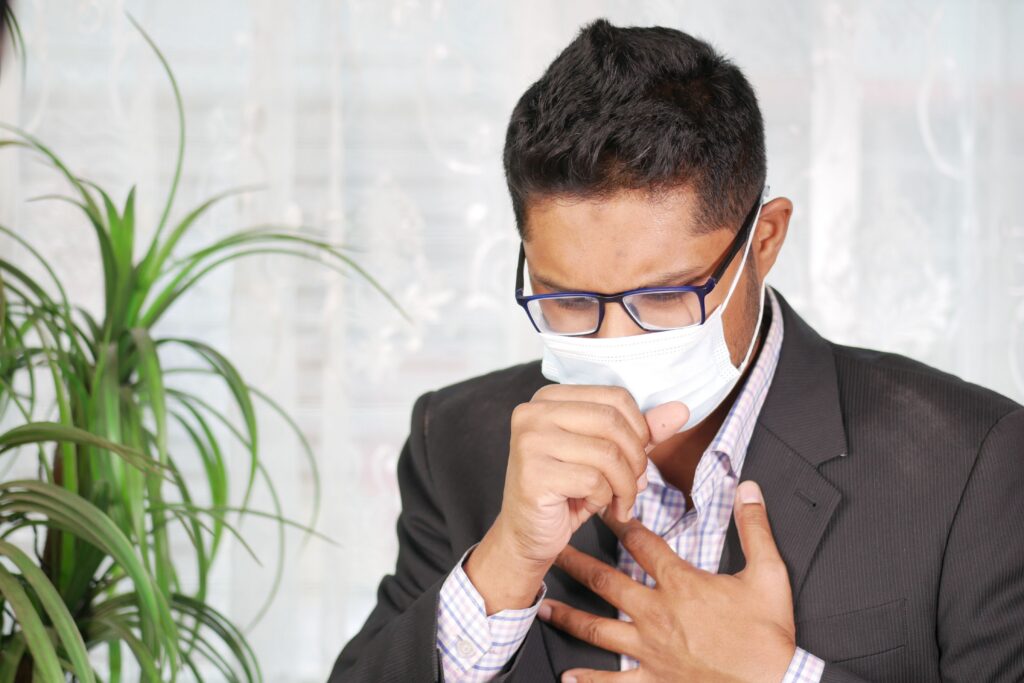
The fever is gone. Your sore throat has improved. The constant sneezing and runny nose are finally settling down.
You might think the worst is over.
But if you live with asthma, recovering from a respiratory infection can be more complicated than that. You may still be coughing, feeling unusually tired, sleeping poorly or getting breathless during activities that previously felt easy.
Perhaps you can manage a short walk but feel exhausted after climbing the stairs. Maybe you return to work, only to realise that concentrating for an entire day takes more effort than expected. Or your cold seems to be improving, but your asthma symptoms suddenly become more noticeable.
This can be frustrating, especially when everyone around you expects you to be back to normal simply because your fever has disappeared.
Recovering from a respiratory infection when you have asthma is not just about getting rid of the cold. It is also about allowing your breathing, energy levels, sleep and daily routine to settle back into a manageable pattern.
There is no single recovery timeline that works for everyone. The right pace depends on the infection, how your asthma has been affected, your usual level of asthma control and whether other symptoms are present.
In this guide, we will explore how to approach the recovery period, return to everyday activities gradually and recognise when it is time to seek medical advice.
Why can recovery take longer when you have asthma?
Respiratory infections, including common colds, influenza and other viral infections, can trigger asthma symptoms.
When you have asthma, your airways are sensitive and can become inflamed and narrowed. A respiratory infection may aggravate this sensitivity, leading to coughing, wheezing, chest tightness or breathlessness.
Even when the infection itself is improving, your airways may not immediately return to their usual state.
Several factors can contribute to a difficult recovery.
1. Your asthma symptoms may continue after the cold improves
You might no longer have a fever or sore throat but still experience coughing, wheezing or chest tightness.
A cough can sometimes linger after a respiratory infection. However, in someone with asthma, a persistent cough may also indicate ongoing airway irritation or worsening asthma.
Do not automatically assume that every lingering cough is harmless or simply part of recovery. If symptoms are not improving, are disrupting sleep or are accompanied by worsening breathing, speak to your healthcare professional.
2. Your energy levels may take time to return
Fighting an infection can be exhausting. Fever, disrupted sleep, reduced appetite and several days of lower activity can all leave you feeling drained.
You may find that activities such as grocery shopping, cooking, commuting or attending meetings require more effort than usual.
This does not necessarily mean your asthma is worsening, but fatigue can occur alongside poorly controlled asthma and other medical problems. Pay attention to the overall pattern rather than attributing every symptom to the infection.
3. Poor sleep can affect the whole day
A respiratory infection can disturb sleep through coughing, nasal congestion, throat irritation or fever. Asthma symptoms at night may add another layer of disruption.
After several nights of poor sleep, you may notice lower energy, difficulty concentrating, irritability and reduced stamina.
If coughing or breathing difficulties repeatedly wake you at night, discuss this with your healthcare professional. Night-time symptoms can be a sign that your asthma needs reassessment.
4. Your usual routine may suddenly feel demanding
After spending several days resting, your normal schedule can feel surprisingly difficult.
You may return to work and try to complete everything you missed. You might attempt your usual workout because you no longer have a fever. Or you may resume household chores all at once.
The problem is that feeling better is not always the same as being ready for every activity at your previous intensity.
A gradual return can help you identify what you can comfortably manage without putting unnecessary pressure on yourself.
Step 1: Understand where you are in your recovery
Before planning your return to routine, take a moment to assess how you are actually feeling.
Ask yourself:
- Is my breathing close to its usual baseline?
- Am I coughing less than I was a few days ago?
- Am I sleeping better?
- Can I manage basic daily activities without unusual breathlessness?
- Am I needing my prescribed reliever medication more often than usual?
- Have I had any asthma symptoms during the night?
- Is my energy improving, staying the same or getting worse?
You do not need to answer every question perfectly. The purpose is to notice patterns.
For example, you might feel well enough to sit at your desk for a few hours but not yet have the energy for a long commute and a full day of meetings.
That is useful information. It can help you decide which activities to resume first and where you may need temporary flexibility.
Important: If you are still experiencing significant breathlessness, worsening wheezing, chest tightness or a need for more reliever medication than usual, do not treat this simply as a fitness problem. Follow your asthma action plan and contact your healthcare professional.
Step 2: Return to work without pushing yourself too hard
For many people, returning to work is one of the first major challenges after a respiratory infection.
You may have emails to answer, meetings to attend, deadlines to meet and colleagues waiting for updates. If you work from home, it can be tempting to start working as soon as you feel slightly better.
But a full day of work can be demanding even when you are not physically active.
If you work from home
Consider easing back into your schedule by:
- Starting with shorter periods of focused work if your responsibilities allow.
- Taking regular breaks rather than working continuously.
- Prioritising essential tasks instead of trying to clear your entire backlog immediately.
- Keeping water nearby if drinking fluids is comfortable for you.
- Avoiding unnecessary late-night work while your sleep is recovering.
- Adjusting your workload temporarily if fatigue or coughing is affecting concentration.
If you commute to an office
Returning to the office may involve additional challenges, including travel, pollution, dust, crowds and exposure to other respiratory infections.
Where practical, consider:
- Discussing a phased return or temporary work-from-home arrangement.
- Avoiding strenuous travel when you are still significantly fatigued.
- Checking air quality before planning outdoor travel or activity.
- Following appropriate infection-prevention measures, particularly while you are still recovering.
- Keeping your prescribed medicines accessible.
You do not need to prove that you have recovered by completing a full workday immediately.
If your symptoms are still significant, discuss the situation with your healthcare professional and employer rather than forcing yourself through it.
Step 3: Restart physical activity gradually
One of the most frustrating parts of recovery can be discovering that your stamina has changed.
You may previously have walked comfortably for 30 minutes, climbed several flights of stairs or exercised regularly. After an infection, even a shorter activity may feel tiring.
This can happen because of the infection, reduced activity, poor sleep or ongoing respiratory symptoms. Persistent breathlessness should not automatically be attributed to deconditioning.
Start with everyday movement
If your symptoms are improving, your breathing is stable and you are not experiencing warning signs, you can begin by returning to ordinary activities at a comfortable pace.
For example:
- Start with light household tasks.
- Move around your home as tolerated.
- Try a short, easy walk when you feel ready.
- Take breaks when needed.
- Increase duration before returning to more demanding activity.
This is an illustration, not a fixed exercise prescription. Your starting point should depend on how unwell you have been and your current symptoms.
When should you return to your usual workout?
Do not use the disappearance of fever alone as proof that you are ready for strenuous exercise.
Before returning to vigorous activity, consider whether:
- Your overall symptoms are clearly improving.
- Your breathing is close to its usual baseline.
- You can manage normal daily activities comfortably.
- You are sleeping reasonably well.
- You are not experiencing unexplained breathlessness, chest pain or significant weakness.
If you have had a substantial asthma flare-up, required urgent medical care or are still experiencing respiratory symptoms, ask your healthcare professional when and how to resume exercise.
Follow your prescribed asthma treatment and action plan. Do not exercise through wheezing, chest tightness or unusual breathlessness just to get back on schedule.
The goal is to rebuild your routine, not to test how much discomfort you can tolerate.
Step 4: Give your sleep schedule time to recover
Sleep can be one of the last parts of your routine to feel normal again.
Coughing may keep you awake. Nasal congestion may make sleeping uncomfortable. You may also feel tired throughout the day after several nights of interrupted rest.
Try to make sleep a priority during recovery.
Practical ways to support better sleep
- Aim for a reasonably consistent bedtime and wake-up time.
- Allow extra time for rest if your usual schedule has been disrupted.
- Keep your sleeping environment comfortable and free from known triggers.
- Follow your prescribed treatment plan.
- Avoid taking additional medicines or changing doses without appropriate medical guidance.
- Notice whether coughing, wheezing or breathlessness is repeatedly waking you.
If you have persistent night-time asthma symptoms, do not simply accept poor sleep as part of having a cold.
Speak to your healthcare professional, particularly if you are waking because of breathing difficulties or needing your reliever medication more often.
Step 5: Do not ignore your asthma medicines during recovery
When the fever disappears and the cold seems to improve, it can be tempting to assume that everything is back to normal.
However, respiratory infections can aggravate asthma even after other symptoms begin to settle.
Continue your prescribed asthma treatment as directed. Do not stop your controller medication, increase doses or start oral steroids or antibiotics on your own because you feel that your recovery is taking too long.
If your asthma symptoms have worsened, your treatment may need review by a healthcare professional.
Review these three things
Your regular treatment: Are you taking your prescribed medicines as directed?
Your inhaler technique: If you are unsure whether you are using your inhaler correctly, ask a healthcare professional or pharmacist to check your technique.
Your asthma action plan: Do you know what to do if your symptoms worsen, which medicines to use according to your plan and when to seek medical help?
If you have needed more reliever medication than usual, have experienced significant night-time symptoms or have had a serious flare-up, arrange a review with your healthcare professional.
A respiratory infection can be a useful reason to review your asthma management, especially if infections repeatedly lead to difficult flare-ups.
Step 6: Eat, drink and rest according to your needs
There is no special food or drink that can guarantee a faster recovery from a respiratory infection. However, maintaining adequate nutrition, drinking enough fluids and allowing yourself to rest can support general recovery.
During illness, you may have eaten less than usual or found it difficult to maintain your normal routine.
As your appetite returns, aim for regular, balanced meals that suit your needs.
A few practical reminders:
- Drink fluids regularly, unless a healthcare professional has advised you to restrict them.
- Eat balanced meals with foods you normally tolerate.
- Allow yourself additional rest when you feel unusually tired.
- Avoid using supplements, herbal remedies or over-the-counter medicines as substitutes for prescribed asthma treatment.
- Check with a healthcare professional or pharmacist before taking new medicines, particularly if you have other medical conditions or take multiple medicines.
You do not need to follow an elaborate recovery diet. Focus on meeting your basic needs while your body recovers.
Step 7: Return to social activities thoughtfully
After several days of illness, you may be eager to meet friends, attend family events or return to your usual social life.
Your decision should take into account both how you feel and whether you might still be contagious.
Respiratory infections vary, so there is no single rule that applies to every illness.
Consider these points:
- Follow current public health guidance for the infection you have, if known.
- Stay home while you have a fever or feel too unwell to participate comfortably.
- Take appropriate precautions around people who are at higher risk of severe illness.
- Consider ventilation and other sensible precautions when meeting others indoors.
- Avoid crowded or polluted environments if they worsen your breathing.
- Do not feel pressured to attend an event if you are still recovering.
If you have returned to social activities but your breathing deteriorates, reassess the situation and seek medical advice when needed.
Step 8: Know the difference between lingering symptoms and warning signs
Not every cough after a cold means that you are having an asthma attack. Some people experience a lingering cough after respiratory infections.
However, it is important not to assume that every symptom is simply part of recovery.
Symptoms worth discussing with your healthcare professional
Arrange medical advice if you notice:
- Coughing that is not improving or is getting worse.
- Persistent wheezing or chest tightness.
- Breathlessness during activities that you normally tolerate.
- Repeated waking at night because of asthma symptoms.
- Increasing reliance on your prescribed reliever medication.
- Fever that persists, returns after improving or is accompanied by worsening symptoms.
- Fatigue that is severe, persistent or getting worse.
- Symptoms that improve and then deteriorate again.
These symptoms can have several causes, and a healthcare professional can help determine whether your asthma needs reassessment or another problem needs investigation.
When is it an emergency?
Seek emergency medical care immediately if you have severe or rapidly worsening breathing difficulty, cannot speak comfortably in full sentences, become confused or unusually drowsy, develop bluish or grey lips, or experience other signs of a serious breathing emergency.
Follow your written asthma action plan while arranging urgent help. Do not wait for a cough or wheeze to settle on its own if you are struggling to breathe.
A simple, flexible return-to-routine checklist
Use this checklist to reflect on your recovery. It is not a medical clearance tool, and you do not need to tick every box before seeking medical advice.
- My overall infection symptoms are improving.
- I am monitoring my breathing rather than judging recovery only by my fever.
- I am taking my prescribed asthma medicines as directed.
- I know what my asthma action plan says to do if symptoms worsen.
- I am prioritising sleep and allowing myself to rest.
- I am returning to work and household tasks at a manageable pace.
- I am increasing physical activity gradually, according to my symptoms.
- I am paying attention to night-time symptoms and reliever use.
- I know when to contact my healthcare professional.
- I know which symptoms require emergency care.
If several items remain difficult because of breathlessness, wheezing or worsening asthma, do not simply wait for your stamina to return. Seek medical advice.
Siddhant’s POV: The hardest part can be realising that you are not back to normal yet
Recently, I shared how a common cold or viral infection can gradually turn into a full-blown asthma attack. Even when you take precautions and follow your treatment, the experience can leave you feeling helpless.
That is one of the frustrating realities of living with asthma: an illness that seems ordinary to someone else can have a much bigger impact on your breathing and daily life.
When you are recovering, there can be pressure to return to normal as quickly as possible. You may feel that once the fever is gone, you should be able to work a full day, exercise and get everything done that you missed.
But recovery is not always that straightforward.
Sometimes, you need to acknowledge that your body is still catching up. You may need more rest, a lighter workload or a slower return to physical activity. And if your breathing is not returning to its usual pattern, you may need medical advice rather than simply pushing harder.
For me, one of the important lessons of living with asthma is that feeling better and being fully recovered are not necessarily the same thing.
I also believe it is important to take persistent symptoms seriously. There is a difference between giving yourself time to recover and ignoring signs that your asthma may still be affected.
You do not have to turn recovery into another task that you must complete perfectly. Pay attention to your breathing, follow your asthma action plan, ask for help when you need it and allow your routine to return at a sensible pace.
This section reflects Siddhant Jain’s experience of living with asthma for more than 20 years and his recent reflections on how a viral infection can affect asthma. Individual recovery experiences vary.
Conclusion
Returning to routine after a respiratory infection can be challenging when you have asthma. The fever may be gone, but coughing, fatigue, disrupted sleep and airway symptoms can make everyday activities feel harder than usual.
Give yourself permission to rebuild your routine gradually. Prioritise rest, return to work and exercise according to how you are feeling, continue your prescribed asthma treatment and pay attention to changes in your breathing.
Most importantly, do not assume that persistent or worsening symptoms are simply part of recovery. Follow your asthma action plan and seek medical advice when needed.
Recovery is not a race. The aim is to return to your everyday life while taking your breathing seriously.
Take the next step with Asthma Friend
- Join the community: Connect with people who understand life with asthma at Asthma Friend.
- Learn through play: Explore free educational games at Asthma Friend Games.
- Prepare for worsening symptoms: Create your free asthma action plan using the Asthma Friend Action Plan Generator. Review it with your healthcare professional so it reflects your prescribed treatment.
Disclaimer: This article is for general educational purposes only. It does not replace professional medical advice, diagnosis or treatment. Follow your healthcare professional’s advice and your personal asthma action plan.
Frequently asked questions
There is no single timeline. Recovery depends on the infection, how severely your asthma has been affected, your usual asthma control and other health factors. Some people improve relatively quickly, while others experience a lingering cough, fatigue or asthma symptoms. Persistent or worsening breathing symptoms should be assessed by a healthcare professional.
A cough can linger after a respiratory infection, but asthma-related airway inflammation or worsening asthma may also contribute. If the cough is worsening, disturbing your sleep, accompanied by wheezing or associated with breathlessness, seek medical advice rather than assuming it is harmless.
Rest is important when you are unwell, but the appropriate level of activity depends on your symptoms and recovery. If your breathing is stable and your symptoms are improving, you may be able to resume light daily activities gradually. Do not push through significant breathlessness, chest tightness or worsening asthma symptoms.
Return gradually when your symptoms are improving and your breathing is stable. After a significant asthma flare-up, severe infection or episode requiring urgent care, ask your healthcare professional when it is appropriate to resume exercise. Stop and seek advice if you experience unusual breathlessness, wheezing, chest tightness or chest pain.
Do not change your treatment on your own. Continue prescribed medication as directed and follow your written asthma action plan. If symptoms have worsened or you need your reliever more often than usual, contact your healthcare professional for advice.
Fatigue may continue after an infection because of disrupted sleep, reduced activity, reduced food intake or the effects of the illness itself. However, persistent or worsening fatigue can have other causes. Seek medical advice if it is severe, prolonged or accompanied by other concerning symptoms.
Yes. Fever and asthma symptoms do not necessarily improve at the same time. You can have worsening asthma symptoms while other signs of infection are settling. Follow your asthma action plan and seek medical advice if your breathing deteriorates.
Seek medical advice if asthma symptoms are not improving, your cough or breathlessness is worsening, you are waking at night because of symptoms or you need your reliever medication more frequently than usual. Seek emergency care immediately for severe or rapidly worsening breathing difficulty.
Related posts:
 How to Prepare the Perfect Nasal Saline Solution for Jal Neti/Nasal Irrigation
 Dust Mites in Indian Homes: A 7-Day Bedroom Makeover
 The Role of Meditation in Asthma Management
 Cold vs Asthma Flare: How to Tell and What to Do
 How Long After Painting Is It Safe for an Asthma Patient to Enter a Room?
 The Impact of Air Conditioning on Asthma: Helpful or Harmful?
 How to Manage Asthma While Working from Home
 Asthma and Oral Health: Understanding the Connection and Prevention Tips
 Asthma and Obesity: Understanding the Connection
 Asthma and Type 2 Diabetes: Understanding the Link and Managing Both Conditions