
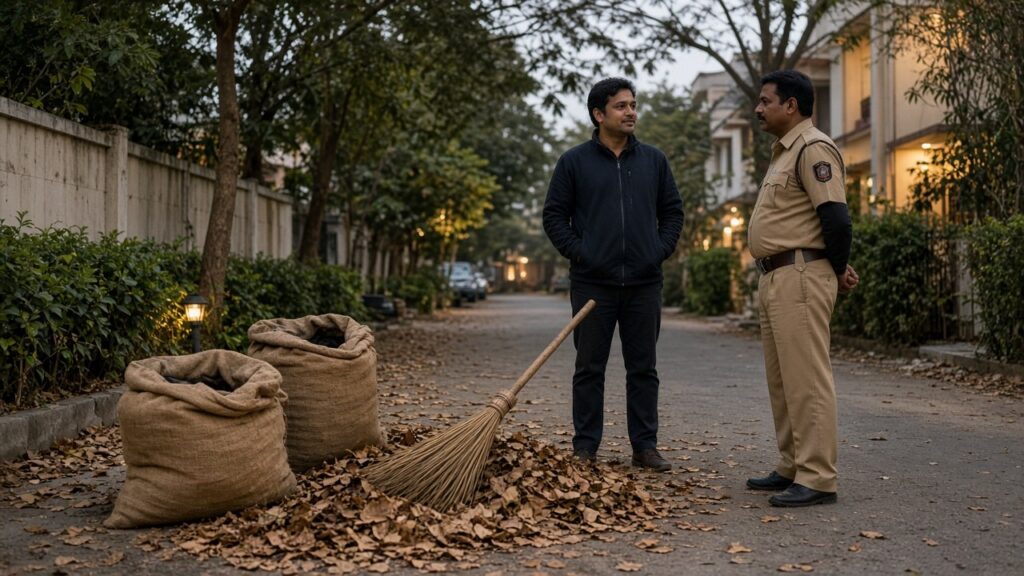
As winter sets in across North India, a familiar smell drifts through many colonies and housing societies in the evening: burning leaves, plastic and garbage. Guards light small fires to keep warm, sweepers burn piles of dry leaves, and waste heaps on empty plots smoulder for hours. For someone with asthma, that smoke can mean coughing, a tight chest and a disturbed night, even with windows closed.
This guide explains why open burning matters for people with asthma, how to protect yourself on smoky evenings, and how to raise the issue with your Residents’ Welfare Association (RWA) in a calm, constructive way.
This article is general education, not medical advice. Please talk to your doctor about your symptoms and treatment, and never start, stop or change any asthma medicine based on a blog post. If you are struggling to breathe, call 112 or go to the nearest emergency department.
Why garbage and leaf smoke is a problem for asthma
Smoke from burning leaves and waste contains fine particles and irritant gases. When plastic, rubber or mixed garbage is burned, the smoke can be even harsher. For people with asthma, breathing this smoke can irritate the airways and trigger symptoms.
Local fires also add to the wider winter haze. On still, cold evenings, smoke tends to stay close to the ground, right at the level of balconies and windows. Our guide to the impact of air pollution on asthma explains why winter air in many Indian cities is so tough on the lungs.
Protecting yourself on smoky evenings
Before raising the issue with anyone, look after your own breathing.
- Close windows and doors facing the smoke, especially in the evening.
- Use a cleaner-air room for sleep, with windows closed and, if you have one, an air purifier running.
- Avoid evening walks near burning piles. Shift walks to times or places with cleaner air.
- Keep your reliever close and follow your action plan if symptoms start.
- Check the AQI for your area and plan outdoor time on better days. Our AQI guide for asthma in India explains the bands.
- Consider a well-fitting mask if you must pass through smoky areas, after checking with your doctor. Our guide to choosing an N95 you can breathe in can help.
Getting your home ready for the burning season
Smoke from outside finds small gaps. Before the worst weeks of winter, a few simple steps can help:
- Check window and door gaps, and use simple draught strips where smoke seeps in.
- Keep one bedroom as the cleanest room, with fewer fabrics and less clutter that hold smoke smell.
- Run kitchen and bathroom exhaust fans for short bursts instead of opening every window when the air outside is smoky.
- Wash curtains and bedding a little more often during heavy smoke weeks.
- Keep a spare reliever where your action plan suggests, so you are never searching for it on a smoky night.
Our guide on creating an asthma friendly home has more room-by-room ideas.
Understanding why burning happens
People who burn leaves or garbage are often not trying to harm anyone. Common reasons include:
- Guards and staff feeling cold during night shifts.
- No clear system for collecting and composting dry leaves.
- Irregular garbage pickup, leaving piles to grow.
- Habit and lack of awareness about health effects.
Understanding these reasons helps you suggest practical solutions rather than just complaints.
How to raise it with your RWA
Gather simple information
- Note the dates, times and places where burning happens.
- Take a photo if you can do so safely and respectfully, without confronting anyone.
- Talk to neighbours. Others with asthma, young children, older parents or heart and lung conditions may also be affected.
Write a polite, clear message
Keep it short, factual and focused on solutions. Here is a sample you can adapt:
“Dear RWA Committee, I live in [block or house number]. Over the last few weeks, leaves and garbage have been burned near [location], usually in the evenings. The smoke enters homes and is especially hard for residents with asthma, children and elderly members, including me. Could we please discuss a few steps, such as clear instructions to staff not to burn waste, a leaf composting pit or bags, warm jackets or a heater for guards on night duty, and regular garbage collection? I would be happy to help. Thank you.”
Suggest practical alternatives
- Leaf composting: a simple pit, compost bags or bins in a corner of the park.
- Regular collection: a fixed schedule for dry leaf and garbage pickup.
- Warm gear for staff: jackets, blankets or a safe electric heater in the guard room, so they do not need fires.
- Clear notices: signs at entry points and in parks saying burning is not allowed.
- Staff briefing: a short, friendly talk with guards and sweepers about why smoke matters.
Raise it at a meeting
Many RWAs hold monthly or annual meetings. Ask to add the topic to the agenda. Bring neighbours who share the concern. A group voice is often more effective than a single complaint.
Be patient and persistent
Change can take time. Follow up politely after a week or two. Thank the committee and staff when things improve.
If burning continues
If the issue continues despite discussion, you may wish to explore local civic channels, such as your municipal ward office or the local body that handles sanitation. Keep your tone factual and focus on the health impact and practical solutions. Our article on advocating for better asthma awareness in your community has more ideas for building support.
Talking to staff directly
If you feel comfortable, a kind word with guards or sweepers can help. Explain that the smoke makes it hard for you to breathe, and ask if they need anything to avoid burning, like bags or a warmer place to sit. Avoid shouting or blaming. Staff are often following old habits or instructions.
Our guide on setting boundaries with smokers in the family shares communication tips that work for other smoke situations too.
Warning signs that need urgent help
Call 112 or go to the nearest emergency department if you have:
- Severe breathlessness or trouble speaking.
- Lips or fingertips that look blue or grey.
- No improvement with your reliever.
- Drowsiness or confusion.
Siddhant’s POV: Small local changes add up
I have lived with asthma for more than 30 years. My breathing improved after I moved from Delhi NCR to Dehradun.
My view is that cleaner neighbourhood air is a shared responsibility, not a personal favour for someone with asthma. I would encourage residents to raise leaf and garbage burning calmly with their RWA and ask about workable collection alternatives. I believe a specific, respectful request is more useful than a confrontation beside a smoky fire. Nobody should have to justify needing less smoke near home.
Siddhant Jain, founder of Asthma Friend, has lived with asthma for more than 30 years.
Conclusion
Leaf and garbage burning in winter is a common, often overlooked asthma trigger in Indian colonies and societies. Protect yourself with closed windows, a cleaner-air room, a nearby reliever and smart timing of outdoor time. Then raise the issue with your RWA calmly, with clear information, neighbours’ support and practical alternatives such as composting, regular collection and warm gear for staff. Be patient and persistent, and thank people when things improve. If breathing becomes severely difficult, call 112.
Take the next step with Asthma Friend
- Join our community: Connect with people who understand life with asthma at Asthma Friend.
- Learn through play: Explore free educational games at Asthma Friend Games.
- Create your free asthma action plan: Use the Asthma Friend Action Plan Generator and keep a copy handy through the festive season.
Frequently asked questions
Yes. Smoke from burning leaves and waste contains fine particles and irritant gases that can trigger asthma symptoms in many people.
Write a short, polite message with dates, times, places and the health impact, suggest practical alternatives and ask to discuss it at a committee meeting.
Options include leaf composting pits or bags, regular garbage collection, warm gear or a safe heater for guards and clear no-burning notices.
Close windows facing the smoke, sleep in a cleaner-air room, keep your reliever close and follow your asthma action plan if symptoms start.
A calm, kind conversation often works better than confrontation. Explain the health impact and ask what they need to avoid burning.
Call 112 if you have severe breathlessness, trouble speaking, blue or grey lips, no improvement with your reliever, or drowsiness and confusion.
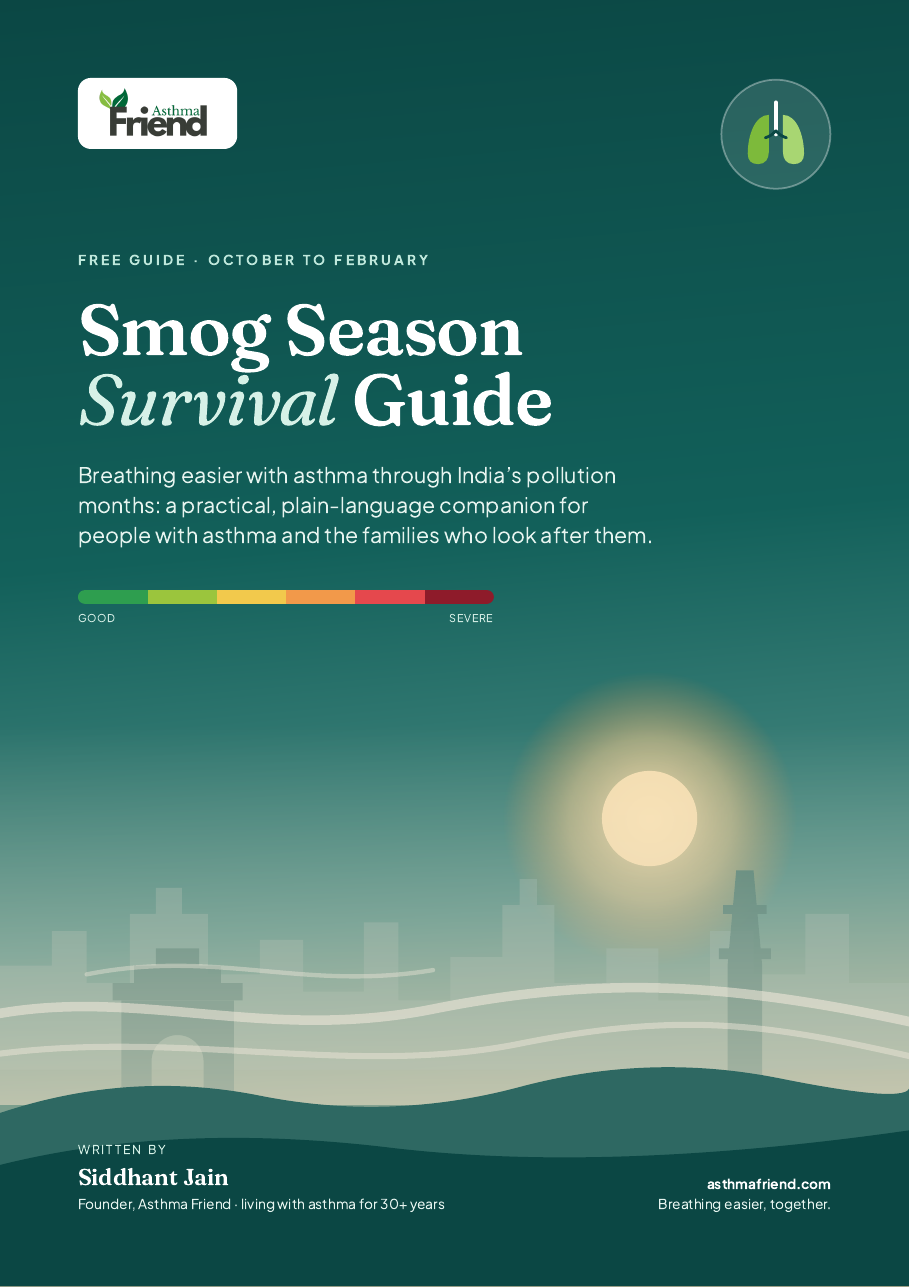
Free: Smog Season Survival Guide
A practical 27-page guide to breathing easier with asthma through India's pollution months: AQI explained, clean air at home, masks, kids and school, plus printable checklists. Join the free Asthma Friend newsletter and we'll email it to you.


Last reviewed: 8 November 2026
Information on this page was written against widely published guidance from national and international respiratory health bodies. It is educational only and is not a substitute for personal medical advice from a doctor.

About the author
Siddhant Jain
Siddhant Jain is the founder of Asthma Friend. He has lived with asthma for more than 30 years. After moving from Delhi NCR to Dehradun, his breathing improved, and he built Asthma Friend to give Indian patients and caregivers practical, empathetic education. The content is educational and is not a substitute for advice from a doctor.
Related posts:
 New Year Resolutions to Manage Your Asthma Better in 2026
 Why a Cough May Linger After a Cold and When to Seek Care
 Is Your Child Wheezing With Every Cold? Viral Wheeze vs Asthma in Children Under 5
 Hotel Rooms and Asthma: Questions to Ask Before You Book
 Asthma and Staying with Relatives: How to Discuss Household Triggers
 Why Occasional Smoking or Hookah Is Dangerous Especially If You Have Asthma
 The Impact of Vaping on Asthma And Why Its Rising Popularity Is a Concern
 Asthma vs. Allergies: Know the Difference, Manage Both
 Winter Asthma in North India: A Practical Month-by-Month Guide
 Room Heaters and Asthma in India: Oil-Filled vs Fan vs Halogen, Angithi Smoke and Safe Winter Warmth