
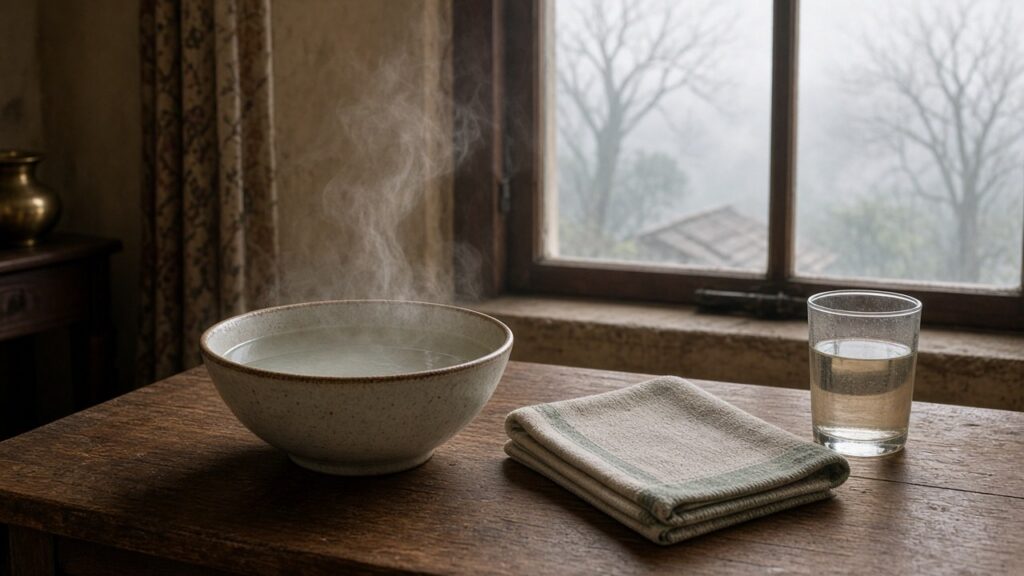
In many Indian homes, the first response to a blocked nose or chesty cough is a bowl of hot water, a towel over the head and a few deep breaths of steam. Bhaap is passed down from grandparents, recommended by neighbours and repeated every winter. If you live with asthma, you may have wondered whether it helps, whether it is safe, and whether there is something better.
This guide looks at what steam inhalation can and cannot do, the safety risks that are easy to overlook, and gentler habits to discuss with your doctor.
This article is general education, not medical advice. Please talk to your doctor about your symptoms and treatment, and never start, stop or change any asthma medicine based on a blog post. If you are struggling to breathe, call 112 or go to the nearest emergency department.
What people hope steam will do
Most people reach for bhaap hoping to:
- Loosen a blocked or stuffy nose during a cold.
- Ease thick mucus in the throat or chest.
- Feel warm and comforted on a cold evening.
- Relax before sleep.
Some people find that warm, moist air makes their nose feel more open for a while. That comfort is real for them. But comfort is not the same as treating asthma.
What steam does not do for asthma
Asthma involves swelling and tightening of the airways in the lungs. Steam does not treat that inflammation and it does not open the airways the way a prescribed reliever does. It is not a substitute for controller medicine, your reliever, or an asthma action plan.
It is especially important not to delay using your reliever, or delay seeking help, because you are trying steam first. If your chest is tight, you are wheezing or you are breathless, follow your written plan. If that does not help, call 112.
Why steam can sometimes make asthma worse
For some people with asthma, steam is a trigger rather than a comfort. Possible reasons include:
- Sudden heat and moisture: very hot, wet air can irritate sensitive airways and set off coughing or tightness.
- Strong additives: balms, menthol, eucalyptus oil, camphor or other strong-smelling products added to the water can irritate the airways in some people.
- Heavy breathing under a towel: covering the head traps heat and can make breathing feel harder, especially if you are already breathless.
- Humid rooms: frequent steaming in a small, closed room can add dampness, which may encourage mould over time.
If you have ever coughed more or felt tighter after bhaap, take that seriously and mention it to your doctor. Our article on the link between humidity and asthma explains why both very damp and very dry air can cause trouble.
Burns: the risk families underestimate
Hot water burns are a real danger with steam inhalation, especially for children and older adults. A bowl can tip over, a towel can catch the edge, or someone can lean too close.
Safety points if your doctor says steam is okay for you:
- Never let young children do steam inhalation unsupervised. Many doctors advise against it for children altogether because of burn risk.
- Use a stable, flat surface and a heavy bowl that will not slide.
- Let boiling water cool for a few minutes before use.
- Keep your face a comfortable distance away, not right over the water.
- Avoid steaming when you are sleepy, unwell and unsteady, or alone if you are frail.
- Keep the bowl away from the edge of tables and away from pets.
Electric steamers can reduce tipping risk, but they still get hot and need care.
Who should be especially careful
Talk to your doctor before using steam if you:
- Have asthma that flares with heat, humidity or strong smells.
- Are caring for a small child with asthma or wheezing.
- Are elderly, have reduced sensation in the hands or face, or have trouble with balance.
- Have heart or other health conditions your doctor has asked you to be careful with.
Gentler options to talk about with your doctor
If your main problem is a blocked nose, mucus or dryness, there are other approaches people commonly discuss with their doctors:
- Saline nasal rinses or sprays: many people find salt-water rinses helpful for a blocked nose. Our guides to nasal irrigation for asthma relief and preparing a nasal saline solution for jal neti cover safe technique, including using boiled and cooled or sterile water.
- Warm drinks: warm water, soups or a light kadha without strong spices can feel soothing, if they suit you.
- A warm shower: some people find a warm, not hot, shower in a ventilated bathroom comfortable, without leaning over boiling water.
- Treating allergies: if a blocked nose is frequent, ask about allergic rhinitis and whether it needs treatment. Our article on asthma and allergic rhinitis explains the link.
- Keeping room air comfortable: avoid very dry rooms from heaters, and avoid very damp rooms from drying clothes indoors.
None of these replace your asthma medicines. They are comfort and nose-care measures to talk through with your doctor.
When a cold may be turning into an asthma flare
Colds are one of the most common reasons asthma gets worse in winter. Watch for:
- Wheezing or a tight chest that was not there before.
- Coughing that keeps you up at night.
- Needing your reliever more than your plan says is usual.
- Breathlessness when walking or talking.
Follow your action plan and contact your doctor early. Our guide on telling the difference between a cold and an asthma flare can help you notice changes sooner.
Emergency signs
Call 112 or go to the nearest emergency department if you have trouble speaking in full sentences, your lips look blue or grey, your reliever is not helping, or you feel drowsy or confused.
A practical approach for families
If bhaap is a strong family tradition, you do not need to argue about it. You can:
- Explain that asthma needs its own plan from a doctor.
- Agree that nobody adds strong oils or balms when someone with asthma is nearby.
- Keep children away from bowls of hot water.
- Make sure the person with asthma has their reliever handy and uses it as their plan says, rather than waiting for steam to work.
Siddhant’s POV: Respecting home remedies without relying on them
I have lived with asthma for more than 30 years. My breathing improved after I moved from Delhi NCR to Dehradun.
My view is that care from relatives deserves kindness, but advice about bhaap still needs careful boundaries. I would encourage families to ask a healthcare professional about safety rather than treating steam as asthma treatment. I believe practical support means respecting the prescribed action plan and avoiding pressure to try a remedy. Warm intentions should never delay help when breathing becomes difficult.
Siddhant Jain, founder of Asthma Friend, has lived with asthma for more than 30 years.
Conclusion
Steam inhalation may feel comforting for a blocked nose, but it does not treat asthma, it can trigger symptoms in some people, and it carries a real burn risk, especially for children. If you choose to use it, ask your doctor first, skip strong additives and follow simple safety steps. For nose care, saline rinses and comfortable room air are gentler options to discuss. Most importantly, never let bhaap delay your reliever or emergency help. If breathing is difficult, call 112.
Take the next step with Asthma Friend
- Join our community: Connect with people who understand life with asthma at Asthma Friend.
- Learn through play: Explore free educational games at Asthma Friend Games.
- Create your free asthma action plan: Use the Asthma Friend Action Plan Generator and keep a copy handy through the festive season.
Frequently asked questions
Steam does not treat the airway inflammation behind asthma and is not a substitute for prescribed inhalers. Some people find it comforting for a blocked nose, while others find it triggers coughing or tightness.
For some people, yes. Very hot, moist air and strong additives such as menthol or balms can irritate sensitive airways. If steam makes you cough or feel tight, stop and tell your doctor.
Hot water bowls carry a serious burn risk for children, and many doctors advise against steam inhalation for young children. Ask your child’s doctor before trying it.
Strong-smelling additives can irritate the airways of some people with asthma. Check with your doctor before adding anything, and avoid them if they have bothered you before.
Many people discuss saline nasal rinses or sprays, warm drinks and keeping room air comfortable with their doctor. If a blocked nose is frequent, ask whether allergic rhinitis needs treatment.
If you are wheezing, breathless, using your reliever more than usual or your reliever is not helping, follow your action plan and seek medical help. Call 112 in an emergency.
Last reviewed: 8 November 2026
Information on this page was written against widely published guidance from national and international respiratory health bodies. It is educational only and is not a substitute for personal medical advice from a doctor.

About the author
Siddhant Jain
Siddhant Jain is the founder of Asthma Friend. He has lived with asthma for more than 30 years. After moving from Delhi NCR to Dehradun, his breathing improved, and he built Asthma Friend to give Indian patients and caregivers practical, empathetic education. The content is educational and is not a substitute for advice from a doctor.