
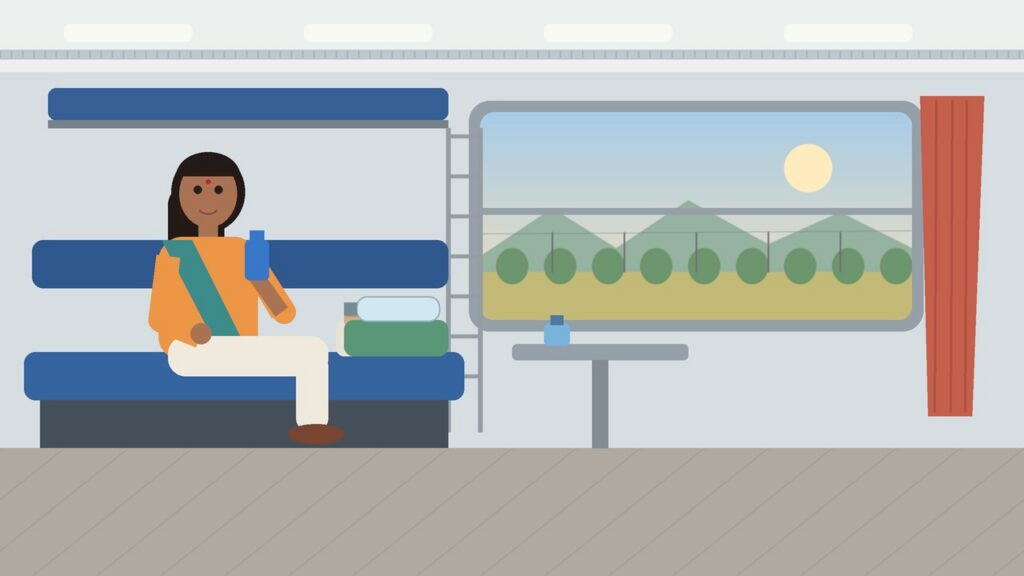
The tickets are booked, the waiting list finally cleared, and you are heading home for the festive season or off on a long-awaited trip. For millions of us, the train is how India travels. But if you live with asthma, an overnight journey can bring its own worries: dusty blankets, an AC coach that feels like a fridge, smoke on the platform, a packed general compartment, and the question of whether your inhaler is somewhere you can actually reach it at 2 AM.
This guide is a practical checklist for train travel with asthma in India: choosing between sleeper, AC classes and chair car, picking your berth, keeping your reliever close, handling linen dust, AC chill and fumes, planning medicines for delays, and what to do if symptoms get worse on board.
This article is general education, not medical advice. Everyone’s asthma is different. Please talk to your doctor about your own travel plans and treatment, and never start, stop or change any asthma medicine on your own.
1. Why train journeys can be tricky with asthma
Trains let you lie down, walk around and sleep. But a long journey also puts several common asthma triggers in one small space for many hours.
- Dust and linen. Blankets, pillows, curtains and seat fabric can hold dust and dust mites, and shaking out a blanket can send it straight into your face.
- Cold, dry air. AC coaches can get very cold at night, and cold, dry air can tighten sensitive airways.
- Smoke and fumes. Busy stations can have diesel exhaust, cooking smoke from stalls and people smoking nearby. In winter, smog often settles over stations in north India.
- Crowds. Festive season trains are packed, which can mean stuffy air, more coughs and colds going around, and less room to sit upright and breathe.
- Strong smells. Pantry cooking, perfume, deodorant sprays, room fresheners and cleaning chemicals in a closed coach can bother some people.
If you also use local trains, metros or buses every day, our guide on public transport tips for people with asthma in India covers daily commuting. This article focuses on long-distance journeys.
2. Sleeper vs AC coaches: what to think about
There is no single best class for everyone with asthma. Each has trade-offs, and your budget, the season and how your asthma behaves all matter.
Sleeper class
- Windows open, so you get fresh air, but also dust, smoke and fumes from the tracks and stations, plus cold wind on winter nights.
- Bedding is usually not provided, so you can bring your own clean sheet and shawl, which some people with dust sensitivity actually prefer.
- Coaches get very crowded in festival season, so keep medicines on your body.
3AC, 2AC and 1AC
- Closed windows keep out much of the outside dust and smoke, which many people with asthma find helpful in pollution season.
- The air can feel cold and dry, especially near the AC vents. Layers and a scarf help.
- Bedding is usually provided. It is generally washed, but blankets may not be washed as often as sheets, so dust is still possible.
- 2AC and 1AC usually have fewer people per section, and 1AC cabins have doors, which can mean less crowding and fewer strong smells.
Chair car and day trains
You sit upright for hours and the AC can be chilly. Carry a light layer and keep your reliever in a pocket, not in the overhead rack.
3. Before you travel: a simple countdown
About a week before
- Check how much of each medicine you have. Pack enough for the whole trip plus a few extra days in case of delays or a change of plans.
- If your asthma has been acting up, book a check-in with your doctor before you travel rather than after.
- Make sure your asthma action plan is up to date and that you know what it says about worsening symptoms.
A few days before
- Check the air quality forecast for your departure city and keep an N95 handy if it looks poor.
- Choose your berth if you can (see the next section).
- Save important numbers in your phone: your doctor, a family contact, the railway helpline 139 and the emergency number 112.
- Pack your own clean pillowcase, a thin sheet or shawl, and warm layers.
4. Choosing your berth with asthma in mind
Berth choice can make a long night more comfortable.
- Lower berth: Easier to sit up if you feel breathless at night, easier to reach your bag, and no climbing. Often the most practical choice for older adults and anyone whose asthma flares at night.
- Upper berth: Away from foot traffic, but often closer to AC vents and the coach lights, and harder to get down from quickly.
- Away from the doors and toilets: Berths at the ends of the coach often get more smoke drifting in from the vestibule, more cleaning chemical smell, and more cold draughts.
5. Keep your reliever within reach, always
This is the most important rule of train travel with asthma: your reliever inhaler and spacer travel on you, not in the big suitcase chained under the seat. A bag locked under the lower berth is no help when you wake up coughing in the dark.
Your on-body asthma pouch
- Your reliever inhaler, plus a spare if you have one
- Your spacer, clean and ready to use
- Your daily preventer and other prescribed medicines, in their original packaging
- A copy of your asthma action plan and a list of your medicines and doses
- Your doctor’s number and any health insurance details
- A well-fitted N95 mask or two for smoky platforms
- Water, tissues and a small torch or phone light for night-time
At night, keep the pouch next to your pillow or in a small bag clipped to the berth, not on the floor or in the luggage rack. Avoid leaving inhalers on a hot window ledge in direct sun. For more on keeping inhalers in good condition, see our guide on caring for inhalers and spacers.
6. Blanket dust, AC chill and strong smells
Handling linen and blanket dust
- Carry your own pillowcase and a thin cotton sheet or shawl to place between you and the railway blanket.
- Do not shake out the blanket near your face. Unfold it gently, away from your head.
- If the blanket smells musty or dusty, use your own shawl or jacket instead.
Managing AC chill
- Dress in layers, with socks and a light cap or scarf for the night.
- If a vent blows straight at you, politely ask the coach attendant whether it can be adjusted, or move your pillow to the other end of the berth.
Smells from the pantry, perfumes and sprays
Fragrance is a common trigger that people do not always think about. Our article on how strong fragrances and perfumes affect asthma explains why. On a train, it helps to:
- Politely ask co-passengers not to use deodorant sprays or perfume in the cabin. Most people are happy to help once they understand.
- Avoid lighting anything, including incense or mosquito coils, and gently remind others that smoking on trains is not allowed.
7. Smoke, fumes and festive crowds at stations
For many people with asthma, the platform is harder than the train. Stations can be full of diesel fumes, cooking smoke and dust, and in festive season the crowds can be overwhelming.
- Wait in a less crowded part of the platform, away from food stalls cooking on open flames and away from smokers.
- In sleeper class, close the window shutter when the train stops at a smoky station or passes burning fields.
- Keep your reliever in your pocket in crowded coaches.
8. Planning medicines for long and delayed journeys
Long journeys and late-running trains, especially in winter fog, can stretch a 12-hour trip into 20 hours or more. A little planning keeps your routine on track without changing anything your doctor has prescribed.
- Pack extra. Carry enough for several extra days, not just the planned journey.
- Set phone reminders for your usual dose times, so a late night or early arrival does not mean a missed dose.
- Keep to your prescribed schedule. Take your daily medicines as advised, even if you feel fine.
- Ask about missed doses in advance. Check with your doctor or pharmacist before the trip what to do if you miss one, rather than guessing on the train.
If part of your trip is by car or air, our guides on planning a road trip with asthma and the wider travelling with asthma checklist cover the rest of the journey.
9. Travelling with children and older family members
Children with asthma
- Keep your child’s reliever and spacer in your own bag as well as theirs, and make sure every adult in the group knows where it is.
- Children may not say they feel tight in the chest. Watch for coughing at night, faster breathing, unusual quietness or tiredness.
- Give children the lower berth next to an adult, with their own clean sheet and a warm layer.
Older parents and grandparents
- Book lower berths where possible, so they can sit up easily and do not need to climb.
- Make sure they keep their inhaler on them, not in the suitcase, and know where it is in the dark.
- Keep their medicine list and doctor’s number saved in your phone too.
10. A quick train travel checklist
Screenshot this list before you leave.
- Enough medicine for the whole trip plus several extra days
- Reliever and spacer on your body, not under the seat
- Spare reliever in a second bag if possible
- Action plan, medicine list and doctor’s number
- Own pillowcase, thin sheet or shawl, and warm layers
- N95 masks for smoky platforms
- Railway helpline 139 and emergency number 112 saved in your phone
- Lower berth away from doors and toilets, if you can get one
11. What to do if symptoms get worse on the train
If you notice cough, wheeze, chest tightness or breathlessness getting worse:
- Sit upright, loosen tight clothing and try to stay calm.
- Use your reliever exactly as your action plan says.
- Move away from any smoke, sprays or cold vents if you can.
- Tell your co-passengers and the coach attendant or TTE that you have asthma and may need help.
Getting medical help on board
Indian Railways runs a single helpline, 139, for passengers during the journey. On the voice menu, the option for security and medical assistance connects you to a call centre executive. You can also tell the TTE, the coach attendant or the train guard. Railway staff can arrange for a doctor or medical team to meet the train at an upcoming station and help you reach a hospital if needed.
Call 112 straight away, and also alert railway staff, if:
- Breathing is very hard, or you cannot speak in full sentences
- Your reliever is not helping, or the effect wears off quickly
- Lips or fingertips look blue or grey
- You feel drowsy, confused or exhausted from the effort of breathing
Do not wait to reach your destination if symptoms are severe. Getting off at the next station with medical help is the right choice.
Siddhant’s POV: Planning for my breathing, not just the ticket
I have lived with asthma for more than 30 years, and I know how easy it is to plan every part of a journey except my own breathing. The ticket gets confirmed, the bags get packed, and the inhaler ends up wherever there is space.
My breathing improved after I moved from Delhi NCR to Dehradun, and that change made me far more aware of the air around me wherever I am. Simple habits, like keeping my inhaler within reach, carrying enough medicine and avoiding smoke where I can, are what let me focus on the journey instead of my chest.
Siddhant Jain, founder of Asthma Friend, has lived with asthma for more than 30 years.
Conclusion
Train travel with asthma in India does not have to be stressful. Choose the coach and berth that suit you, carry enough medicine for delays, and keep your reliever and spacer on your body, not under the seat. Bring your own clean sheet and warm layers for blanket dust and AC chill, keep away from smoke and strong smells, and look out for children and older family members. If symptoms get worse, follow your action plan, tell railway staff, call 139 for medical help on board, and call 112 in an emergency. With a little preparation, the journey can be part of the fun.
Take the next step with Asthma Friend
- Join our community: Connect with people who understand life with asthma at Asthma Friend.
- Learn through play: Explore free educational games at Asthma Friend Games.
- Create your free asthma action plan: Use the Asthma Friend Action Plan Generator and take a copy on your next train journey.
Frequently asked questions
Many people with well-controlled asthma travel by train without problems. Plan ahead: carry enough medicine for delays, keep your reliever within reach, bring your own clean sheet and warm layers, and see your doctor before the trip if your asthma has been active recently.
It depends on your triggers. AC coaches keep out much of the outside dust and smoke but can be cold and dry, while sleeper class has fresh air but also dust, fumes and cold wind. Choose what suits you and prepare for its downsides.
Blankets and pillows can hold dust and dust mites, which can bother some people with asthma. Carry your own pillowcase and a thin sheet or shawl, and unfold blankets gently away from your face.
Keep your reliever and spacer on your body or in a small bag next to your pillow. Do not pack them in luggage locked under the seat or in the overhead rack, where you cannot reach them quickly at night.
A lower berth away from the doors and toilets is often the most practical, because it is easier to sit up, reach your bag and avoid smoke and cold draughts from the vestibule.
Call the railway helpline 139 and choose the security and medical assistance option, or tell the TTE, coach attendant or guard. Staff can arrange medical help at an upcoming station.
Call 112 and alert railway staff if breathing is very hard, you cannot speak in full sentences, your reliever is not helping, or lips or fingertips look blue or grey.
Last reviewed: 1 November 2026
Information on this page was written against widely published guidance from national and international respiratory health bodies. It is educational only and is not a substitute for personal medical advice from a doctor.

About the author
Siddhant Jain
Siddhant Jain is the founder of Asthma Friend. He has lived with asthma for more than 30 years. After moving from Delhi NCR to Dehradun, his breathing improved, and he built Asthma Friend to give Indian patients and caregivers practical, empathetic education. The content is educational and is not a substitute for advice from a doctor.