

On 14 November, India celebrates Children’s Day. It is a day to think about what children need to grow up healthy, confident and happy. For the many children living with asthma, those needs include something extra: grown-ups who understand what asthma feels like from the inside.
Children do not always have the words to explain their worries. They may hide symptoms, play down how they feel, or say “I am fine” when they are not. The list below is not based on quotes from any particular child. It brings together common experiences that parents, teachers and people who grew up with asthma often describe, so adults can listen more closely.
This article is general education, not medical advice. Please talk to your child’s doctor about their symptoms and treatment, and never start, stop or change any asthma medicine based on a blog post. If a child is struggling to breathe, call 112 or go to the nearest emergency department.
1. “I am not making it up”
When a child says their chest feels tight or they cannot run any more, they need to be believed. Asthma symptoms can come and go, and a child who was fine an hour ago can feel very different now.
How to help: Take their words seriously. Check them calmly, follow their action plan and praise them for telling you.
2. “Sometimes I hide my symptoms”
Many children hide coughing or breathlessness because they do not want to miss a game, upset their parents or look different in front of friends.
How to help: Make it safe to speak up. Say clearly, “You will never be in trouble for telling me you feel unwell.” Notice signs like coughing at night or avoiding stairs.
3. “I want to play like everyone else”
Children with asthma want to run, dance, cycle and play cricket. Being left out hurts.
How to help: Talk to your child’s doctor about exercise, and help them join in with warm-ups, rest breaks and the reliever close by. Our guide on helping your child breathe easy has more ideas.
4. “Using my inhaler in front of others is embarrassing”
Some children feel shy or teased when they use an inhaler at school or in public.
How to help: Practise using the inhaler and spacer at home so it becomes quick and easy. Talk about famous people and athletes who have asthma. Ask the teacher to make inhaler use normal and private when needed.
5. “I get scared when I cannot breathe”
A flare can be very frightening for a child. That fear can linger long after breathing settles.
How to help: Stay calm during a flare, because children copy your mood. Afterwards, talk gently about what happened and what the plan is. Our guide on how to explain asthma to your child can help you find the right words.
6. “Please do not talk about my asthma in front of everyone”
Children may feel uncomfortable when relatives discuss their health loudly at family gatherings, or compare them to a cousin.
How to help: Share health details with relatives privately. Let your child decide how much they want others to know, as far as safety allows.
7. “Smoke and strong smells really bother me”
Incense, mosquito coils, cigarettes, firecrackers, strong perfumes and cooking smoke can all make a child with asthma cough or feel tight.
How to help: Keep the home smoke-free. Ask visitors not to smoke near your child. Choose gentler options for festivals and daily routines.
8. “I do not always understand my medicines”
Children may not know why they take a daily inhaler when they feel fine, or how it differs from the blue reliever.
How to help: Explain in simple words, using their doctor’s guidance. Let them help with their routine as they grow, such as keeping a tick chart or packing their school bag. Our article on preparing an asthma friendly school bag is a good place to start.
9. “I worry about missing school and falling behind”
Children who miss school because of flares or appointments can feel anxious about studies and friendships.
How to help: Work with teachers to share notes and homework. Remind your child that health comes first and that they can catch up.
10. “I want you to be proud of me, not just worried about me”
Children with asthma notice when every conversation is about their health. They want to be seen for who they are: artists, athletes, readers, jokers, friends.
How to help: Celebrate their talents and interests. Balance health checks with fun, praise and normal childhood moments.
A few more ways grown-ups can help every day
- Make a written asthma action plan with your child’s doctor, and share it with school and caregivers.
- Know the warning signs of a serious flare, and teach older children to recognise them.
- Keep the reliever within reach at home, school and on outings.
- Watch air quality during North Indian winters and plan outdoor time on better days.
- Be a role model, staying calm, organised and kind about asthma.
Our article on what people with asthma wish others understood offers a grown-up view that many children may share.
For teachers and relatives
- Ask the parent for the action plan and keep it handy.
- Allow the child to use their inhaler without fuss.
- Avoid comments like “You look fine” or “Just try harder”.
- Include the child in activities with sensible adjustments.
- Know when to call 112.
When to get urgent help
Call 112 or go to the nearest emergency department if a child:
- Struggles to breathe or speak.
- Has ribs pulling in with each breath.
- Has lips or fingertips that look blue or grey.
- Does not improve with the reliever.
- Seems very sleepy, floppy or confused.
Make Children’s Day a little brighter
This Children’s Day, you could:
- Ask your child what they find hardest about asthma, and really listen.
- Plan a fun activity that suits their breathing, like an indoor art session on a bad AQI day.
- Learn together through play with free educational games.
- Thank the teachers and caregivers who support your child.
Siddhant’s POV: Listening is the first kind of care
I have lived with asthma for more than 30 years. My breathing improved after I moved from Delhi NCR to Dehradun.
My view is that listening to a child is an essential part of making asthma support feel safe. I would encourage grown-ups to ask simple questions, believe reports of discomfort and avoid teasing about inhalers or missed activities. I believe children deserve explanations they can understand and room to join in with appropriate support. Their concerns should not have to become dramatic to receive attention.
Siddhant Jain, founder of Asthma Friend, has lived with asthma for more than 30 years.
Conclusion
Children with asthma often carry feelings they cannot easily put into words: fear, embarrassment, frustration and a deep wish to be like everyone else. This Children’s Day, take time to listen, believe them and make it safe for them to speak up. Work with your child’s doctor on a clear action plan, keep the reliever close, reduce smoke at home and include your child in fun with sensible adjustments. Above all, celebrate who they are. If breathing ever becomes difficult, call 112.
Take the next step with Asthma Friend
- Join our community: Connect with people who understand life with asthma at Asthma Friend.
- Learn through play: Explore free educational games at Asthma Friend Games.
- Create your free asthma action plan: Use the Asthma Friend Action Plan Generator and keep a copy handy through the festive season.
Frequently asked questions
Watch for coughing at night, avoiding stairs or games, tiredness, or being unusually quiet. Make it safe for them to tell you they feel unwell.
Many children with asthma enjoy sports. Ask your child’s doctor what their plan should say about exercise, and keep the reliever within reach.
Practise at home so it becomes quick and easy, talk about well-known people with asthma and ask teachers to make inhaler use normal and private.
Use simple words and pictures, follow your doctor’s guidance and keep the tone calm and reassuring. Let older children take part in their routine.
Teachers should know the child’s triggers, symptoms to watch for, where the reliever is, what the action plan says and when to call 112.
Call 112 if a child struggles to breathe or speak, has ribs pulling in, has blue or grey lips, does not improve with the reliever or seems very sleepy.
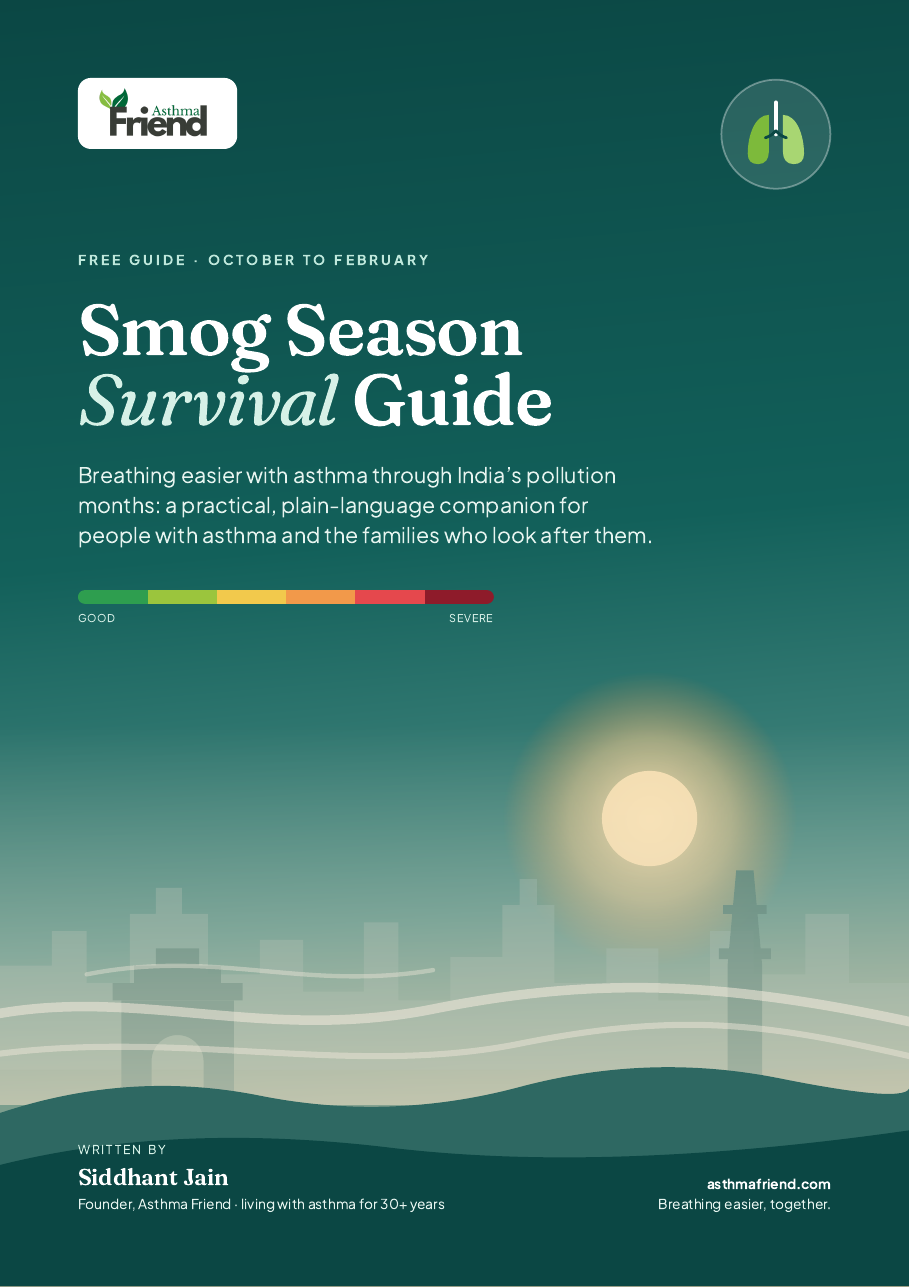
Free: Smog Season Survival Guide
A practical 27-page guide to breathing easier with asthma through India's pollution months: AQI explained, clean air at home, masks, kids and school, plus printable checklists. Join the free Asthma Friend newsletter and we'll email it to you.


Last reviewed: 8 November 2026
Information on this page was written against widely published guidance from national and international respiratory health bodies. It is educational only and is not a substitute for personal medical advice from a doctor.

About the author
Siddhant Jain
Siddhant Jain is the founder of Asthma Friend. He has lived with asthma for more than 30 years. After moving from Delhi NCR to Dehradun, his breathing improved, and he built Asthma Friend to give Indian patients and caregivers practical, empathetic education. The content is educational and is not a substitute for advice from a doctor.